How beneficial rhizobacteria can reduce insect pests in crops
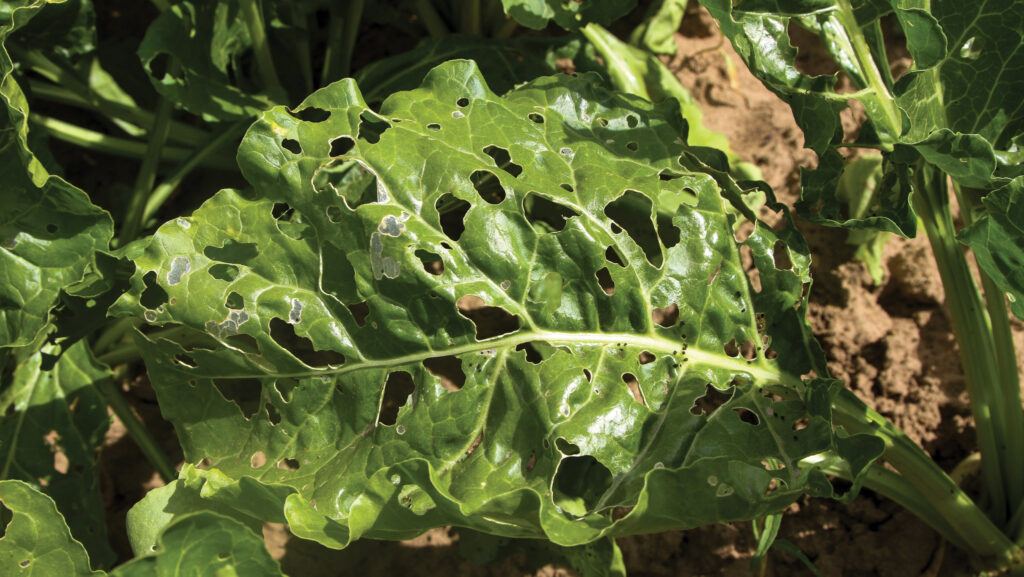 © GNP
© GNP Inoculating crops with beneficial rhizobacteria has been shown to reduce insect pest damage by priming natural plant defence pathways.
Certain bacterial strains can activate internal defence mechanisms of plants, altering chemical signals to make crops less attractive to pests.
Some bacteria can alter the release of plant volatiles to attract beneficial insects.
Applying specific rhizobacterial strains such as Bacillus species can, therefore, enhance nutrient uptake, support crop growth and ultimately boost yields.
See also: How crop nutrition can avoid insect and disease
Power of microbial communities
The narrow region of soil that clings to plant roots, known as the rhizosphere, is home to billions of microbial organisms that play a vital role supporting plant growth and acquiring nutrients.
“Plants influence the rhizosphere by releasing root exudates to recruit specific soil microbes, allowing for efficient environmental responses,” explains Dr Sharon Zytynska, senior lecturer in ecology at the University of Manchester.
A research project examining the impact of rhizobacteria on insect pests discovered how these plant-friendly microbes stimulate a powerful plant defence mechanism against chewing and sap-sucking insects.
The meta-analysis carried out by Sharon, and colleagues Dr Megan Parker and Dr Oriana Sanchez-Mahecha, pooled findings from 70 studies.
Rhizobacteria inoculation to plants was found to:
- Reduce insect fitness
- Reduce insect survival
- Produce fewer offspring
- Minimise leaf damage
- Alter host choice – fewer insects settled on treated plants
- Reduce body size – especially when Bacillus species were used
“Bacterial populations can be recruited relatively quickly over short time frames.
“Microbial inoculants can prime plants, to mount these responses faster,” Sharon explains.
Bacillus species
The impact varied significantly depending on type of insect pest, plant host, and rhizobacterial species.
Across the board, Bacillus species were the most-effective microbial group.
They reduced body size of chewing pests, shortened development times, and cut reproductive rates in several sap-feeding insects.
These all reduce pest population sizes.
Pseudomonas species, though widely studied, showed weaker and more variable results.
While it is often thought multi-strain microbial products would be more beneficial, the study found single microbial strains outperformed diverse mixes.
This is likely because combined strains are individually good, but hinder each other’s actions.
Chewing v sucking insects
When herbivores with chewing mouthparts, such as caterpillars and beetle larvae, fed on plants treated with rhizobacteria, they showed reduced willingness to feed and consumed less leaf mass.
In many cases, they exhibited lower survival or diminished reproductive potential.
Behavioural responses such as avoidance of inoculated plants were often stronger than changes in growth or fertility.
This suggests rhizobacteria enhance early defence signals that shape insect choice before significant feeding occurs.
“These insects create substantial physical damage as they feed, which triggers robust defence responses in the plant,” explains Sharon.
This strong response aligns with how chewing insects cause damage: by physically rupturing plant tissues.
“Rhizobacteria-primed plants produce more robust wound-response compounds, making them less appealing and more difficult for pests to thrive on,” she says.
Sucking insects
Sucking insects, including aphids, whitefly, and psyllids, showed different vulnerabilities to rhizobacterial inoculation.
They were less affected in their feeding behaviour, but more exposed to the plant’s internal chemistry, with marked effects on reproductive output, often accompanied by decreases in body size or lifespan.
These patterns indicate chemical changes mediated by microbes reduce the nutritional quality or suitability of the plant’s phloem for these insects.
Other rhizobacteria, including nitrogen-fixing rhizobia, performed surprisingly well against aphids and whitefly, though fewer studies were available.
Dr Sharon Zytynska was sharing research findings at the Roots to Regenerative Agriculture conference hosted by the Association of Applied Biologists held in York at the end of 2025.