Advice on sugar beet weed control for summer 2026
 © GNP
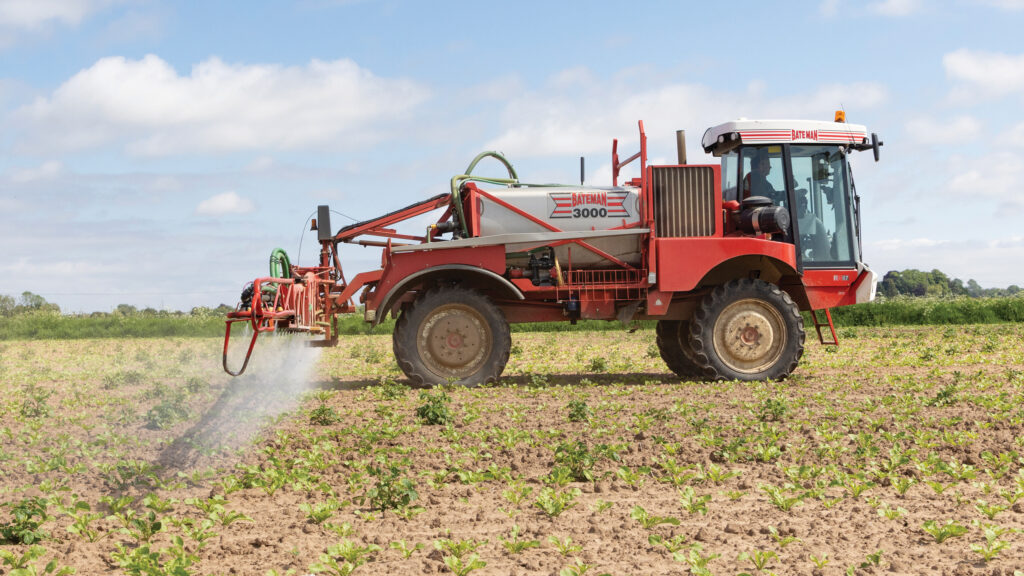
© GNP Good crop ground cover will be key to managing herbicide costs in sugar beet this year, after dry conditions affected weed control programmes in 2025.
Sugar beet growers should have a benchmark figure of £200/ha for herbicides for broad-leaved weed control this year on high burden sites, with a further £20/ha where grassweed control is required.
After a difficult year in 2025 with high weed pressure, Pam Chambers, weed specialist at British Sugar recognises that growers are questioning herbicide budgets after variable results were achieved in such a dry season.
See also: Beet moth threat: What farmers can do to mitigate risk
“One of the difficulties with last year’s drought was that crop canopies remained open until late in the season and weeds kept germinating,” she recalls.
“With the benefit of hindsight, those crops would have benefited from additional sprays.”
For this reason, final weed counts at the British Beet Research Organisation’s (BBRO’s) Brettenham trial site, which had very high populations of fat hen, were not acceptable from a programme costing £140/ha.
“An additional T4 spray and a possible T5 application would have been justified in a commercial situation, at a cost of £55/ha per spray. So we would have spent around £250/ha if we’d kept going.”
Conviso One (foramsulfuron + thiencarbazone) performed well at this site and gave the highest levels of weed control from a herbicide cost of £63/ha, although the £250/ha cost of growing a tolerant variety (Conviso) has to be considered where weed beet is not an issue.
At BBRO’s Navenby site, where the main challenge was black bindweed, best results came from a standard three-spray programme with lenacil added at the T2 and T3 timings. “The final weed assessment showed seven weeds/sq m.”
What were the weed control lessons from 2025?
Difficulties with weed control in 2025 were due to high weed pressure and the hot, dry season, with BBRO identifying some key findings:
- Variable crop emergence – Waiting for complete crop emergence allowed some weeds to become too large for effective control; weed control must begin as soon as weeds emerge.
- Choice of actives – Contact-acting actives (such as phenmedipham, ethofumesate) performed well in hot, dry conditions and allowed higher rates to be used. Poorer control came from low application rates.
- Use of adjuvants – A mineral oil proved beneficial on “tougher” weeds and where rates were higher, with early morning or evening applications giving the best results.
- Nozzle choice – Fine sprays give best control of small weeds, with flat fan 02 nozzles performing well in 2025.
- Application speed – Travelling too fast in a dry spring allowed dust to fly up, reducing herbicide activity and spray coverage. Aim for 8-12km/hour and maintain boom height at 50cm above canopy
- Spray intervals – Tight spray intervals were required in 2025 – aim for five to seven days between sprays when weeds are tough and check after application.
- Open canopies – Open canopies allowed weed germination to continue into the summer
- Last spray dates Spraying stopped too soon where open canopies were a feature, so late germinating weeds impacted yield.
Pre-emergence or not?
Whether to use a pre-emergence spray will be up for discussion this year, she acknowledges, after such a dry start last year.
“Using a pre-emergence spray buys you time and contributes to weed control, helping with the first post-emergence spray.
“If it’s very dry again, or you are on a light soil type, you may want to hold off. Otherwise, using a pre-emergence straight after drilling, where moisture is present, can give some flexibility.”
Alternative weed control methods are being assessed by BBRO, with a band sprayer tractor hoe combination being compared to the ARA/Ecorobotix system and the Conviso system at the Yaxley site.
The herbicide cost with the ultra-precision spot spraying system was down to £24/ha making it the most economic, reports Pam, although there were no significant differences between treatments on the low weed burden site.
“They all worked well and were commercially acceptable. When looking at alternative methods of control you have to weigh up costs, the time and labour required, any effect of weather conditions on its use, the amount of fuel used and the suitability to use any equipment across the rotation.”
New herbicide for 2027
A new post-emergence herbicide containing a new active ingredient for the control of broad-leaved weeds in sugar beet is expected to be approved in time for the 2027 growing season – the first since Debut arrived in 1995.
Bringing an alternative mode of action and new active ingredient to the sugar beet crop, Rinskor from Corteva contains florpyrauxifen-benzyl, a synthetic auxin from the arylpicolinate family (which also includes Arylex).
It works by mimicking naturally occurring plant hormones, with treated weeds displaying curl and twist symptoms similar to those of clopyralid.
Used at very low rates as a partner product in tank mix with other actives, Rinskor has activity on more difficult weeds such as fat hen, fool’s parsley, poppy and annual mercury, claims Corteva.
In a 2025 BBRO trial, a tank mix of Rinksor + phenmedipham + ethofumesate gave comparable results to the use of phenmedipham + ethofumesate + metamitron + lenacil. Work will continue in 2026.
Emerging weeds
Sugar beet is not alone in being affected by “new and emerging” weed species, with game cover and cover crop seed mixes thought to be the source of contamination for some of them.
The identification of velvet leaf in sugar beet on two farms in 2025 is a concern, highlights British Sugar’s Pam Chambers, while barnyard grass and mugwort are becoming more prevalent.
“Some of these are very difficult to get full control of and require hand pulling,” she says. “It’s worth keeping samples of seed coming onto the farm so that any impurities can be identified.”
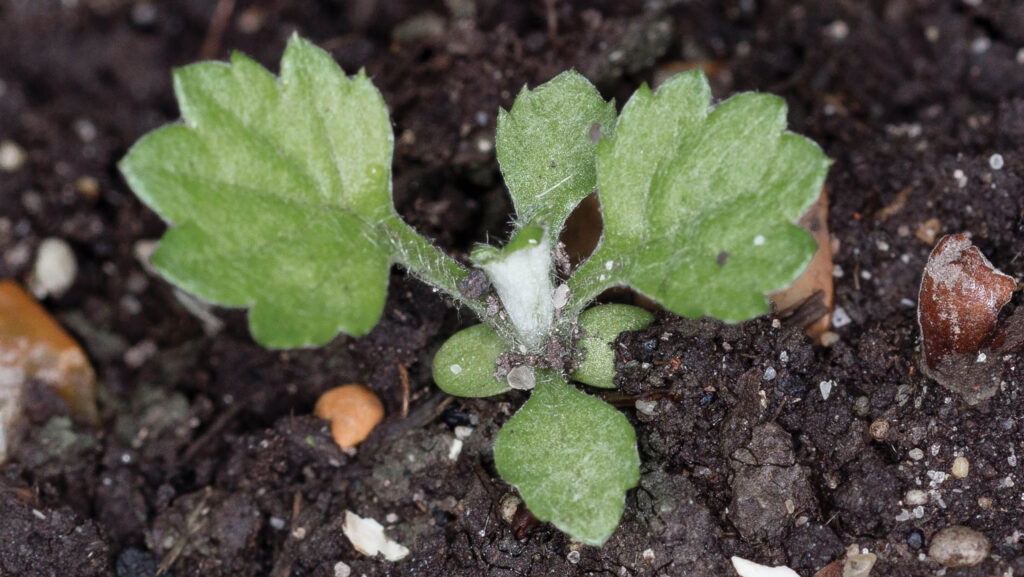
A mugwort seedling at the two true leaf stage © Blackthorn Arable
Drilling countdown
With drilling expected to be under way in the next month, growers are being reminded to be guided by soil temperatures and moisture levels and not the calendar.
Seed germination starts when soil temperatures are above 3C but will be slow until they reach 5C, while heavy rainfall soon after drilling will affect emergence.
Target plant population is 100,000 plants/ha, according to BBRO, with 1.25 units/ha needing to be drilled to meet that target. The germination of UK seed is 95% while in-field establishment is typically 80%.
Cover crops should have been destroyed at least six weeks ahead of drilling, stresses Stephen Aldis, head of field operation at the BBRO, to minimise risk and avoid the increasing threat from pests and diseases.
“That minimum six-week break is critical. Given the pest and disease complex crops are facing in a changing climate, giving them the best start is reliant on that.”
Beet moth update
BBRO’s beet moth strategy will deliver some immediate solutions, but it won’t be until 2029 that an integrated plan for beet moth management is launched, according to BBRO’s head of crop protection, Dr Alistair Wright.
The research focus will be on four main areas, after the pest became more widespread in 2025 in the prolonged drought:
- Lifecycle and behaviour
- Trapping and monitoring
- Cultural management
- Chemical control.
Updates will be issued as findings are confirmed, he confirms.

Staying sharp shouldn't be a chore