Why spring beans benefit from earlier drilling
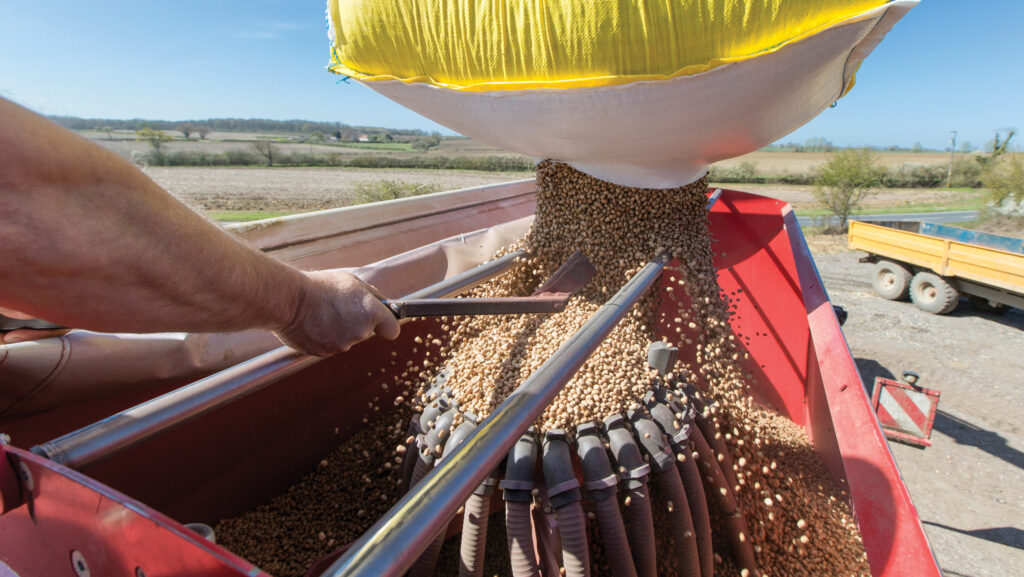 © GNP
© GNP Lower growing costs, the opportunity to exploit the break crop effect, and better variety choice are all good reasons to grow spring beans this year.
However, timely drilling is advised to limit the seasonal factors that affected crop performance in 2025.
Spring bean crops were hit harder than their winter counterparts by last year’s drought and high summer temperatures, reports Dr Charlotte White of Adas, who believes that a repeat of the 2025 situation can be avoided.
See also: Growers advised to test home-saved spring bean seed
From the past six years of the Yield Enhancement Network (YEN) results, spring beans had an average yield of 4.4t/ha, with the earlier-sown crops being the higher yielding ones, she reveals.
“Sowing early enough to avoid subsequent moisture stress was definitely a success factor in 2025,” she says.
“By getting good deep rooting, crops had better water uptake and avoided the worst of the stress periods.
“Overall, YEN data shows that rain in May and lower temperatures in the April to June growing period are associated with higher yields,” she adds.
Charlotte believes what last year highlighted was that high temperatures and drought conditions at the critical flowering and pod fill stages aren’t helpful.
Otherwise, early cultivations and timely drilling were important, so that seed went into a moist seed-bed that offered good seed-to-soil contact.
“Pest and disease management was also a success factor with spring beans, so fungicide and insecticide applications matter.”
Ceres Rural’s yield survey results confirm the YEN findings and the effect of seasonal factors – from an average spring bean yield of 4.41t/ha in 2024, the 2025 average was 3.5t/ha.
Agronomist Anna Bromley says: “Fortunately, we know why that occurred. While we can’t control the weather, we can try to avoid the clash between high temperatures and flowering with timely drilling.”
By timely, Anna means late February to early March, although she notes that soil conditions should be the main driver.
“They’re poor rooters compared to some crops, so the seed-bed and good seed-to-soil contact are really important.”
Variety
Variety preference hasn’t changed much since Lynx came along, but there are newer varieties worth considering now, for their consistency across years, says Anna.
“Navara is finding its place and offers high yields and a strong disease-resistance package. The accepted wisdom is not to consider a variety with a downy mildew rating below 5, so it passes that test.”
Aim to drill to a depth of 10cm, she advises, both to protect the seed from rooks and to allow the roots to grow down into moisture before a dry spell.
“Spring beans don’t tiller like winter beans, which is why you should keep seed rates up,” she advises.
“Target 50-55 plants/sq m, so that you get the numbers for good establishment of pods – it’s the number of pods that determines the final yield.”
Weed control
Effective weed control comes from having a clean start and making the most of pre-planting and pre-emergence glyphosate, notes Anna.
Control needs to be done pre-emergence and pendimethalin can no longer be used on its own on the crop. Post-emergence options are limited, with bentazone available for broad-leaved weeds.
“Depending on the weed spectrum, adding in some clomazone can help with cleavers control and is typically mixed with another residual partner,” she says.
Aclonifen (as in Emerger) is now approved for use on beans pre-emergence, bringing in some grassweed control.
A tank mix partner such as clomazone expands its activity, or for a bigger spend there is Nirvana (imazamox + pendimethalin).
For some sites, a post-emergence grassweed herbicide application, such as Laser (cycloxydim), may be required.
“Growers will be trying to keep costs down,” comments Anna.
“It’s usually best to do a pre-emergence treatment and then review it. Most will try to avoid putting spring beans in where there’s a known blackgrass issue.”
Disease
Rust and chocolate spot are the two main disease threats and, where disease pressure isn’t high, a single spray of tebuconazole will often suffice.
Otherwise, a tebuconazole/azoxystrobion mix applied at the beginning of flowering and followed up three weeks later at early pod set can be used.
Downy mildew requires a treatment of metalaxyl M (SL567A) when lesions are forming on more than 25% of the crop.
“A two-spray programme is still cost-effective. Keep an eye on the weather and make your decision based on the threat to the crop,” says Anna.
Pests
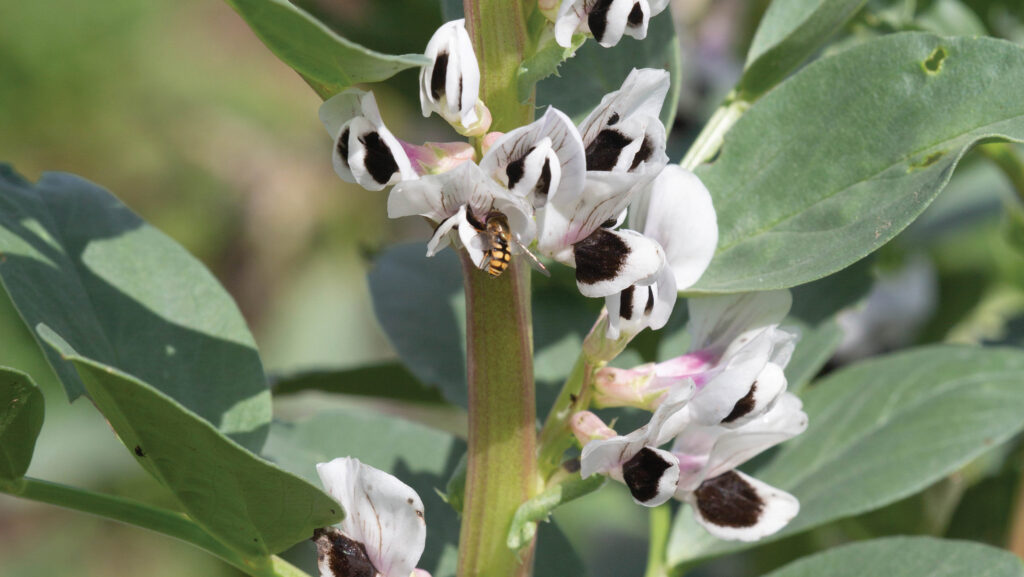
High temperatures during flowering can dent bean yields © Tim Scrivener
Spring beans are more at risk than winter beans from pea and bean weevil, but it’s rarely worth treating crops, which should grow away from any damage, she says.
“Black bean aphid is the bigger issue and can smother the plant at flowering.
“There is a recognised spray threshold of 10% of plants infested – just be aware that any spraying should take place early in the morning or late in the evening with flowering crops.”
Bruchid beetle control has given very variable results, so treatment should only be timed to coincide with conditions that favour the beetles and when adults have been found in the crops.
“This is usually when 50% of pods have developed and temperatures are above 20C for two consecutive days. But there has been a move away from spraying in recent years.”
Seasonal factors can have a bigger effect on final yields with spring beans than agronomy, but that early season action is important, along with appropriate pest and disease control, says Anna.