

Maize for anaerobic digestion – how do the numbers stack up?
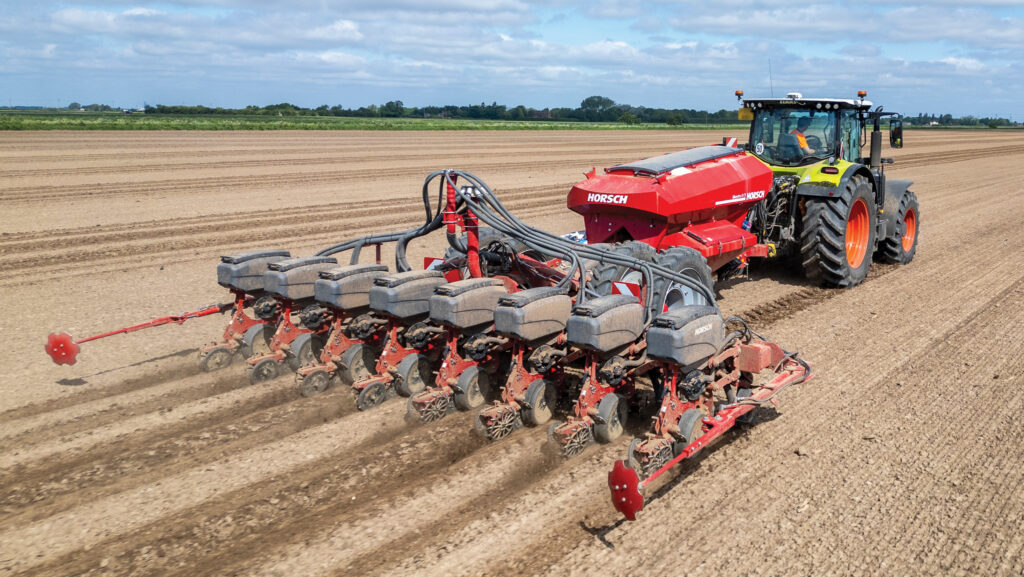 © GNP
© GNP Growing maize to supply a local anaerobic digestion plant may look attractive for farmers in the right location, however haulage costs and yield variability can “make or break” profitability
That’s why one expert advises farmers to consider all the economics carefully before signing up to any agreements.
About 70,000ha of maize is grown for anaerobic digestion (AD) in the UK each year, equivalent to almost one-third of the total maize area, with a large proportion of AD crops in the south and east of England.
See also: Triple-use maize variety on offer to support rising interest
Expectations are that this area will increase in future years if a number of proposed new gas-to-grid AD plants come online, many of which source maize from local growers to help meet feedstock requirements.
In the right situations, Hutchinsons farm business consultant, Leo Page says AD maize can be a profitable option, adding diversity to the rotation, and sometimes including the return of digestate back onto the land, to build soil nutrition, organic matter and help feed soil biology.
However, the past two seasons have highlighted just how much yields – and therefore profitability – can fluctuate depending on the weather, while haulage distance from field to AD plant can also make a big difference, says Leo.
“For many maize growers, distance and haulage costs are really what makes or breaks the viability of growing maize for AD.
“As a general rule of thumb, for every extra mile you have to travel between the field and the AD plant, you should deduct roughly 60p/t of freshweight, assuming you’re doing the haulage yourself. That equates to about £25/ha off your business surplus (net profit) for every extra mile.”
So, for example, if a farmer is growing maize 10 miles away from an AD plant and is making a net profit of £250/ha before haulage, that would be wiped out once transport has been included.
Leo acknowledges that budgeting for maize can be much harder than for other arable crops, with enormous variability depending on growing conditions, land suitability, the weather, yield potential, grower experience, as well as transport distances.
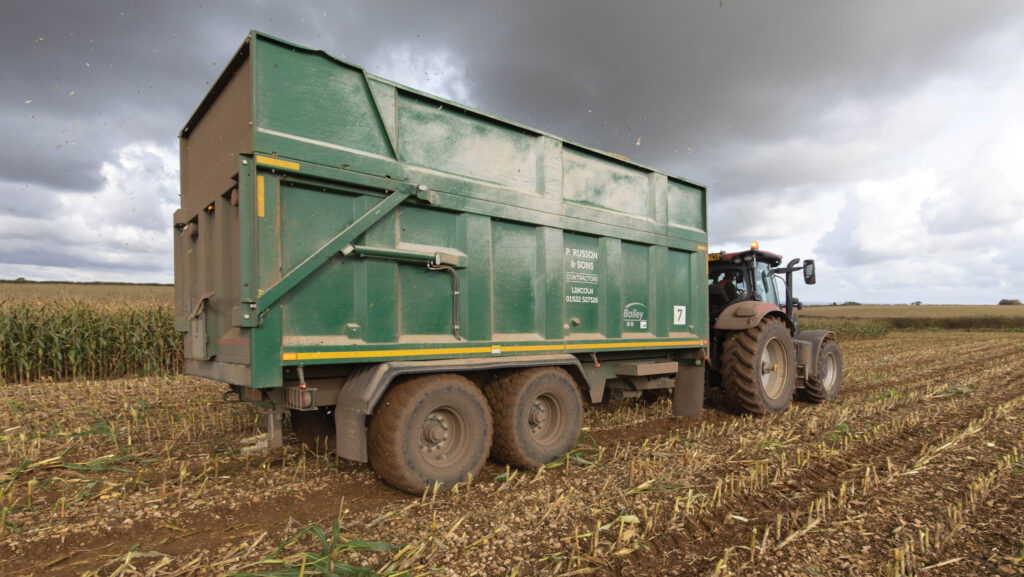
© Tim Scrivener
Some of these variations are illustrated in the table (below), which sets out example costings for a farmer supplying maize to an AD plant. It shows how much impact variations in yield, price, and haulage distance can have on the business surplus.
Another difficulty when evaluating the viability of growing AD maize is the wide differences in supply agreements with AD plant operators, Leo notes.
Some plant operators may do the haulage themselves, some will offer a price net of haulage costs, and others may offer a delivered price per tonne of dry matter, or freshweight, with a sliding scale should crops come in above or below a target level.
In all cases, he recommends farmers look carefully at what is being offered and consider how confident they are in meeting the yield and quality targets required to make a profit.
Other considerations
Leo reminds growers that there is a range of other factors to consider when assessing the viability of growing maize for AD, and highlights some key questions to think about:
- Will it bring beneficial diversity to the cropping rotation?
- Is maize a better break crop than other options, such as OSR, pulses, or SFI?
- Is it an appropriate use of your land/soil?
- What will be the impact on soil health and structure – will remedial cultivations be needed?
- What will be the impact on timeliness of establishing following crops?
- Are there options to mitigate the risks (such as undersowing grass, early varieties, following maize with a spring crop)?
- What will growing maize do to other crop areas and the fixed costs associated with these? For example, will machinery costs be spread over a smaller wheat area, raising the cost of production/ha or tonnes?
- How important is having digestate on your land? What are the risks versus rewards?
- How far will maize need to be transported, and what will that cost?
- How confident are you of achieving the dry matter and freshweight yields needed to deliver a positive margin?
- Does maize help spread workloads or create more pressure in the autumn?
- Does maize fit into the long-term vision?
- What will be the impact on farm labour?
“Anyone planning to grow maize for AD needs to be certain it is a worthwhile option for their farm, and take time to evaluate the impact it will have before accepting any offer to grow it to supply an AD plant,” Leo concludes.
Choose varieties wisely
Careful variety selection is key to a successful maize crop, and growers need to choose options that suit their specific situations, says Hutchinsons national energy seed crops manager, Peter Brundle.
When comparing varieties for AD maize, the FAO maturity rating and dry matter yield, are two particularly important criteria to consider, he says.
Dry matter (DM) yield is the main yardstick that many AD plant operators use as the basis for how much they pay growers, while the maturity rating influences when the crop will be ready to harvest, so can have implications for following crop plans, he notes.
“Be aware, that in many cases, the following crop is more important than the maize crop, so you don’t want to compromise that by having to harvest maize late when you want to be sowing wheat.
“Every variety is different, and every grower will want different things,” Mr Brundle says.
“Some might want an early maturing variety with a low FAO number, so they can harvest early and in good time to establish the following crop, while others might prefer a later maturing variety with a higher FAO to allow more time to build DM yield.”
Decisions can be further complicated when relying on a contractor for drilling and harvest, he adds.
“When you’re not in full control of those operations, you have to choose the right variety to make sure you manage the risk.”
Illustrative costings for AD maize showing the impact of yield and haulage distance on net margin |
|||
|
Freshweight yield (DM%) |
45t/ha (36%) |
40t/ha (36%) |
30t/ha (30%) |
|
Price offer (£/t freshweight delivered to plant at 36% DM) |
55 |
45 |
36 |
|
Maize revenue (£/ha) |
2,475 |
1,800 |
855 |
|
Seeds/fert/sprays (£/ha) |
850 |
850 |
850 |
|
Machinery and labour (£/ha) |
387 |
387 |
387 |
|
Other overheads (excluding haulage) (£/ha) |
544 |
544 |
544 |
|
Business surplus (£/ha) after haulage costs – 1 mile from field to plant |
665 |
-7 |
-946 |
|
Business surplus (£/ha) after haulage – 5 miles |
551 |
-108 |
-1,022 |
|
Business surplus (£/ha) after haulage – 10 miles |
409 |
-234 |
-1,116 |
|
Note: Illustrative costs only – actual figures and price offers will vary for individual businesses. |
|||
