

How new income streams are protecting Shropshire farm business
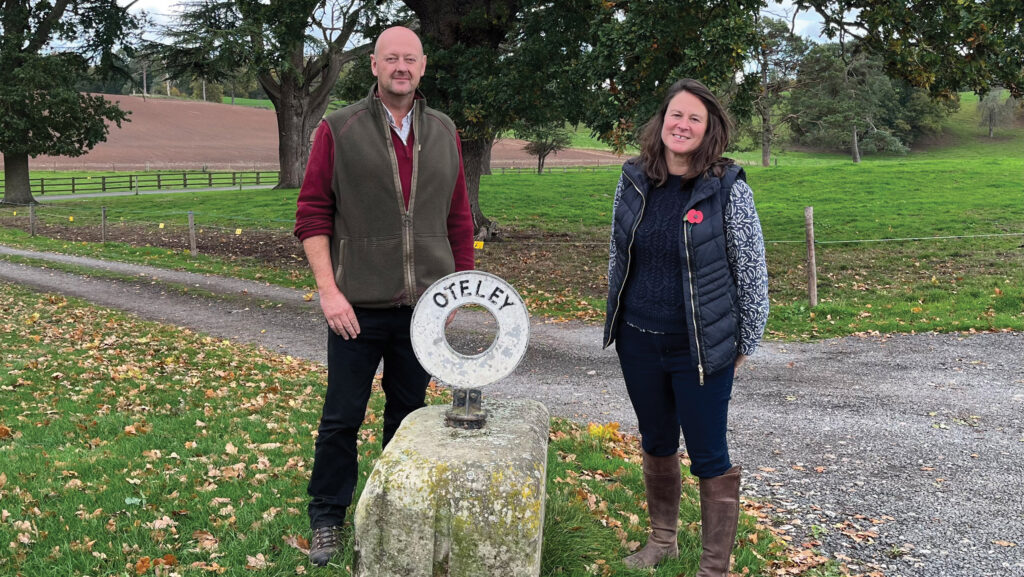 Ian and Clare Mainwaring © Louise Impey
 Arable businesses are facing one of the worst profitability challenges in living memory due to a combination of soaring input and machinery costs, poor crop prices and an uncertain future over government payments for environmental schemes.
This has left many farms struggling to make a profit on wheat crops this season.
However, some arable businesses are finding solutions to the slump which include adding value, changing course or bringing in new income streams.
Farmers Weekly discover how one couple in Shropshire are making ends meet.
See also: Farmer tackles arable slump with push for more hectares
The decision to open a farm shop and have an on-site café means there has been a culture change at Oteley Estate near Ellesmere, admit Ian and Clare Mainwaring.
They are now open four days a week and welcome people coming up the farm drive.
Determined not to let the diversification detract from what they see as their primary purpose – food production – the couple also recognised the importance of new income streams.
That’s why they have seized the opportunity to trade on the family estate’s 500-year heritage and proximity to the town of Ellesmere.
“Given the current economic and political headwinds, there’s no hiding from the fact that it’s going to be a bumpy ride for farming in the next few years,” says Ian.
“At Oteley, we are trying to strike the right balance between profitable production and our environmental responsibilities, as well as taking care to spread our risk and put the business on the right footing for the future.”
Future funding
With public funding for farming being phased out, Ian describes the farm shop and café as a means of “putting our hand in other people’s pockets”.
With an idyllic setting right next to the mere in the town, there has been no shortage of footfall since they opened.
“That brings other challenges and opportunities, such as people wanting to walk their dogs,” he continues.
“So we are looking at how we can offer that, without it interfering with the farm operation or public safety.”
© Ian and Clare Mainwaring
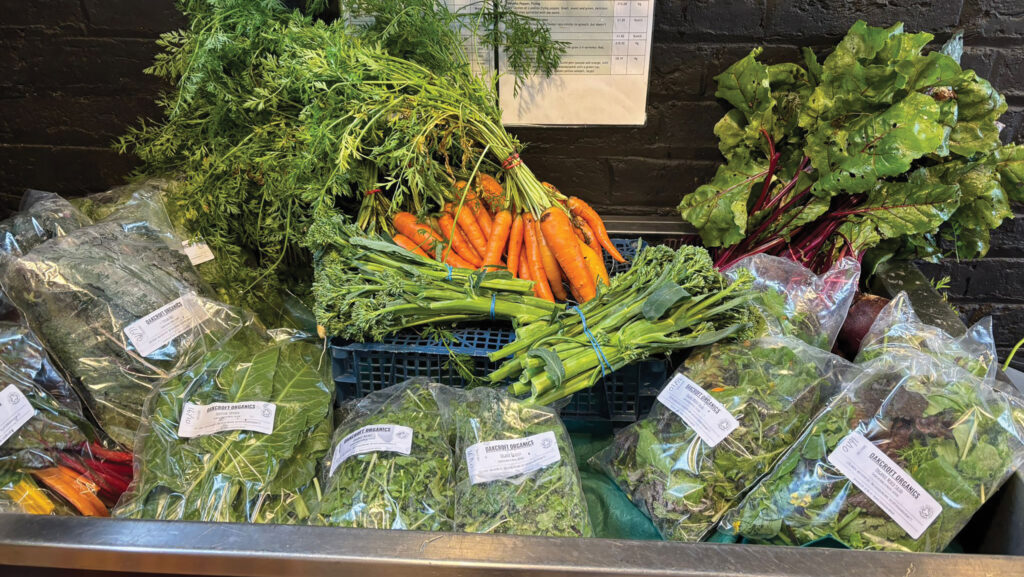
As well as selling their own meat through the shop, they have set up a production kitchen making ready meals and goods such as sausage rolls.
Plans for an on-site butchery had to be scrapped when grant funding was closed.
“When we started selling meat direct to the public, it became clear that our customers wanted to have a coffee having made the trip out here,” recalls Clare.
“After doing some research, we realised that there was nowhere open on a Sunday locally. So we opened the café and went from there.”
Core business
The mixed 810ha farm business consists of arable and grassland, with two native breed suckler herds and a flock of 113 outwintered ewes.
Highland cattle are used for stewardship grazing, as the estate has a considerable area of parkland next to the mere.
Both herds allow the business to “sell a story” with its livestock. The Shorthorns provide the meat for the farm shop.
“Selling your own meat is not easy,” adds Clare. “There are hoops to jump through, costs to absorb and trading standards to comply with.
“Our aim has always been to provide a consistent product and offer good value for money.”
© Ian and Clare Mainwaring
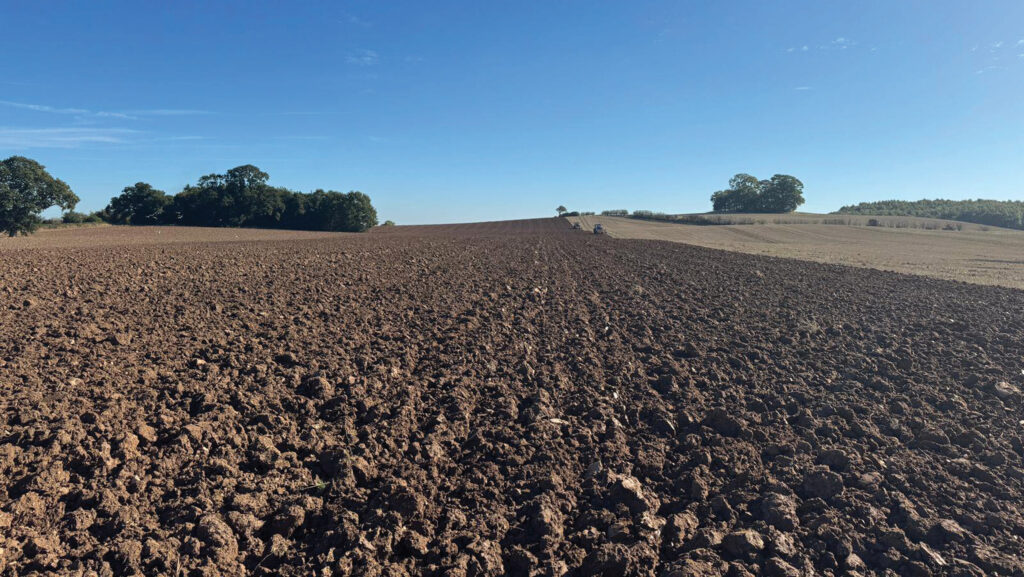
Combinable crops form the basis of 405ha of arable, with wheat, barley, oilseed rape and milling oats grown, while more recent introductions to the rotation include fodder beet and forage maize.
All the barley produced on the farm is fed to a more intensive beef enterprise, with cattle being produced for Buitelaar and ABP.
Bulls are retained entire for beef production and the heifers are either kept for breeding or go through the farm shop.
The TB threat is ever-present and unlikely to change any time soon, notes Ian.
Cropping challenges
Challenges for the arable land include blackgrass and climate change, as well as the fact that more working capital is now tied up in growing crops.
“We are predominantly winter crops, so heavy autumn rainfall can give us problems and the normal cashflow pressures apply.”
Ploughing still features where maize is going in, but otherwise the cultivations strategy is to do as little as they can get away with.
Near perfect conditions in autumn 2025 saw wheat and barley crops establish well, reports Ceres Rural agronomist Will Spurdens, who is now considering what inputs will be appropriate and if any savings can be made.
“The pre-emergence herbicide mix of flufenacet + diflufenican + aclonifen went on with enough soil moisture to activate it, so has performed as expected and is only just beginning to run out of steam,” he reports.
“There was no need for an autumn follow-up but I am being vigilant with the early spring scouting.”
The thicker wheat crops have got some early disease kicking about, with both septoria and mildew being found, so fungicide strategies are being devised to cope with that.
Will is also on high alert for yellow rust, given the varietal breakdown seen last year.
The first dose of nitrogen will be applied in early-mid February, with applications then tailored to manage growth and make any savings.
“Grain prices aren’t looking too hopeful so we will be managing the spend on crops.”
Oilseed rape continues to look better than it has for some years at this stage of the season, he continues.
An application of Fox (bifenox) was made just after Christmas to help manage a charlock issue, he reports.
“Some sharp frosts and a dump of snow have helped to slow it down, which is no bad thing. I don’t think it will need any growth regulation.”
He is now turning his thoughts to the crop’s nitrogen and sulphur requirements, as well as any foliar nutrition needs and disease suppression. “Hopefully, there will be no need for any broad-leaved weed control.”
What’s next?
There are more redundant farm buildings in the old stable yard at Oteley that could be converted, points out Ian, who is already in discussions with a prospective tenant for one of them.
He is also investigating a biodiversity net gain opportunity that would involve taking some outlying and very marginal land out of production.
“They approached me about it – it’s just one possible option for that land, so I am looking at what it would involve.”
In addition, the estate is working with the Forestry Commission to create a woodland plan, which will involve tree planting and management of existing woods.
Peatland restoration is another project, with Natural England keen to work with the estate.
With three meres on the farm, much of the land is in a meres and mosses classified area, so both the existing Entry Level Stewardship and Higher Level Stewardship schemes were extended two years ago to maintain the habitat and the biodiversity it supports.
There are also two Sustainable Farming Incentive agreements in place, both of which have more than two years to run.
Leisure options related to the mere at Ellesmere are a further possibility and will get investigation, notes Ian.

Staying sharp shouldn't be a chore
Explore more / Transition
During the series we follow our group of 16 Transition Farmers through the challenges and opportunities as they seek to improve their farm businesses.
Transition is an independent editorial initiative supported by our UK-wide network of partners, who have made it possible to bring you this series.
Visit the Transition content hub to find out more.
