

Why demand for hybrid rye and maize is set to rise
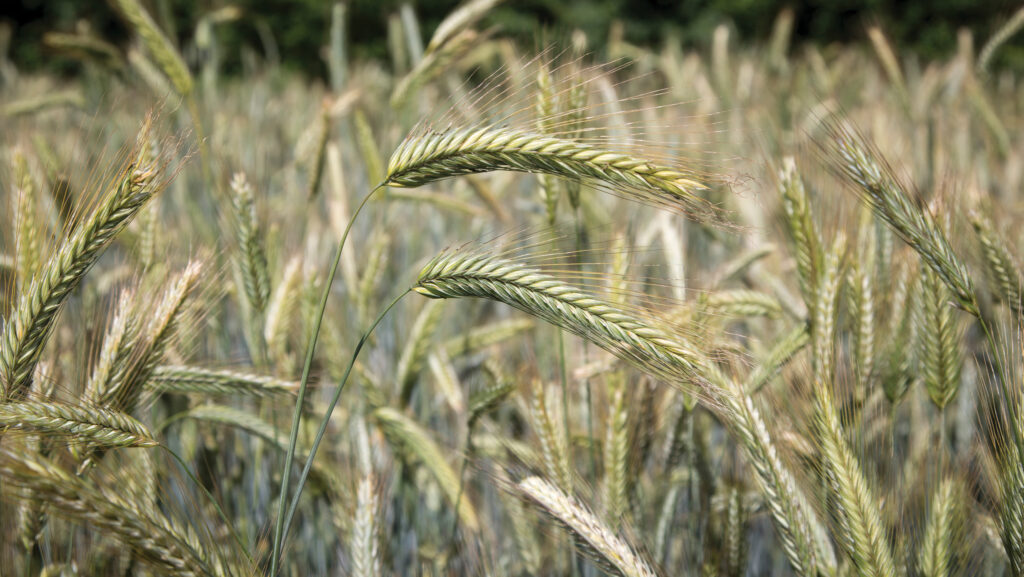 Forage rye © GNP
 The expansion of biomethane injection plants and on‑farm anaerobic digestion capacity is creating long‑term demand for home‑grown feedstocks, offering growers new low‑risk routes to improve profitability and resilience.
With 130 biomethane injection plants and more than 500 combined heat and power anaerobic digestion (AD) plants, the UK’s evolving energy policy landscape offers strong growth opportunities for the AD industry.
Since its launch in 2021, the current Green Gas Support Scheme (GGSS) has stimulated further growth in AD and will continue to do so until 2028, says Lucy Hopwood, director and principal consultant at Alder BioInsights.
See also: Maize for anaerobic digestion – how do the numbers stack up?
In the past five years under the GGSS, 12 new biomethane projects have been commissioned, with a further 22 in development and set to become operational by 2028.
All have planning, grid capacity and finance already in place.
Importantly, for both UK maize and rye growers, Lucy points out that all these new plants will require a secure supply of feedstock.
“It’s highly likely we will see greater demand for both crops to meet future supply levels,” she says.
Rye demand
Rye, alongside maize, has established itself as a reliable crop feedstocks for supply into AD in recent years.
“While the quality of other AD inputs such as food waste can vary, a consistent, stable supply of high-quality feedstock is fundamentally important to successful AD production from both a biological and commercial productivity perspective,” she says.
On a tonnage-in basis, rye is higher yielding in terms of gas production than either a tonne of food waste or livestock manure providing a strong and stable output.
Rye also has key advantages over other crops in its drilling flexibility and drought tolerance.
In the past three years, the UK has experienced two exceptionally dry seasons, so this last trait could prove especially important, if these extreme weather patterns were to become the new normal.
“Looking at Alder BioInsights’ latest analysis on sustainable feedstocks, a tenfold increase in biomethane production could be achieved by 2050, making a critical contribution to decarbonisation efforts in energy and agriculture.
“This translates to a potential tenfold increase in use of both rye and maize, delivering increased productivity, profitability and sector resilience as part of a more integrated circular farming system,” concludes Lucy.
With wholecrop for biogas production still the biggest single market for hybrid rye, independent agronomist Craig Green, of CMG Agronomy, also sees a bigger future for the crop as the AD sector continues to expand.
Craig says: “Of the 58,000ha of rye grown last year, more than 50% of the area was grown as wholecrop for AD.
“Although not a true break crop, hybrid rye offers a very low input/high output option.
“It has exceptional drought tolerance, can be grown on poor-quality land that won’t support wheat or barley and its low susceptibility to take-all makes it a stronger option than a second wheat.
“Combining rye or growing wholecrop rye for AD effectively gives farmers two different break crop opportunities.
“If they go down the AD route, rye can be harvested early in June or July offering them an excellent entry for oilseed rape.
“If growers choose to combine rye, then the crop is harvested later, and they reap the benefits of rye’s ability to produce up to 1.5 times more straw than either wheat or barley.
“On fertiliser inputs, a standard rye crop may realistically only receive about 120kg/ha of N, almost 50% of the N a farmer might apply to a winter wheat.
“Rye is simply one of the lowest input crops and will fit into almost any rotation.”
Variety choice
He adds: “On variety choice, Saaten Union have seven of the 11 varieties on the current Descriptive List [DL], and it’s fair to say they have tended to dominate the rye sector since the arrival of Performer many years ago.”
Having independently trialled most of the current listed varieties, Thor, a dual-purpose, high-yielding rye, has been the stand-out for Craig during the past three years.
“Last year, during one of the longest droughts on record, Thor was able to stay green well into July for many of my farmers, and with a treated yield of 108% in the East, it has very few weaknesses.”
Of the more recent entrants onto the DL, Craig says Karlsson and Erling have caught his eye.
Having followed the two varieties in trials, both look agronomically robust, with Erling’s very stiff straw giving it an advantage over Thor.
“Erling is early maturing and, given that its earlier to harvest, it’s also incredibly N efficient, outperforming all the other rye varieties I saw in last year trials by around 20kg/ha,” he says.
Another expert monitoring the performance of rye varieties in trials is Philip Marr, renewable biomass consultant for Agrii.
Having trialled 146 varieties during the past 15 years, Philip is keen to stress that the focus is not just on yield, with speed of leaf development, overall disease resistance and response to varying rates of N all essential to the evaluation of each variety trialled.
“We look at every variety over a three-year period.
“It’s a very thorough and transparent process with the specific aim of finding out as much as we can about each rye variety.
“At the end of each trial, we send tissue samples to the renewable research department at Sheffield University, where the biomass of each variety is measured and converted into biogas yields in cubic metres a tonne [cu m/t].
Gas yields
“Over the past 15 years since our research began, we’ve successfully identified a significant difference in gas output levels between individual varieties.
“Often these differences can be as large as 60-70cu m/t of biogas of freshweight material.”
Although 60-70cu m may not sound much, Philip says with clamps for AD plants often holding tens of thousands of tonnes, the reality is that the overall gas output between varieties can be measured in seven-digit figures (millions of cu m of biogas).
So variety choice definitely matters – especially with yield differences of 20-25t/ha between the best- and worst-performing rye varieties.
“Based on the past two years of trial results, two varieties, Erling and Karlsson, have topped Agrii trials in terms of both freshweight and biogas yields.
“Although both have also recorded very high grain yields, I see both Erling and Karlsson as true biomass types offering strong traits for growers seeking higher gas yields for supply into AD plants,” he confirms.
Kurtis Scarboro, crop manager for cereals and oilseeds with Elsoms Seeds, who market all Saaten Union varieties in the UK, also recognises the importance of identifying high gas yielding varieties as the AD sector continues to develop in importance.
He says: “As the only new variety added to the 2026-27 winter rye descriptive list, Erling becomes the seventh Saaten Union variety from a total of 11 varieties currently listed.
“With a grain yield of 103% to controls, it’s a high-yielding, high-output, true dual-purpose variety suitable for both the grain and AD markets.”
With a short, stiff stem, the variety is relatively straightforward to manage with very low susceptibility to lodging and has the built-in guarantees of high straw yields from its high tillering capacity.
Overall disease resistance has been solid in trials, and it offers farmers a moderately fast growth development through the spring, a characteristic that rye growers particularly like, he concludes.
Staying sharp shouldn't be a chore

Staying sharp shouldn't be a chore
Explore more / Transition
During the series we follow our group of 16 Transition Farmers through the challenges and opportunities as they seek to improve their farm businesses.
Transition is an independent editorial initiative supported by our UK-wide network of partners, who have made it possible to bring you this series.
Visit the Transition content hub to find out more.
