Why one farm switched from dairy to hay, straw and trees
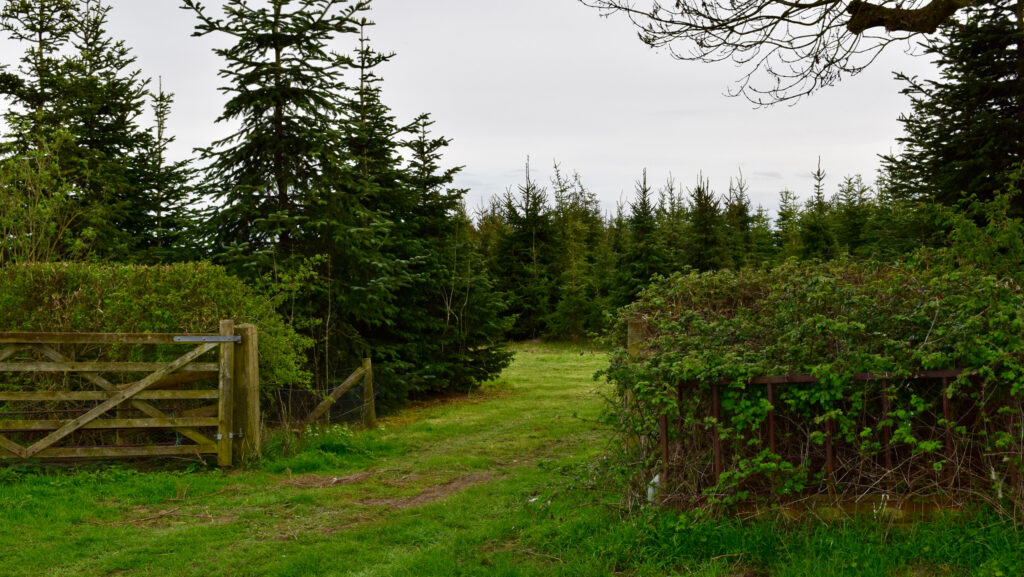 © Paul Spackman
 A Leicestershire farming family has built a more resilient farming business, diversifying into selling hay, straw and Christmas trees direct to the public alongside cereal cropping.
This summer, Jim Mount, wife Jane and sons Harry and Will are launching a pick-your-own flower venture on the family farm in the village of Thorpe Langton, near Market Harborough.
Back in 2002, Jim decided to go out of dairy and focus on these fledgling enterprises.
See also: How old grain store became indoor ski slope diversification
Today, the business consists of:
- Arable cropping (wheat, winter and spring oats)
- Direct sales of hay/straw/haylage
- Growing and selling Christmas trees, and a Christmas barn
- Building rented to a local brewery
- Pick your own flower meadow (new for 2026)
- Caravan storage (planned).
Farm facts
J&J Mount & Sons (Mount Farm)
- 140ha of cereals – wheat, oats and rotational leys
- 73ha of grass meadow plus 160ha of grass keep
- 10ha of Christmas trees
- Staff: Jim, wife Jane plus sons Harry and Will. They also employ one full time and one part time
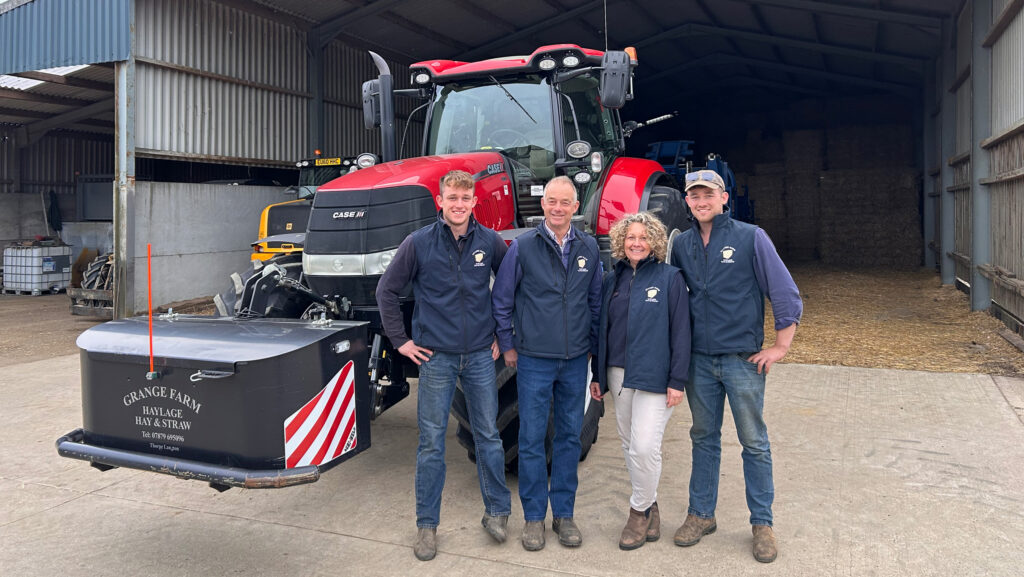
Harry, Jim, Jane and Will Mount © Paul Spackman
Christmas trees
Last Christmas, the Mount family sold 2,700 trees, of which 900 were bought in and the rest grown.
Back in the 1980s, Jim’s mum worked at Melton Mowbray Auction Mart where she was offered 30 surplus Christmas trees and sold them on the farm.
The following year, that increased to 60 trees – and in 2003, the family started growing their own.
In the 23 years since, Jim has built up extensive knowledge on how to grow a quality tree.
They currently have 10ha and used to grow four species: Norway spruce, Nordman fir, blue spruce and Serbian spruce.
The family now plant 50:50 Norway spruce and Nordman fir. “We can grow better quality Norway spruces than you can buy and the larger Nordmans are expensive.”
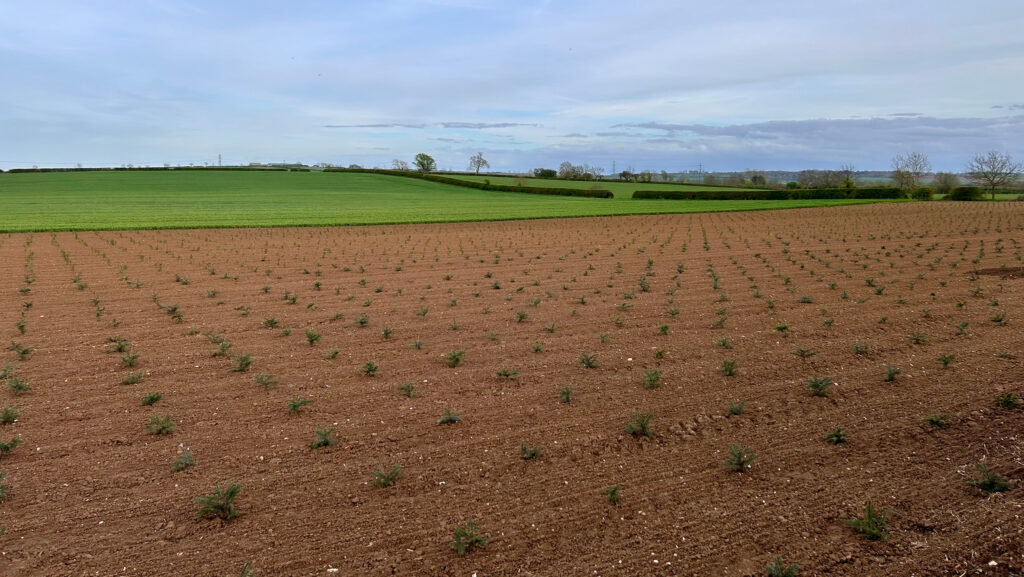
Newly planted Christmas trees © Paul Spackman
Trees are planted every two years and Jim aims to plant 4,000-4,500 each time – which are all now machine-planted using a GPS system.
With so many trees to manage alongside other ventures, most of this work is contracted out to Festive Forestry, a specialist company based in Herefordshire.
Trees take quite a bit of managing, as he aims to produce a quality product. They need pruning and shaping as they develop, especially in the early years, as people want narrower trees. “If you leave it, it will grow outwards,” he explains.
Grass also needs to be mowed between the rows and trees fed once a year. The family do as much as they can, topped up with help from Festive Forestry.
Over the years, the business has evolved from just selling Christmas trees into a Christmas Barn, utilising the old grain shed.
The interior is decked out with any unsaleable trees, old vehicles including a traction engine and is transformed into a winter wonderland.
The aim is to bring extra revenue by selling tree decorations, lights and so on – everything the public needs to dress their house and tree.
There is also a Santa’s grotto – proceeds from which go to local charity – a café and pens of animals, making it a family destination which has developed a strong local following.
Hay and straw
When the dairy cows went, Jim started making and selling hay to horse owners in the area.
“We are fortunate to be in an area with very high horse numbers.”
They typically bale and sell 100,000 small square bales, consisting of 65,000 hay and 35,000 straw. In addition, they produce 5,000 big bales. However, in last year’s drought, grass yields were down with just 43,000 small bales.
Alongside the arable area, they farm 73ha of permanent meadows and also take on 160ha of grass keep from other farms.
Hay is produced from three cuts of rotational Italian Ryegrass leys and meadow grass. Bales are delivered within a 15 mile radius using a fleet of three Land Rover Defenders.
The arable and hay making enterprise is over-kitted for the area with machinery. For example, the high-capacity Lexion 650 (7.7m cut) means they can make the most of the rest of the day.
New venture – flowers
Last year the family visited a flower-picking site in Yorkshire and decided to give it a try on their farm this summer. The plan is to have three different drilling dates to prolong flowering, with a block of sunflowers and another of mixed flowers.
“We will charge to pick the flowers. But it’s not just the flowers, people want the experience. So there will be benches, a café and some ride-on tractors for kids.”
Jim aims to be open from mid-July to late August to coincide with the school summer holiday.
Arable side
The 140ha of arable cropping now accounts for about 18-20% of the farm’s income, producing 1,200t of grain.
They grow predominantly feed wheat, along with break crops of oats and Italian ryegrass.
If they have a black-grass problem, the worst areas are managed by sowing a two-year ryegrass ley, which is used to produce hay and/or haylage, before going back into wheat.
Jim works with his Hutchinsons agronomist, Sally Cox, to manage day-to-day agronomy across the farm.
Microbrewery
This is not strictly a farm diversification, as the shed is rented to local microbrewery Langton Brewery.
The shed was formerly used for heifer-rearing and has been converted over the years to now include a taproom.
It works well on the run up to Christmas, as the taproom is open at the same time as the Christmas barn, adding another attraction.
“Jane and I realise how lucky we are to have our two sons Harry and Will to continue to take this family business to the next level,” says Jim.
Top tips for those considering their first diversification
Carrie Marshall, Hutchinsons farm business consultant, has five pointers for those who are starting out a diversification:
- Start by thinking about what you are interested in. The most successful projects come from a genuine passion and interest. Look at your labour profile and see what skill sets you have within your business, especially when it comes to dealing with the public.
- What assets have I got within my farming business that I could utilise? This could be a large shed that you can install padel courts or supercar storage or yard space suitable for storage. It may be a lake that you could use for wild swimming or fishing. “Everyone will have assets on their farm that aren’t currently utilised. You may look at these and think it’s not something I want to do myself, but there will be someone out there who may want to develop that.”
- Where’s my farm located? You don’t have to be on the edge of a village or town. “Some farms may not be suitable for a tourism venture but are located on main roads which may be suitable for truck stops, car charging stations or meeting rooms.”
- Look at the area you’re in and ask, “What are we missing?” Travelling the country, seeing what else people are doing is a good way to research what may work locality.
- What is your appetite? How much money and time are you prepared to invest?
Once farmers have decided to go ahead, she urges them to seek advice, whether that’s from professionals, consultants, or just from other people doing similar projects. A business plan is important. There is grant funding out there, but you can’t be reliant on it. So what feasibly can you fund yourself?
Finally, don’t let the public scare you. When you mention diversification, a common reaction is “I’m not dealing with the public”, but not every project has to involve the public.
Staying sharp shouldn't be a chore