How new grain store secured farm’s future after storm
 © MAG/Emma Gillbard
 When Storm Arwen hit parts of the UK in November 2021, bringing winds of up to 130mph, Andrew Reed’s farmyard in Berwick-Upon-Tweed was devastated, leaving him without enough grain storage.
“It completely wrecked the place,” Andrew recalls. “We had debris everywhere. The clean-up alone took eight weeks.”
See also: How a colour sorter investment helps secure milling premiums
The bold decision was made to invest £1.5m to rebuild the entire yard and grain stores in what was the biggest structural change the farm has seen in a generation.
“It was a hugely stressful period, and it was a big move to fork out that sort of money – particularly with grain prices where they were at that time – but we had to reinvest in the farm to secure its future,” says Andrew.
Site clearance fully began in 2022, with the new facilities finally becoming operational in time for the harvest in 2024. This meant completing two harvests without grain storage or a dryer.
“One harvest I had to sell wet grain straight off the combine, which resulted in me having to pay £30,000 in drying costs,” explains Andrew. “It was a long, drawn-out process, but we got there eventually.”
More than double the storage
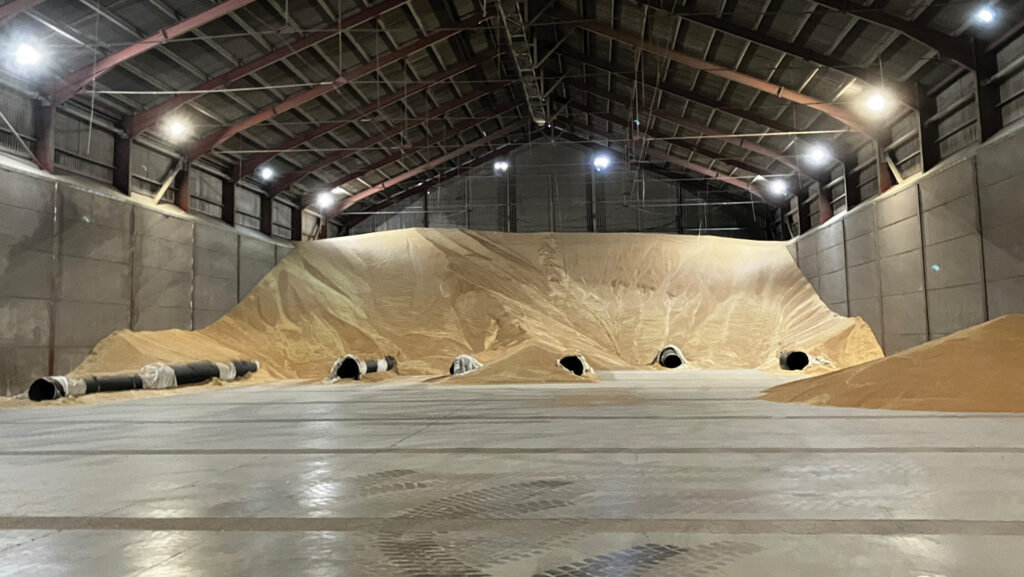
The redevelopment has more than doubled the farm’s grain storage capacity. With 7,000t of storage now on site, the business has far greater marketing flexibility, and provides the farm opportunity to expand if required.
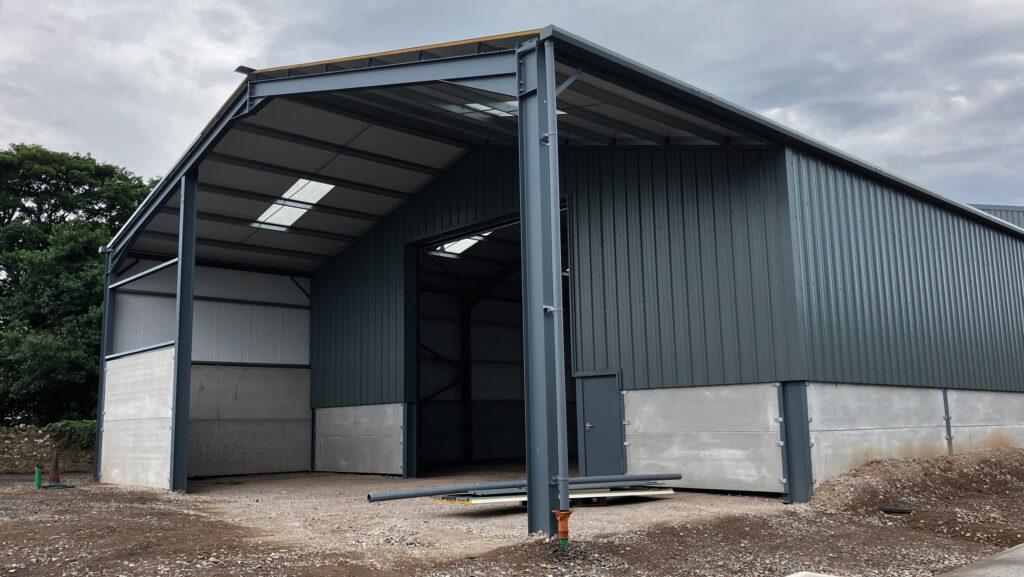
The major works were carried out in two phases. The first phase was a general grain storage and new dryer facility. The second involved a second grain store and a workshop.
Like many major construction projects, delays and unexpected challenges arose throughout the build. The site’s proximity to overhead electricity infrastructure added further complexity to the design process.
The investment also included doubling on-farm fuel storage from 5,000 litres to 10,000 litres.
Several of the new buildings have also been fitted with solar panels to improve long-term efficiency. Andrew believes the investment should serve the business for at least 30 years.
© MAG/Emma Gillbard
Continuous grain drying
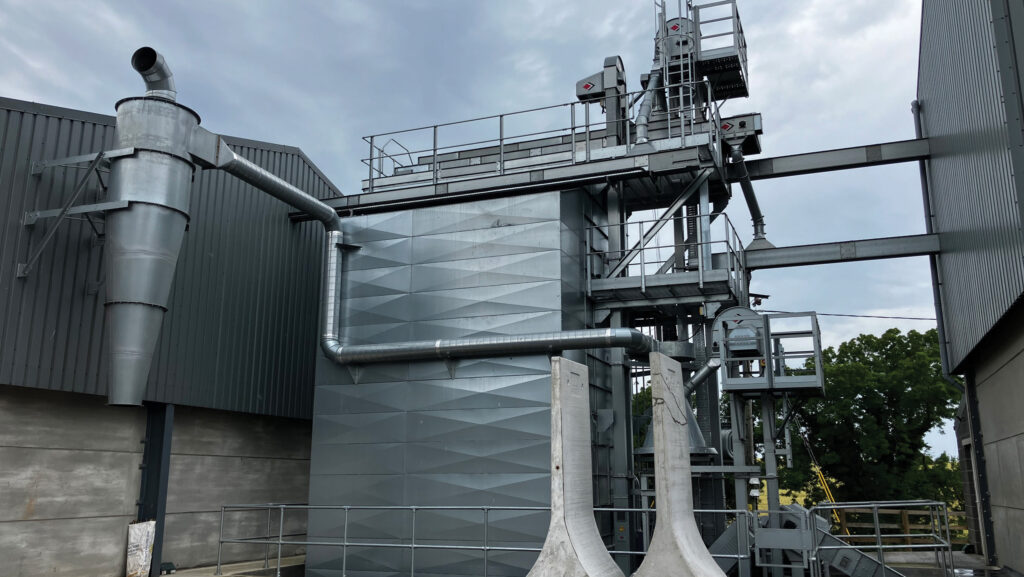
A key part of the investment has been a new continuous-flow Akron Svegma grain dryer, replacing the farm’s previous air-drying bins and Carier system.
Installed by grain systems integrator McArthur BDC, the dryer is capable of handling up to 40t/hour during peak capacity, although it typically operates between 20-25t/hour.
“The system includes an automated moisture monitoring system that continuously measures grain moisture on both intake and discharge so target moisture contents can be met,” explains Scott McArthur, project division director at McArthur BDC.
The entire system can be monitored remotely via a smartphone app or laptop.
“We’re running about half a day behind the combine now, so it’s much more efficient,” says Andrew.
An aspirator connected to the dryer’s intake system also removes lighter material as the grain passes through, improving cleaning performance before storage.
Andrew estimates the dryer should repay its investment within about 10 years.
Cropping
The 760ha farm grows:
- Winter wheat
- Winter barley
- Spring barley
- Oilseed rape
- Spring beans
- Peas
Crops are established using a combination drill following either ploughing or minimum cultivation. The farm operates both five- and seven-furrow ploughs, alongside a Simba SL cultivator equipped with discs and legs.
© MAG/Emma Gillbard
The business focuses on growing Group 3 biscuit wheats, applying four fungicide sprays alongside variable-rate NPK fertiliser, with a total nitrogen application of about 250kg N/ha.
A trailed sprayer has replaced a previous self-propelled machine, with running costs proving significantly lower.
Winter wheat averages 11t/ha, with wheat generally stored for longer-term marketing. Andrew follows the markets closely, spreading sales throughout the year to help manage cashflow.
Much of the barley is sold at harvest to free up storage space, but with the new grain stores up and running it provides an opportunity to hold on to grain if prices are low.
The business supplies spring barley under a five-year contract with a local maltster, providing a guaranteed market.
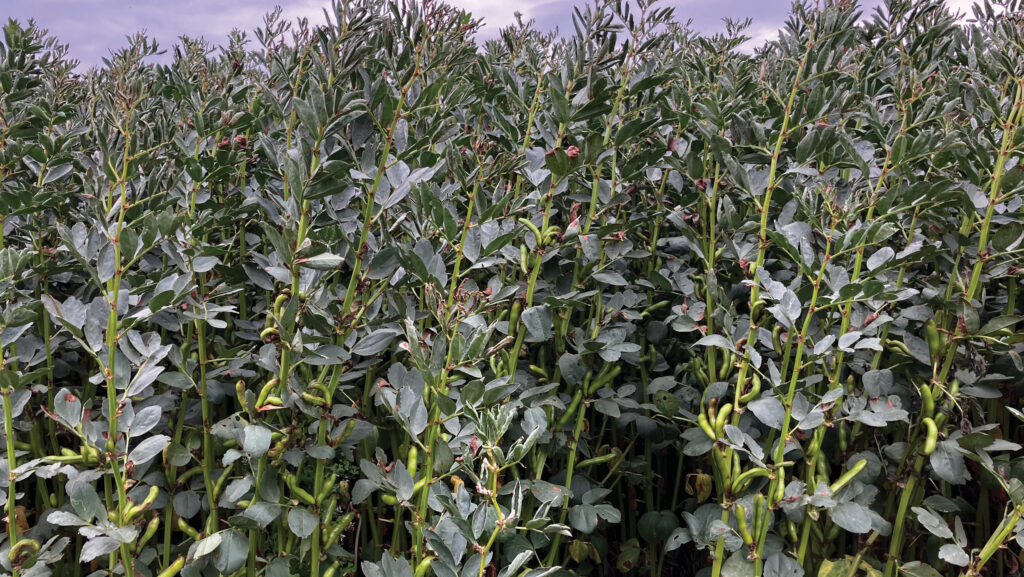
Spring beans feature once every six or seven years in the rotation and are grown for the human consumption market. Pulses improve soil structure, reduce weed pressure and create an ideal entry for wheat.
On the farm, it is just Andrew and one other full-time man with three self-employed staff coming to help at harvest.
© MAG/Emma Gillbard
Harvest update
Andrew has harvested and baled all winter barley, 75% of which made malt quality. The 200t that didn’t making the grade due to higher screenings will be stored and sold as feed at a later date.
Two-row variety Buccaneer has yielded 9t/ha – the highest moisture was 15.5%, the lowest going down to 13% – so they haven’t had to use the dryer. “Normally, we would harvest at about 18% moisture but this year was exceptionally dry,” Andrew says.
Oilseed rape is ready for harvest but an unexpected rain shower has postponed this. “With the current weather conditions, we are reasonably pleased with the results,” says Andrew.
Harvest is carried out using a New Holland CR990 combine fitted with a 35ft header, which has been on the farm for around six-and-a-half years.
Farming alongside a world-class curling career
Andrew Reed has spent more than three decades representing team England at curling. He is currently team captain and, with 201 international caps, has represented England at World Championships and major international competitions round the world.
Despite balancing elite sport with running a busy arable business, Andrew still curls at club level once or twice a week and attends England training sessions every month.
“Farming keeps me busy, but curling keeps me fit and has allowed me to travel the world,” he says.
Curling runs in the family, with both of his parents playing the sport. Andrew began curling while attending boarding school in Perth before making his international debut in 1995.
One of the highlights of his career came at just 18, when he represented England at the 1998 World Junior Curling Championships held in Canada.
Curling is a major winter sport in the country and provides the biggest stage globally for players.
More recently, Andrew has competed in Estonia, Sweden and New Zealand, where England finished third in 2019 – just missing out on qualification, which required a top-two finish.