Crop Watch: Spring drilling and T1 wheat fungicide strategies
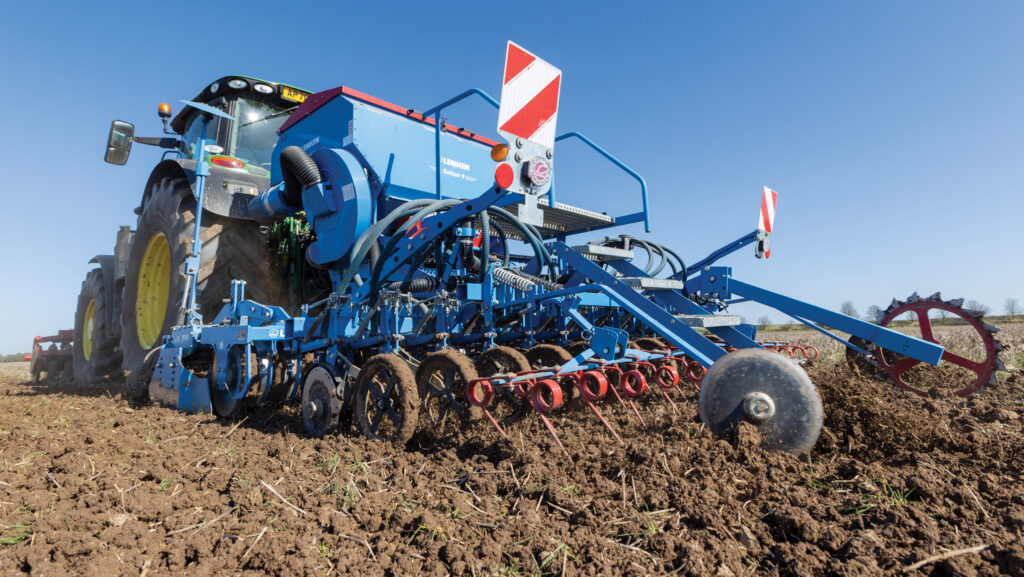 © GNP
© GNP A return to colder temperatures and unsettled weather are adding to challenges of managing forward cereals crops and staying on top of the disease pressure.
Our Crop Watch agronomists report from their regions.
See also: Arable farm management software: The options and prices
South
Neil Harper, Agrii (Kent)
Considering where we found ourselves four weeks ago, after almost two months of continuous rain, we are delighted with how much we have been able to do since then.
We have 60-70% of spring cereals and beans drilled in good conditions. Additionally, 120-150kg/ha of nitrogen is sitting underneath winter wheat after the settled weather in the middle of March allowed farmers to motor with fertiliser spreaders.
Nitrogen applications have been carefully considered to ensure stocks are used wisely.
The one negative is that crops don’t really know whether they are coming or going. We have had some drastic temperature fluctuations, causing them to grow and then shut down.
Add in some herbicides, plant growth regulators and tebuconazole, and crops are showing lots of colouring at leaf tips; sure signs of acropetal stress.
We have been applying manganese and zinc to help alleviate this.
Leaf tissue tests have also shown up quite a few crops requiring magnesium and boron.
It’s early to apply boron, but we have been driven by the test results when deciding which nutrients to apply.
Leaf three is just showing itself in winter wheat, meaning discussions about T1s are happening.
Septoria is easily visible on the lower leaves, and its severity depends on the date of drilling. Yellow and brown rust are in the obvious candidates.
Rust returning
I have heard that where people put early T0s on, there are signs of rust returning as the fungicide loses steam.
These crops will need careful management to not compromise the T1 timing.
The disease levels we have are making us a little nervous about what will happen if there is some wet weather. If we get into a curative situation, we can spend a lot of money very quickly, which farmers can’t afford – especially since diesel and fertiliser have gone up so much.
It is for these reasons that we feel T1 will be especially important this year to build a strong foundation.
Much of our product choice will be based on mefentrifluconazole, plus pyraclastrobin for added rust control.
We will then add fluxapyroxad or benzovindiflupyr, depending on whether septoria or rust is a bigger concern. Isoflucypram could also come into play for its greater persistence.
Grassweed control continues to look good. Wild oats have been more of a challenge than usual, and they’re starting to get quite large.
We will be looking to get on with a contact graminicide to control these before they begin to rob yield.
OSR crops still look fantastic. The last nitrogen is going on, and flowers are appearing.
We were seeing pollen beetles at green bud, but not at threshold, and these have now, thankfully, become a pollinator rather than a pest, without needing to apply an insecticide.
Our crops have lots of potential, and the weather has allowed us to get off to a good start this spring. Whatever else is happening in the world, that’s good news.
North
Conor Campbell, Hutchinsons (Northumberland)
March was certainly a month of two halves. We started with good progress, once ground conditions dried.
With good crop potential and a slightly later start to fertiliser applications, most farmers applied a fairly hefty dose on the first split.
Now, I admit I certainly didn’t discourage this, but I believe my words were: “That’s absolutely fine, as long as we can get on to manage that growth and disease pressure.” Cue non-stop wind and the occasional dose of heavy rain.
A combination of early drilling, nitrogen and the arrival of longer days has meant that crops are generally very forward for this time of year.
Barley crops are fast approaching growth stage 31 and we will soon be looking at T1 applications.
Thankfully, many received an early dose of trinexapac to manage the early growth, protect tillers and improve rooting.
Wheats are around growth stage 30, but some varieties are pushing leaf three on the main stem – mainly due to luxury uptake of nitrogen and not being able to manage that growth.
The temptation will be to pull the T1 timing forward, but remember that T2 is generally the third week in May regardless, so going early with a T1 will result in a long gap to T2.
My advice is to stick with your T0, perhaps adjust this accordingly and increase PGR rates/product choice to match the crop, but accept the shorter gap.
Compromising the lower leaves will have far less negative impact on yield than the upper leaves.
Septoria is plentiful in the base and, therefore, on the newer leaves, so timings and gaps between them will be critical.
Oilseed rape
Oilseed rape crops are now at green/yellow bud.
Light leaf spot can be found irrespective of the variety, and the difference an autumn fungicide application can make is clear to see.
This is an important disease, which we often forget about once the crop starts to flower, as the focus turns to sclerotinia. We are always in a preventative situation with light leaf spot, so achieving good levels of suppression is important.
Spring drilling has started and crops should be off to a good start with plenty of moisture.
West
Jamie Armstrong, AICC/Wessex Agronomy (Wilts, Gloucs, Hants)
April has started with a noticeable shift in pace, with crops responding quickly to improving temperatures and more settled conditions.
A warm spell in March helped kick things into action.
Temperatures have since remained fairly typical for the time of year, although it turned slightly cooler towards the end of the month.
Yellow rust is there if you look hard enough, across a range of wheat varieties.
Dawsum, Extase, Arnie, Scope, Mayflower and Graham are all showing varying levels of infection. In contrast, varieties such as Skyfall are, so far, remaining very clean, despite often being the usual culprit for yellow rust in our area.
Septoria is also present in most crops, although levels vary significantly depending on drilling date, variety and local conditions.
Earlier drilled wheats generally carry more disease lower down the canopy, particularly where crops sat wet for prolonged periods through January and February.
Later drilled wheats are cleaner but, with inoculum widespread, they will not stay that way for long if conditions turn favourable.
Most T0s have now been applied, with timing largely dictated by opportunity rather than ideal conditions, particularly due to wind.
Attention is now turning to T1 applications, with some of the more forward crops planned from around 5 April onwards where growth stage and conditions allow.
Winter barley
Winter barley is following a similar pattern. T1 fungicides are now being applied to earlier, more forward varieties, with the remainder planned for this week or early next.
Small amounts of brown rust can be found on older leaves across most varieties, with hybrids slightly more affected.
Net blotch is also present where winter barley follows spring barley. Overall, crops have tillered well and are now starting rapid growth.
Winter beans seem to be falling into two categories. Later-drilled crops (post mid-November) remain relatively free of disease, while earlier October-drilled fields have seen more significant levels of chocolate spot and ascochyta, in some cases requiring an early fungicide to maintain a clean crop.
Spring drilling is progressing well where conditions allow. Spring barley is largely complete on the chalk farms, while those on heavier ground are only just getting started.
East
Dan Ives, Agrovista (Herts, Beds, Cambs and Essex)

© Tim Scrivener
After a very productive March, attention now turns to what feels like true spring conditions – at last.
Cooler temperatures during much of March eased crop growth a little, but not to any disadvantage.
Many winter cereal varieties were forward, and well-timed T0 applications with growth regulators have evened up crops.
Weather has been conducive to the development of yellow rust in cereals.
Yellow rust was fairly easy to spot in some wheat varieties early on, but as T0 was rapidly approaching I held off treating them.
Tebuconazole applications at T0 have held the disease, although close attention will be needed at T1 on those varieties showing weakness towards it.
Most winter wheat has received a second nitrogen application. Rates depended on how much was applied at the first dressing and subsequent tailoring to crop need; those that put on excessive growth in early March took up a large proportion of that initial application quickly.
Nitrogen applications on winter barley are almost finished.
T1 fungicides plus plant growth regulators have been made.
All varieties, particularly hybrids, will need to be checked to see if they need a later PGR application, mainly to prevent brackling.
OSR mid-flowering sprays to control sclerotinia are being applied with trace elements.
We need to remember that the disease can quickly develop when petals fall and stick to leaves or stems during mild, damp conditions. Most crops appear to have good potential and are well worth protecting.
Spring crops have been drilled into lovely seed-beds thanks to favourable weather.
All of my sugar beet is sown and has had a pre-emergence herbicide.
Where grassweeds are a historic problem I add ethofumesate to bolster the residual activity; when primarily targeting broad-leaved weeds I recommend straight metamitron as a holding residual.
Early drilled beet crops have now emerged and are receiving their first post-emergence application.

Staying sharp shouldn't be a chore