Crop Watch: Spring drilling progress as wheat T0 timing looms
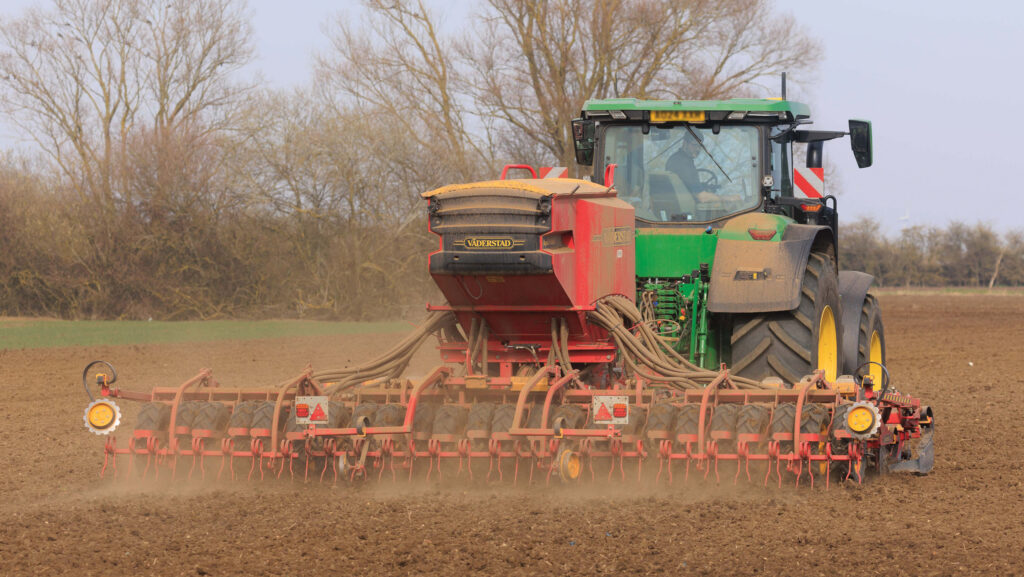 © Tim Scrivener
 Farmers Weekly‘s Crop Watch agronomists keep us up to date with spring fieldwork, after a spell of sunshine which has seen fertiliser applications and spring drilling progress well.
See also: Advice on key focus areas to ease pressure on arable margins
North
Greg Dawson, Scottish Agronomy (East Scotland)
Scottish crops were generally sown in good conditions last autumn and with mild weather continuing through until the turn of the year, many winter cereal crops have come into the spring well tillered and showing good yield potential.
The favourable conditions for autumn cultivations left soils in good condition despite significant accumulation of precipitation.
This bodes well for developing root systems to drive access to water and nutrition.
The relatively open winter has also encouraged disease and allowed established weeds to continue growing.
Cold weather and snow in some regions at the start of the year slowed these issues but hasn’t provided a cure.
There has been a requirement to consider including fungicides, growth regulators and herbicides at the T0 this season.
As we move towards the T0 timing in winter wheat, yellow rust remains at the forefront of our minds following far higher pressure in 2025 than normal.
This was caused by the well-publicised shifts in resistance ratings and weather patterns that favoured the disease even in areas of the country not normally considered at risk.
With yellow rust observed in certain varieties and locations as early as November we appear to be facing a repeat in 2026.
We will watch disease progression in untreated variety plots with an even keener interest than normal.
It is also with a sense of déjà vu that we have revisited break-even ratios for nitrogen fertiliser applications to cereal crops.
Unlike the spike in fertiliser prices experienced in 2022 it is not, to date, being matched by a similar upturn in cereal prices.
Most growers have already secured product for harvest 2026 but sense checking nitrogen plans against current price ratios and recent trials results is important.
It is also useful to think ahead to future seasons. As always, taking steps to maximise soil nitrogen supply by managing the soils and utilising organic manures is the best approach to reducing reliance on purchased N in the long term.
South
Oli Pilbeam, CCC and CLM (Kent and Sussex)
Crops are looking strong. Most crops established well, achieving great root structures. I’m a big believer in early nitrogen to get biomass in crops, early doors.
Wheat had 60kg N/ha with sulphur at the end of February, with 100kg N/ha applied after mid-March.
Oilseed rape will receive its final spring N before it grows too tall for the spreaders, taking total spring nitrogen to 150-200kg N/ha.
With green area indices (GAIs) ranging from 2.5 to 3, we are certainly reducing the fertiliser it receives.
T0 fungicide programmes have started – tebuconazole, plus or minus azoxystrobin – as yellow rust and brown rust rear their ugly heads.
I’m also trying sulphur and Vacciplant – biological control methods in a bid to reduce prothioconazole usage. With the mix I’m adding florasulam and thibenuron-methyl to get on top of groundsel.
Timely applications of Modus or a generic equivalent will have a big role in preventing these lush crops from lodging.
We grow quite a lot of blends – typically Zyatt, Skyfall and Crusoe – which is preventing rusts taking hold and saving on fungicides.
A Broadway Star or generic equivalent is being applied to tackle brome and wild oats, while also offering decent broadleaf weed control.
Oilseed rape has had a prothioconazole and tebuconazole-based fungicide to prevent light leaf spot and holding back the remains of phoma in the first half of March.
We used Caryx to regulate the oilseed rape on “growy” soils.
Spring barley has been planted on chalkier Downs ground. The remaining barley, spring oats, spring beans and peas will hopefully only be 10 or so days behind on heavier Weald and Romney Marsh soils.
Fertiliser and fuel prices have shot up, but wheat prices have not reacted to the Iran war in such a big way.
This volatile world is leading to more conversations about contract farming agreements, as people look to exit or renegotiate.
I act for both contractors and landowners, which may seem unusual, but the future of such agreements will be formed of strong partnerships.
We are budgeting for low, if any, margin in the short term – hopeful that things will get better and aware we need to share the bad times, as well as the good.
This calls for a longer-term, collaborative, transparent approach.
Despite the doom and gloom, I can’t help but think that with change comes opportunity…
East
Ryan Baker, Frontier (Suffolk/Norfolk)
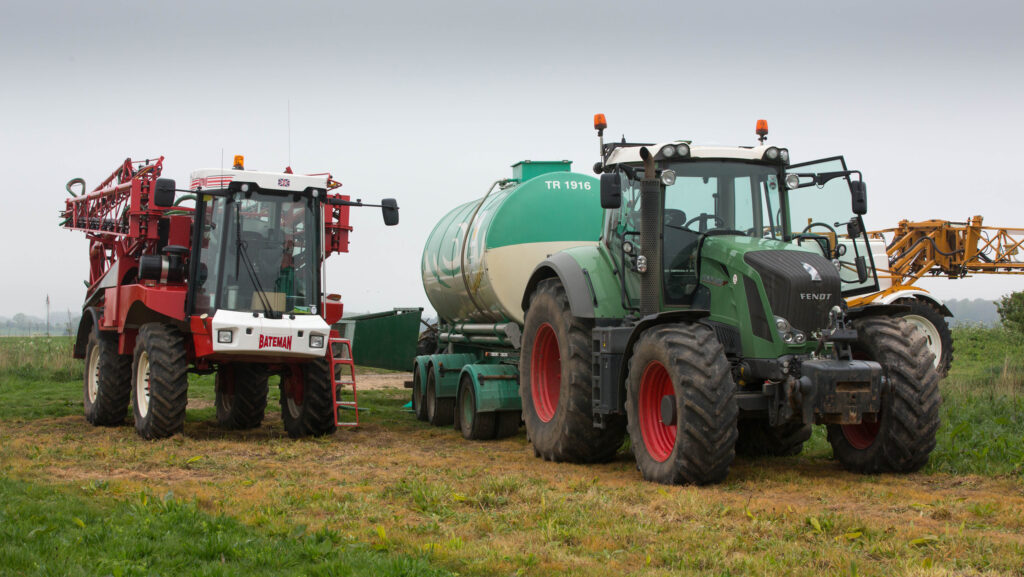
© Tim Scrivener
This time last year, spring cereal drilling was nearly complete, whereas this year we have only just started. It serves as a reminder to base decisions on conditions and not on calendar date.
Now soil temperatures are rising, sugar beet drilling has commenced. Drilling in good conditions is paramount to get the crop to 12 leaves as rapidly as possible.
The BBRO and Rothamsted virus forecast has predicted first aphid flight to occur on the 22 April. The forecast suggested a higher risk than 2025.
Many winter wheat crops are lush and leggy and showing high levels of disease already. Many crops have been halfway up your welly since early March but are now only just at true GS30.
Starting the plant growth regulator (PGR) programme strongly at T0 will be crucial to reduce lodging risk.
Many varieties are exhibiting yellow rust this spring. Brown rust pustules have also been seen far earlier than normal.
T0s will be based around tebuconazole and prothioconazole, saving the two strobilurin applications for later in the programme.
First nitrogen has been applied to most winter crops. With liquid fertiliser especially, intervals will have to be carefully monitored this spring as the weather has compressed application timings.
Blackgrass control in winter cereals has been good where pre- and post-emergence herbicides were applied in a timely manner in the autumn.
There are only a handful of fields that were drilled and sprayed in the dry where control has been unsatisfactory.
Stem extension applications to winter oilseed rape are broadly complete.
Pigeons have left the crop alone this year and growy conditions mean the use of metconazole and mepiquat-chloride have increased this spring.
A slightly later application towards green bud, rather than the traditional welly boot height, can increase the effect of growth regulators.
Chocolate spot has not been seen at this severity in winter beans for several years. In places, wind and sharp frosts over the winter have stressed the crop.
This, combined with earlier drilled, lusher crops, has allowed the disease to take hold. Remember, all fungicides in beans with activity on chocolate spot are protective, not curative.
West
Will Spurdens, Ceres Rural (Shropshire and Cheshire)
What a glorious week it has been. Spring has certainly sprung with wall-to-wall sunshine all week.
Grassweed follow-up sprays have nearly been completed.
The early sprays of these SUs are showing signs of uptake in the weed, and as temperatures warm we should hopefully see these kick into action.
Oilseed rape crops have received a light leaf spot fungicide and foliar nutrition with the addition of a plant growth regulator if required.
We will keep an eye on pollen beetle numbers, but all being well we won’t have to go back into the crop before early-mid flowering for a sclerotinia protective spray.
Winter wheat T0 fungicide applications have commenced on the more forward crops and will be very important this year as yellow rust can be seen in many varieties across the country.
Noticeably, a large amount of varieties carrying the YR15 gene have the disease already but it’s still pertinent to walk all other varieties.
Growth regulation, foliar nutrition and early broadleaf weed herbicides are being recommended in this pass.
Winter barleys are looking well and are approaching their T1 fungicide timing where we will be applying growth regulation and any other weed tidy ups.
Winter oats have a lot of mildew kicking around and it is worth cleaning these up with a broadleaf herbicide if needed.
Spring barley drilling has started and has gone into excellent seed-beds with plenty of moisture. Early potatoes have been planted this week in excellent conditions.
Spring beans are yet to be planted in some situations and fodder beet drilling is getting ever closer.
With the cost of fertiliser and fuel prices we must advise and recommend appropriately for the agronomic situation, but also have the mindset of the potential margins of these crops this spring and consult with our clients how much they are willing to spend.
It’s going to be a busy but exciting few weeks.

Staying sharp shouldn't be a chore