Crop Watch: Stressed cereal crops and potato planting
 © GNP
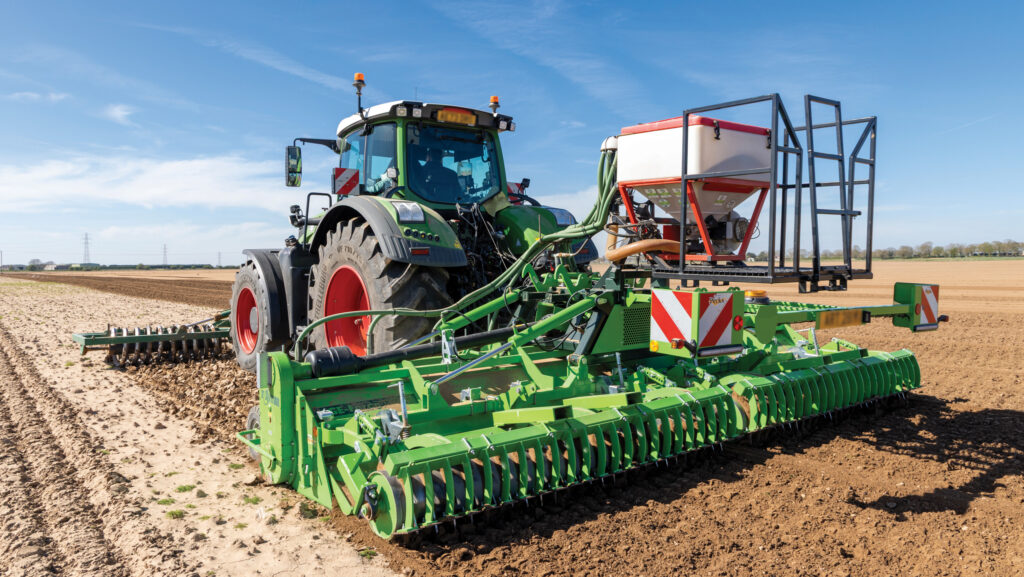
© GNP Large variations in temperature, with warm days and cold nights, has slowed crop growth and care is needed not to check crops with fertiliser and fungicide applications.
In the East, potato planting is now under way, with conditions more favourable than last year as soils have had time to dry out.
See also: Read more from our Crop Watch agronomists
East
Harriet Bateman
Prime Agriculture/AICC (Norfolk, Cambs & Lincs)
After a spell of settled weather, crops across the region are generally looking well, although development is a little more measured compared with last season.
Sunshine has helped crop colour and condition, but some rainfall would now be beneficial across all crops.
Winter cereals have responded well to recent conditions, with most crops moving steadily towards the key T1 timing towards the end of the month.
As always, correctly identifying leaf three is essential – don’t rely on guesswork; dissect plants and check the main tiller.
Growth stages remain variable between fields. Product choice will depend on disease pressure, variety, yield potential and cost considerations.
Septoria and rust risk remain present, with variation between varieties and crop density, so programmes will need to be tailored accordingly, particularly in response to upcoming weather if it remains dry.
Plant growth regulator requirements appear more moderate so far, although more forward crops may still warrant a follow-up depending on lodging risk.
Second nitrogen applications are ongoing and, now we are in April, using a urease inhibitor with urea or urea ammonium nitrate is mandatory to minimise losses.
Spring drilling
Spring cereal drilling has gone well where conditions allowed, with many crops now emerged and establishing evenly.
However, surface moisture has been limited in places, which may reduce pre-emergence herbicide efficacy.
Later-drilled crops would benefit from rainfall to aid establishment and herbicide activation.
Pest pressure should be monitored, especially gout fly, although levels currently appear low.
Sugar beet crops are emerging but remain variable depending on soil type and drilling date. Keep an eye out for slug activity if rainfall returns.
Herbicide programmes will begin as crops reach the expanded cotyledon stage.
Dry conditions may impact performance so to get the best out of herbicides if it stays dry, spray very early in the morning when weeds are more receptive to chemical uptake.
Potato planting is now under way, with conditions more favourable than last year as soils have had time to dry out.
Allowing a flush of weeds before crop emergence will help maximise the efficacy of pre-emergence herbicides.
One bonus of the dry spell is that we have seen a reprieve for the chocolate spot challenged winter beans, which now have a band of clean, new growth.
As we move towards flowering, be vigilant when treating crops as the inoculum is still on the lower leaves ready to infect when the weather changes.
North
Stephen Bell
Fane Valley (Northern Ireland)
With four seasons in one day still a common occurrence, weather continues to test patience and planning.
As soils begin to dry, growers are under pressure to make the most of short spray windows.
Dry days have often been windy, and clear skies have brought overnight frosts, so keep tank mixes simple and avoid adding extra stress to crops already under pressure.
Tidying up grassweeds and chickweed in crops that missed an autumn residual has been the recent focus where field conditions allow.
Most wheats are approaching T0, with leaf four now unrolling or fully emerged, depending on variety and drilling date.
While some crops are leggy with noticeable differences in height between varieties, they remain within the T0 timing.
Don’t be tempted to apply the T1 too early, wait until final leaf three has fully emerged as an earlier application will stretch the interval from T1 to T2 and leave crops unprotected from yellow rust and septoria.
Wet weather has largely kept yellow rust in check, though septoria remains active in the base of most varieties.
Although sprayers have only just come out of many fields, a T0 fungicide will be required in the next five to 10 days – typically a strobilurin with/without tebuconazole to manage rust, supported by a multisite to protect leaf four from septoria.
Experience from last year underlines the importance of early rust protection to prevent flare‑ups and firefighting later when drier more settled conditions prevail.
Winter barley
Crops have tillered well, with most now at growth stage 31-32 with T1 fungicides planned or already applied – generally an SDHI plus azole with/without strobilurin plus multisite mix alongside growth regulation.
Some rhynchosporium is visible, but, overall, barley is clean and responding well to nitrogen and foliar nutrition.
Many oat crops are around growth stage 30 and moving quickly, some already quite tall.
Growth regulation will be required soon, though take care where crops show purpling or stress.
Disease levels are low, with oat septoria leaf blotch the main issue so far.
OSR continues to look strong. Final nitrogen is on, and crops are now flowering. Mid‑flowering sprays, based on azole/SDHI chemistry, will be applied to protect against sclerotinia.
Drilling has finally got under way on drier, lighter ground where conditions allow, but there remains a lot of work to do – here’s hoping for a spell of more for settled weather to push on.
West
Ben Allard
Pearce Seeds (Dorset, Wilts and Somerset)
Crops have been progressing rapidly through their growth stages and moving along well. However, over the past two weeks, growth has noticeably slowed.
This has largely been dictated by cold mornings and significant day/night temperature fluctuations.
These fluctuations have delayed applications of T0 fungicides and liquid fertilisers due to the stress imposed on crops.
Yellow rust pressure has been a key factor influencing T0 decisions.
All T0 applications have now been completed, however some have been delayed due to the weather, but they still remain essential to apply to winter wheat, to manage high levels of yellow rust.
In assessing T0 performance, the inclusion of tebuconazole has proven effective in reducing active yellow rust within crops.
However, there is still significant potential for the disease to re-establish itself later in the season, so I will be monitoring crops closely going forward.
Recent weeks have brought fertiliser use and application rates back into sharp focus, particularly in light of rising fertiliser prices.
In some cases, planned applications are being reassessed to ensure economic efficiency.
Winter barley crops have, in most cases, received their full nitrogen requirement. Winter wheat has typically received 120-160kg N/ha to date.
Considering current ground conditions, upcoming weather forecasts, and lessons learned from last season, I am bringing forward my planned final nitrogen application.
This is to take advantage of forecast rainfall, drive biomass production, and mitigate the risk of drier conditions later in the season.
Foliar nitrogen
With fertiliser prices remaining high and the potential for dry weather later into April/early May, it is essential applied nutrients are used as efficiently as possible.
This season presents an opportunity to use foliar nitrogen to maximise nutrient efficiency.
Combining foliar nitrogen with T2 applications later in May will also reduce the need for additional passes across the crop, thus saving on fuel.
T1 applications are about 10-14 days away, depending on crop growth stage.
Septoria remains a key threat, alongside yellow rust.
Diadem XE, in combination with strobilurins, will form a core part of my fungicide programme with the current disease pressure.
Maize preparations are under way, with slurry and farmyard manure being applied and cultivations taking place.
However, growers should not be misled by occasional warm days into drilling too early.
Soil temperatures need to be consistently warm (8C and rising) and the current cold mornings still present a significant risk to early establishment.
South
Anna Dunford
Hampshire Arable Systems/AICC (Hampshire, Surrey and Isle of Wight)
Hitting the perfect wheat T1 timing spray is proving difficult this season, when every tiller dissected shows a different leaf emerging to the previous one.
Yellow rust pressure remains high in both Yr15 varieties and the usual suspects.
Robust T0 sprays have been applied over the past fortnight, with cold nights helping to check further rust development.
Lower leaves are laden with septoria, and while recent dry days have eased pressure slightly, a short spell of rain could quickly reverse this.
This leads onto the importance of keeping spray gaps between T1 and T2 short, ideally under three weeks.
Forward crops already have leaf three 50% emerged, with some showing the tip of leaf two, meaning T1 applications are imminent.
In these cases, a follow-up T1.5 spray is likely to be needed around two weeks later to bridge the gap before a properly timed T2.
Winter barley crops are also more forward than usual. T1 sprays have been applied targeting brown rust and net blotch.
Prothioconazole and an SDHI form the base of most programmes, with the addition of pyraclostrobin for net blotch.
Oilseed rape
OSR crops are now in flower, and overall pod set has been good.
Some later-drilled crops have been slow to move from green bud to early flower, which may result in more aborted pods on the main raceme due to pollen beetle.
Crops will receive a mid-flowering spray to protect against sclerotinia.
Early-flowering crops should be monitored closely, as extended flowering periods (four to eight weeks) may require a late fungicide.
Winter beans are starting to flower, with chocolate spot largely kept at bay by the dry spell, though some crops have received an early tebuconazole spray.
Early-flowering sprays will soon be applied, with phosphite added for downy mildew where needed.
Spring drilling is nearly complete, with maize sowing soon to begin.
Emerging spring beans, peas and linseed need to be monitored closely – if growth is hampered by weevils, thrips and/or flea beetle, crops should be treated accordingly.
While warm days aid emergence, rainfall is needed to help growth and improve pre-emergence herbicide performance, which is currently limited by dry conditions.

Staying sharp shouldn't be a chore