

Advertiser content
Early harvest maize boosts Gloucestershire farmer’s success in goat business
Extreme wet weather can significantly impact any farming business, with increased disease risk, crop loss, and machinery problems, making harvest time crucial to a successful yield.
Charlie Whitehouse, a mixed farmer from Gloucestershire, discusses how an early maize harvest has helped support the family’s gelato diversification.
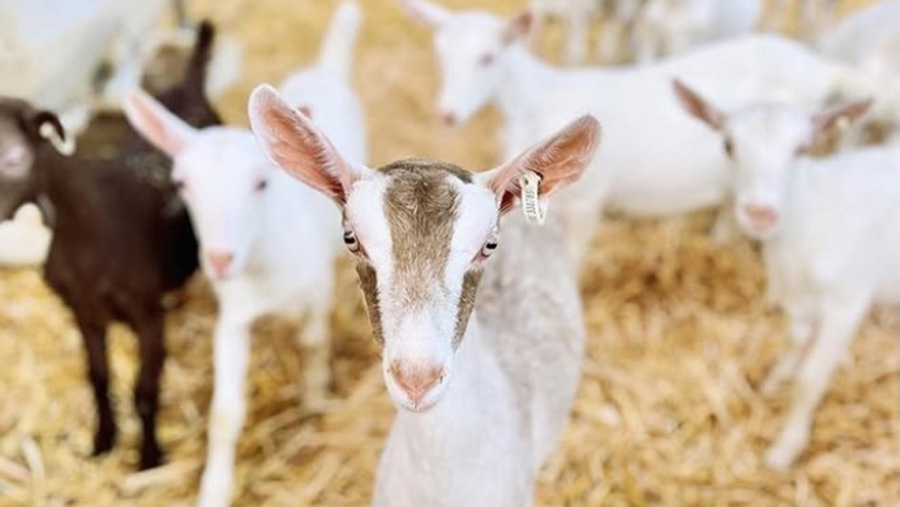
Farming around 2,000 acres at Bradley Farm, Charlie Whitehouse from PG and CP Whitehouse grows,1,600 acres of arable, 700 ewes, 100 suckler cows, and a herd of 800 milking goats.
© RAGT Seeds UK
A couple of years ago, the business diversified into goat’s milk gelato, ‘Oh My Goat’, a smaller side to the farming operation, yet filled with big flavours.

© RAGT Seeds UK
Using around 4,000 litres of milk to make the gelato, the product promises a fresh approach to a traditional dessert, packed with nutritional benefits.
Find out more about ‘Oh My Goat’ via their website and Instagram.

© RAGT Seeds UK
The herd of goats feed on the farm’s maize, and Charlie emphasises the need to harvest when it’s dry, to avoid mud contaminating any silage, which poses a risk of Listeria to the livestock.
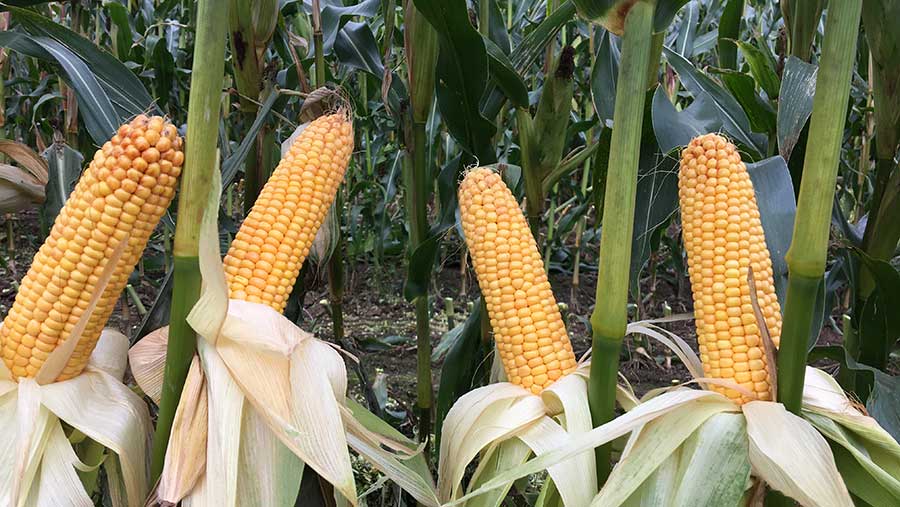
Loyal to his seed supplier, Green Farm Seeds, Charlie has been growing the maize variety, RGT Duxxbury, for several years, resulting in an earlier harvest, typically around the end of September.

© RAGT Seeds UK
“The goats like a drier maize as opposed to a wetter maize, so we want to be harvesting as early as we can to get a decent crop of wheat in after it,” Charlie says.
“We don’t want to be making a mess, and so if we want to try and get an early crop off and we want a dry product to feed to the goats, then actually, we have to go for an ultra-early, and we think it’s pretty good.”
He is usually among the first to plant in the area, and last year he saw a very early harvest in August.
© RAGT Seeds UK
“We plant it a little bit thinner than some people, to try and bring that on again. The thinner you plant it, the earlier it ripens.”
On average, the crop yields 16-17 tons per acre, and Charlie emphasises its good quality.

© RAGT Seeds UK
Richard Turner, forage and environmental portfolio manager at RAGT, echoes Charlie’s comments.
“RGT Duxxbury is an FAO150-maturity class, consistent in yield and quality and a good all-round variety,” he says.
“It’s a consistent early maturing maize, with some of the best lodging resistant scores, ensuring a reliable harvest. Its excellent early vigour lends itself to drilling after spring silage or, on less favourable sites. One of the earliest-maturing varieties available in the UK, it brings the reliability you expect from RAGT.”
Provided by
RAGT breeds, produces, and sells seeds globally. The company has one of the largest species portfolios in the seeds industry: maize, sorghum, cereals, oilseeds, protein crops, forages, cover crops and amenity.