

Early wheat harvest delivers mixed returns
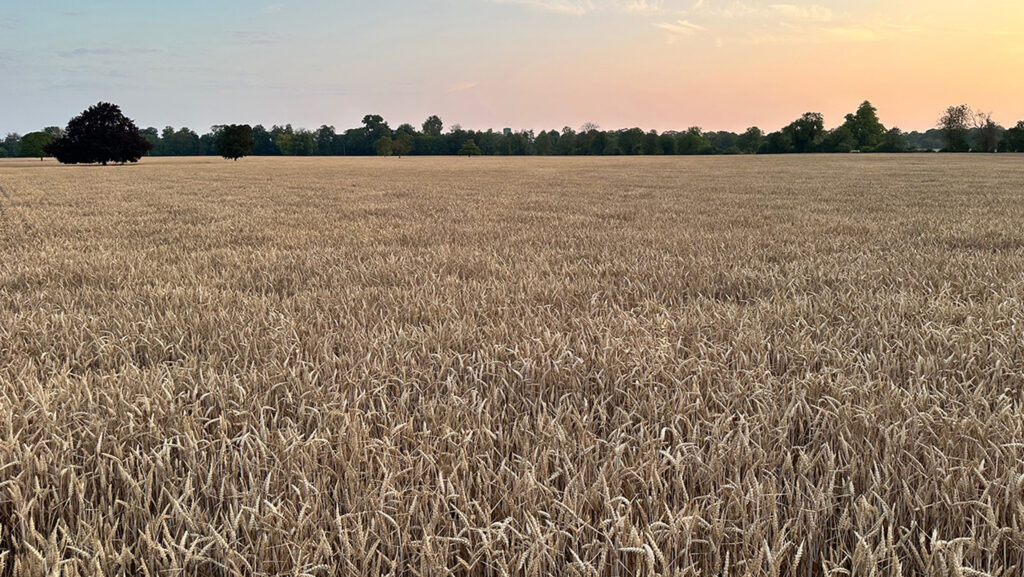 Champion wheat has struggled in the dry spell at Thirplow Farms, Cambridgeshire © David Walston
 The first combines rolling into winter wheat have delivered a mixed picture, with some growers reporting yields more than a third below normal after the prolonged dry spell.
Although only a handful of crops have been cut, early reports suggest a lack of rain during key growth stages has left many farms facing lower-than-expected yields, even where grain quality has remained respectable.
David Walston, a third-generation arable farmer at 900ha Thriplow Farms near Cambridge, said this season was shaping up to be one to forget.
See also: Share your harvest photos and videos
“I think ‘abysmal’ would probably be the best adjective to describe harvest so far,” he told Farmers Weekly.
Having already completed around a quarter of harvest and 35% of his wheat area, Mr Walston said average wheat yields currently stand at just 4.87t/ha on the farm’s lighter land.
“Normally, in a dry year, I’d expect that to be doing in the sixes,” he said. “The long-term average is probably somewhere in the mid-sevens, so we’re down 35-40%.”
GOT A HARVEST STORY?
Email your harvest stories, including photos and videos, to philip.case@markallengroup.com
The disappointing yields follow an exceptionally dry spring. Between 12 March and 26 May, the farm received just 17mm of rain.
“We then had frost in the middle of May and the heatwave at the end of May,” he said. “Most of our fertiliser went on at the end of March and it just never got rained in at all.”
Despite the disappointing yields, grain quality has remained encouraging, with specific weights averaging about 81kg/hl.
“We actually stopped combining yesterday afternoon because moisture was getting below 12%,” he said. “When we started again at five o’clock this morning it was only 13.9%.”
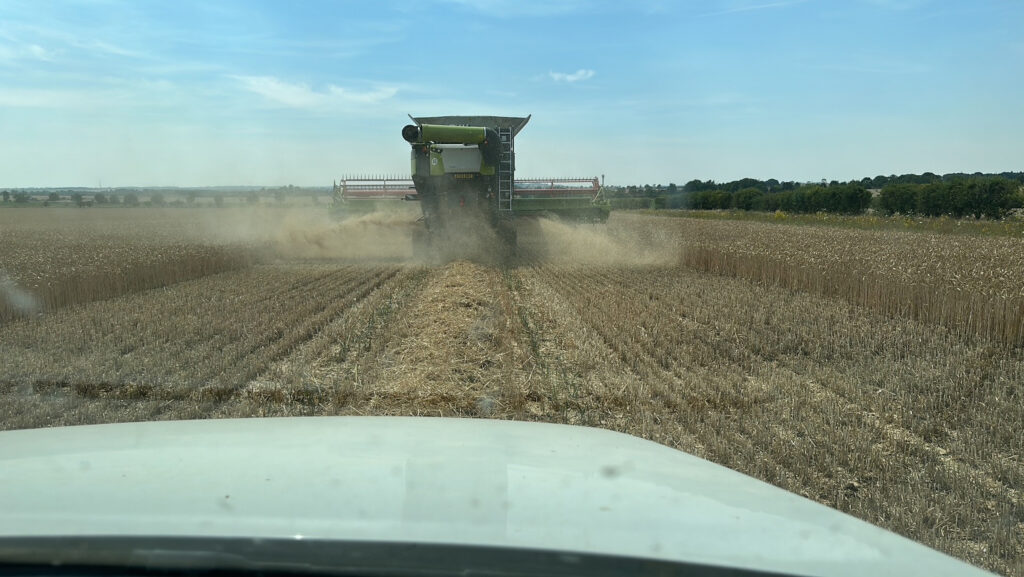
The swaths of wheat straw are only about 3in high, reflecting the poor crop at Thriplow Farms near Cambridge © David Walston
Mr Walston said he was baling straw for the first time in years to boost farm income, but the drought had left straw yields looking poor too.
Earlier harvests
Mr Walston also notes that harvest is arriving significantly earlier than it did a decade ago.
“I started farming 15 years ago and wheat harvest used to start at the end of July,” he said. “Last year we started on 11 July, this year it was 7 July and it’s possible we’ll be finished within 10 days.
“It feels like harvest has come forward by about three weeks in the space of a decade.”
He warned that increasingly early harvests could ultimately hit UK wheat yields.
Variety performance has also differed markedly. Mr Walston has already cut Scope wheat and is moving into Champion, although he has low expectations after the crop struggled throughout the season.
“It has looked terrible all year,” he said. “Something – probably BYDV – has nailed the Champion, so I’m dreading the results. We’re definitely not growing that again.”
Mr Walston also believes growers should be open about disappointing harvests.
“When all you hear about are 11t/ha wheat crops, it can be terrible for farmers’ mental health,” he said. “I’ve had plenty of people saying, ‘Thank you for posting honest results.’”
Hexton performance
Elsewhere in Cambridgeshire, James Peck of PX Farms began harvesting RAGT’s Group 4 soft feed wheat Hexton on 7 July.
Wheat is a go on Hexton RAGT pic.twitter.com/KIPsj76n1x
— James S. Peck (@Pxfarms) July 7, 2026
Andrew Creasy, cereals product manager at RAGT Seeds, said the variety was yielding about 8.5t/ha at Scotland Farm, Dry Drayton – below the 11-12t/ha originally hoped for.
“When we sowed it back in September we were talking about 11-12t/ha, but that crop had nine solid weeks of no rain right through its prime growing stage,” he said.
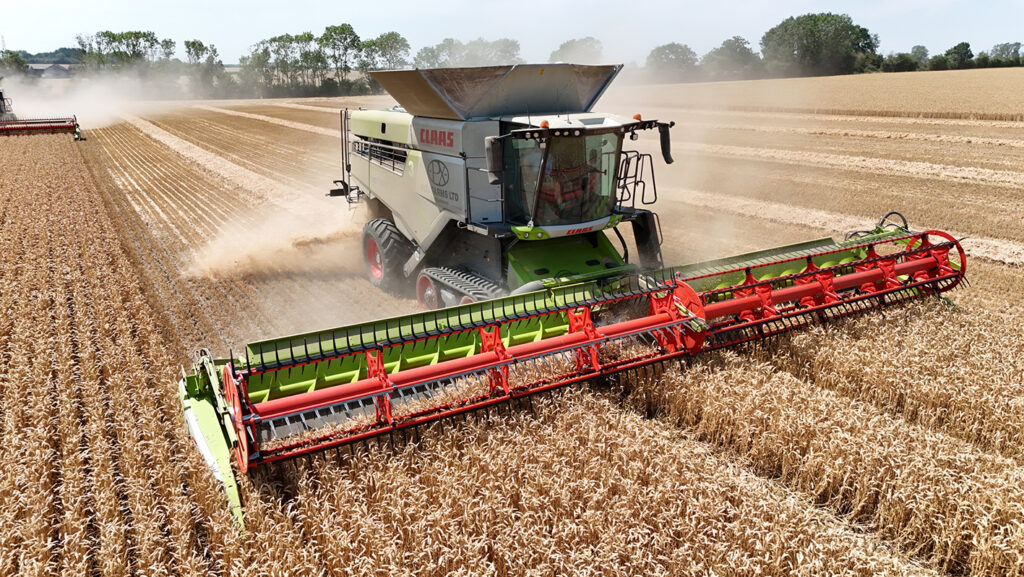
Hexton wheat being harvested at PX Farms’ Scotland Farm in Dry Drayton, Cambridgeshire © Tom Blatch
“From stem extension through to ear emergence there was just no rain whatsoever. We had a little respite at the beginning of June, but then it’s been hot again since then. Unfortunately, that is what these crops have had to deal with this year.”
Despite the lower yield, Mr Creasy said the crop had produced good grain quality, with moisture at 12.2%, a specific weight of 78kg/hl and strong standing power. He added that Hexton’s yellow rust resistance had “stayed strong” throughout the season.
Early Suffolk report
Further north-east, Suffolk farmer Rich Maddever, of PH Maddever Farms, said early wheat harvest results at Scotts Farm, Cavendish, highlighted just how variable crops have been between varieties.
“Bamford so far isn’t good,” he said. “However, we’ve moved into some Zealum, which is very good.”
Remember when we used to cut winter wheat in August!? pic.twitter.com/bQhIvfoufL
— Rich Maddever (@RichMadd86) July 3, 2026
