

Advertiser content
Effective weed control in wheat with residual herbicides
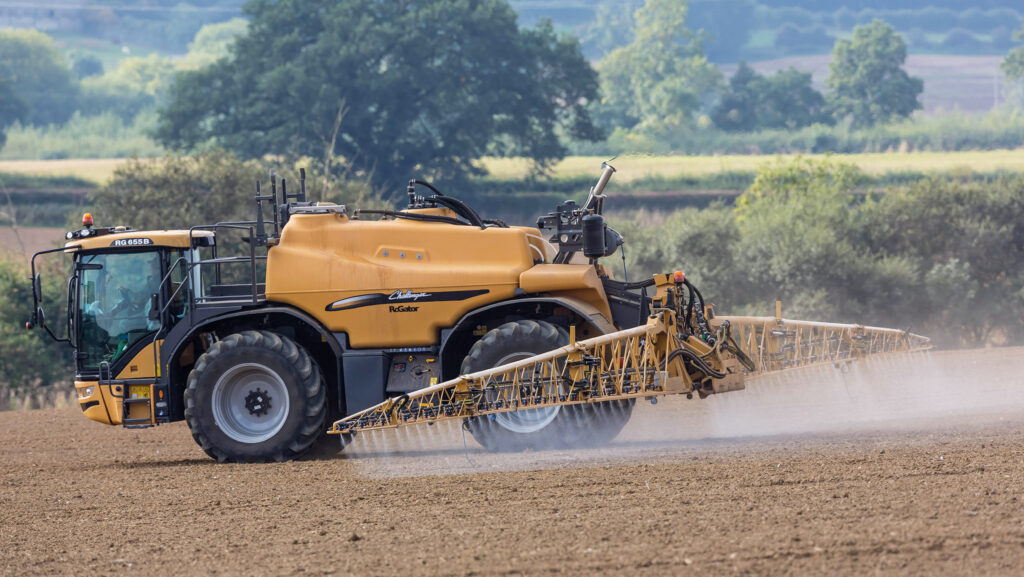 © Tim Scrivener
 Without proper control, grassweeds can cause significant yield and financial losses in wheat. It is key to understand the different physical and chemical properties of residual herbicides to build an effective programme.
Wheat herbicide programmes are built on a foundation of effective cultural controls. Stale seedbeds, delayed drilling and ploughing can all reduce germination of black grass, Italian ryegrass, brome and other weeds in the crop.
A healthy, well-established crop is priority number one. It is better able to compete with weeds and has good yield potential. Make sure weed control techniques support good establishment.
Residual herbicides
Residual herbicides remain in or on the soil and are effective against target weed species for a useful length of time.
This could range from a few days to several months allowing them to be applied before weed germination. These herbicides are usually taken in by the roots or the shoots, but have limited or no post-emergence activity
Actives like flufenacet and metribuzin are soil-mobile. They require moisture to reach the weed germination zone for uptake by the roots. Dry conditions and physical barriers in the seedbed can both limit efficacy.
It is important to drill crops to at least 32mm deep, beyond the usual zone of herbicide activity to avoid crop effects. Avoid pre-em applications when heavy rain is forecast and be particularly cautious on lighter soils.
Using a sequence rather than a stack is a sensible precaution if crop effects are a concern.
Other actives like Proclus (aclonifen) and diflufenican are relatively immobile and remain on the soil surface for uptake by the emerging shoots.
They tend to be more tolerant of drier weather, but any soil disturbance after application has a detrimental effect on performance.
Aim for a pre-emergence spray with a mix of root and shoot activity such as a metribuzin co-form like Alternator Met, Cadou Met or Octavian Met (all flufenacet + diflufenican + metribuzin) plus Proclus.
It can cope with a range of conditions and contains four different modes of action.
Diversity is key
A herbicide’s mode of action is the chemical basis for how it interferes with essential plant processes to kill it. Different actives can have the same mode of action.
The international Herbicide Resistance Action Committee (HRAC) groups herbicides according to the mode of action to help planning and resistance management.
For the residual herbicide programme in wheat there are actives from six HRAC groups (Group 3, 5, 12, 15, 30 and 32) to choose from. For efficacy and resistance management, aim to use a range of actives.
Trials continue to demonstrate the gains in control from including different modes of action in the programme.
Protection throughout autumn
Soil disturbance from drilling encourages weed germination, so the pre-emergence timing is very important. The ideal spray timing is within 48 hours of drilling so that herbicides are ready and waiting for weeds.
Any delay means weeds might have emerged before the herbicide is applied. Herbicide choice can help if a delay is unavoidable.
Metribuzin co-form products have a much smaller drop in control compared to Liberator (flufenacet + diflufenican).
Weeds can continue to emerge during autumn and into spring, so residual protection is needed to control further germination. This can come from the longevity of the actives or further application of residual herbicides.
Herbicides degrade in the soil due to chemical reactions (hydrolysis) and microbial decomposition. How long this takes depends on the active and the weather.
Soil-immobile actives like Proclus tend to take the longest to break down. For all actives, warm, moist conditions promote degradation, whereas dry and cool conditions allow greater persistence.
Blackgrass tends to have a concentrated germination period in early to mid-October. A second application one to two weeks after the pre-em ensures maximum herbicide levels throughout the main germination period.
Italian ryegrass has a more protracted germination. Protection for longer is more important, so a gap of two to four weeks between sprays is better.
Ensure the pre-emergence application includes actives with good longevity so there is some protection if the follow-up is delayed or not possible.
Resistance management
For residual actives, the development of reduced sensitivity and resistance has been much slower than for contact-acting chemistry.
However, increasing reliance on residual chemistry for grassweed control means resistance management is increasingly important.
Key steps include:
- Use cultural controls first
- Use actives from different HRAC mode of action groups in the programme
- Follow up residual chemistry with contact-acting chemistry where appropriate
- Use crop rotation to have a wider range of actives to choose from
- Monitor success and test if resistance is suspected.
Alternator® Met contains metribuzin, flufenacet and diflufenican. Cadou® Met contains flufenacet, diflufenican and metribuzin. Liberator® contains flufenacet + diflufenican. Octavian® Met contains metribuzin, flufenacet and diflufenican. Proclus® contains aclonifen.
Alternator®, Cadou®, Liberator®, Octavian® and Proclus® are Registered Trademarks of Bayer. All other brand names used are Trademarks of other manufacturers in which proprietary rights may exist.
Use plant protection products safely. Always read the label and product information before use. Pay attention to the risk indications and follow the safety precautions on the label.
For further information, including contact details, visit www.cropscience.bayer.co.uk or call 0808 1969522. © Bayer Crop Science Limited 2025.
This article is part of a Bayer learning module on the Farmers Weekly Learning Centre – complete the quiz to gain BASIS points.
BASIS is not responsible for the technical content of any articles or training modules and is not endorsing any products or services within these modules.
BASIS is working in partnership with Agronomist & Arable Farmer to help educate and inform agronomists and assist them in gaining points towards their annual CPD requirement. BASIS is a trademark of BASIS (Registration) Ltd. All rights reserved © BASIS (Registration) Ltd.
Provided by
At Bayer Crop Science, we are committed to transforming the future of UK crop production by becoming the preferred partner for agronomists, distributors, and growers. Our focus is on world-leading innovation, dedicated in-field expertise, and a tailored customer experience that consistently delivers value, trust, and results sustainably.