Growers to hold nerve on oilseed rape drilling until rain arrives
 © Tim Scrivener
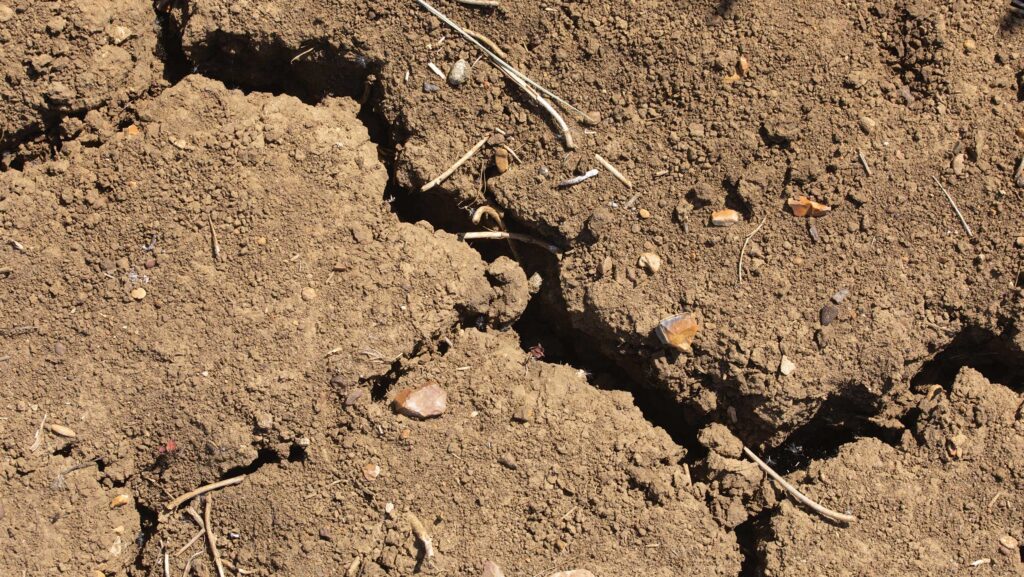
 As another week of hot dry weather passes, “rock hard” soil conditions are preventing many growers from drilling oilseed rape.
Those considering drilling are advised to hold their nerve and wait for rain, rather than be guided by calendar dates.
With such an early finish to harvest, some may be getting itchy feet and wanting to get seed into the ground, but with little rain in the forecast, it could prove fatal to crops.
See also: How careful growth built a 1,200ha mixed enterprise
Farmer perspective
Luke Robison, farm manager of the Benham Estate on the outskirts of Newbury, Berkshire, would usually direct-drill oilseed rape in the first week of August, but such dry soil conditions made this is an impossible task this year.
“Drilling early usually works well for us. We aim to get a strong forward crop, which is good for pigeon control going in to winter. However, this year conditions are so dry, we just can’t drill,” explains Luke.
The team finished harvest on 28 July – the earliest ever finish for the estate.
They attempted to drill a cover crop after a field of wheat in mid-July, but decided to hold off as conditions were too hard, and implements were at risk of being damaged.
“We knew it was dry, but it was surprising just how hard the ground really was.
“We’ve got to wait for rain before drilling to give crops the best chance of reaching their yield potential,” he says.
Until then, the team is taking the opportunity to enjoy the sunshine and well-earned rest after harvest, before the rain arrives and field work can continue.
Industry advice – wait for rain
“The hot, dry summer has left soils critically short of the moisture needed to establish crops successfully,” says Florentina Petrescu, oilseed rape product manager for Limagrain UK Field Seeds.
Sufficient moisture is essential to start the germination process, with more rain required following drilling, to ensure there is enough moisture for emergence.
“There needs to be a decent amount of rain to restore moisture levels to sustain rapid crop emergence,” she says.
“Initially, the seed rapidly takes up water through imbibition, initiating germination.
“Continued water uptake is necessary to support further metabolic activation until germination is complete,” she explains.
“How often have we seen seed that has started to germinate, only for it to wither away through lack of soil moisture before completing emergence?” says Florentina.
It is possible to get good yields from later-drilled oilseed rape, right up to mid-September when sown into the right conditions. In fact, later-sown crops can often outperform earlier drilled crops.
Florentina points out crops drilled mid-September in the Lincolnshire Wolds achieved yields of over 6t/ha, so there is definitely potential for later drilled crops.
“Hybrid varieties will also have better vigour contributing to faster emergence and greater early biomass accumulation which results in a rapid establishment,” she says.
Cultivating clay in Lincolnshire
On the heavy clay soils of the Lincolnshire Wolds, some farmers are attempting to cultivate the “concrete like” conditions to get ahead of work and prepare for when rain eventually arrives.
Snapped coulter legs and broken sheer bolts seem to be a frequent occurrence as farmers navigate the hard, dry conditions.
“It’s going to take a long time for rain to soak in and soften the ground.
“That’s why many are attempting to cultivate to break up the soil so any rain can infiltrate,” says Lincolnshire farmer Mark Stubbs.
“Cultivating early will allow weeds to chit to create a stale seed-bed.
“Weeds are likely to flourish as there will be less crop competition and they tend to be more tolerant in dry conditions,” he continues.
Mark is concerned about drilling oilseed rape early in dry conditions as this will slow establishment, making crops vulnerable to cabbage stem flea beetle attack.
“With limited soil moisture, any established plants will likely sit there as they cannot grow away. Flea beetle will just wipe out the crop as pressure seems to be high this year,” he says.
Mark would normally cultivate about two weeks after the combine around mid-August, so with the early finish to harvest, he is not technically behind schedule.
What is concerning is the lack of rain in the forecast and current ground conditions.
“I’m cultivating some fields to get ahead. We will just have to take it slow to avoid wearing out too much metal,” he says.
Herefordshire
Herefordshire farmer Ally Hunter Blair is waiting until the rain arrives before planting oilseed rape with his Mzuri strip-till drill.
“I would rather drill late into September when we, hopefully, have moisture in the ground, so crops can get up and grow.
“Otherwise, seedlings won’t be able to establish or any emerged plants will wither away or be attacked by flea beetle,” he says.
Devon farmer drills forage rape
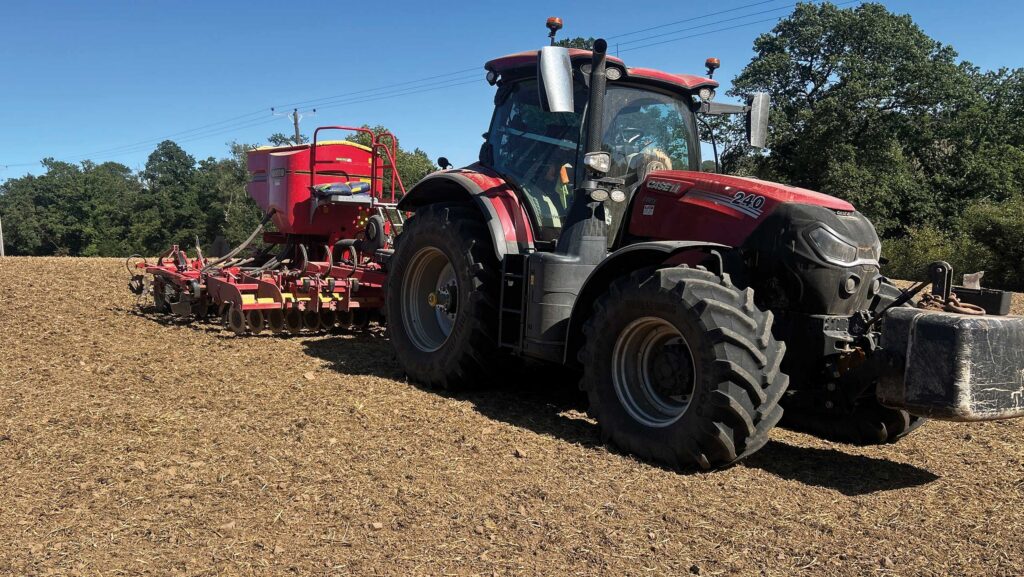
Drilling for forage rape © Tom Mills
Devon-based mixed farmer Tom Mills has cracked on with drilling forage rape for winter sheep grazing, despite this year’s dry conditions.
“At a seed cost of £13/acre, it’s worth us getting a crop in the ground so we can graze sheep over winter.”
Planting 20ha in the first week of July, the farm near Witheridge has received sporadic showers, so Tom is hopeful the crop will emerge.
“We used our own machinery and direct-drilled with the Vaderstad to keep costs down. If it doesn’t establish, we can drill a crop of ryegrass instead,” he says.
A light application of manure applied to the seed-bed helps to reduce cabbage stem flea beetle pressure by warding off the pest.
The farm normally grows 30ha of forage rape, but given the dry conditions, Tom has cut the area in favour of winter barley, set to be planted at the end of September.
A total of 25ha of grass seed is currently going into the ground.
“We’ve got an area of wet land, so we’re better off establishing crops now, before the rain arrives,” he says.