Poor harvest prompts rethink on winter drilling plans
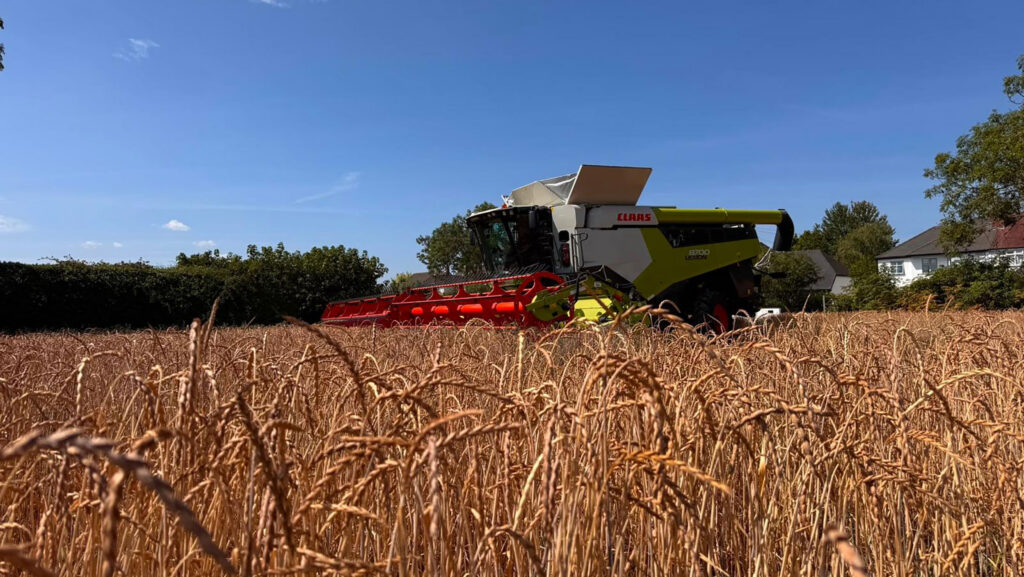 © Clive Bailye
 Disappointing yields, high input costs, low prices and increasingly unpredictable weather are prompting some arable farmers to question whether it is worth drilling winter crops this autumn.
Machinery experts are also warning that the impact of a dry growing season could continue into autumn, with hard, baked seedbeds increasing wear on cultivator points and putting components under greater strain.
Staffordshire farmer Clive Bailye, who farms near Lichfield, is among those reconsidering his plans after harvesting wheat that looked capable of producing some of his best yields, only to fall dramatically short.
See also: Harvest 2026: Harvest nears completion for some
“This is the first time I’ve ever harvested crops that look really good, but they’re just not,” he told Farmers Weekly. “Two months ago, I would have said we’ve got some of the best-looking wheat I’ve ever grown.”
Crops that appeared comfortable 10t/ha performers have instead yielded between 5-7t/ha, with Mr Bailye expecting his overall result to be 30-40% below what he had anticipated.
He reported that a heritage wheat variety, grown for the speciality health food market, performed “no worse, if not better” than the latest blended varieties, raising questions about whether the latest genetics are delivering enough resilience to extreme weather.
Pure gamble
The disappointing harvest has left Mr Bailye questioning the economics of putting another crop in the ground.
“With fuel prices where they are and fertiliser prices going forward, and commodity prices not really changing, you’re not making money out of that,” he said.
“If you’re planting this autumn, you’re really doing it on the basis that you’re gambling on prices rising between now and next harvest. That’s a pure gamble.”
Mr Bailye said prices would need to rise substantially to compensate for the scale of the yield losses. “If I’ve got a 40% drop in yield, I need a 40% rise in price,” he said.
But the impact is not simply financial. Mr Bailye says repeated poor harvests can make farmers question their own ability, even when the underlying cause is weather, which can be damaging for mental health.
“You start to question your self-worth. What have I done wrong? Why am I such a bad farmer?” he asked.
“Failure never feels good. It feels like failure even if it’s not your fault.”
Unlike many others, he is fortunate to have the final year of an uncapped SFI 23 agreement, which means he can consider putting a large proportion of his farm into non-food-producing options.
Mr Bailye estimates he could potentially put up to 90% of his farm into options such as pollinator mixes and winter bird food, which currently offer a more attractive return than growing a loss-making wheat crop.
“There’s only so many times you’ll stand there and let the weather kick you in the balls,” Mr Bailye said. “Eventually you go, ‘I’m not standing here taking this anymore. I’ll go and do something else – or grow something else.’”
Farmer not alone
He is not the only farmer questioning the future viability of conventional cropping.
Merseyside farmer Olly Harrison has been hit by similarly difficult conditions and says extreme weather is making farming increasingly difficult without alternative sources of income.
“We might as well not bother growing things and leave the farms empty,” he told the BBC, highlighting the impact of having up to half as much produce to sell while facing additional costs to make crops marketable.
“Unless you’re a large farm with no borrowing and have cash reserves, there’s no future for a farm without diversification, especially in the North West,” he added.
‘Miserable’ harvest
Herefordshire grower Ally Hunter Blair, meanwhile, summed up his 2026 harvest in one word – “miserable”.
While his winter wheat had performed reasonably well on lighter land and winter oilseed rape had done particularly well, spring crops had been a major disappointment.
“Spring barley yields are very average, and any form of legume has been a complete waste of anyone’s time and money,” he said.
Mr Hunter Blair said he planned to take a break before deciding what to plant this autumn, although he expected poor harvests across the UK and elsewhere to provide some support to grain prices.