Farmer Focus: Rains arrive to nourish parched crops
 © Karen Edwards
It has finally rained in South Africa! The South African weather service has officially declared 2015 to be the driest year since records began in 1904.
Meanwhile, the UN officially pegged 2015 as the hottest year on record globally. While my weather equipment may be rather rudimentary, I can certainly vouch for both of these statistics.
It was in the midst of this drought and a heatwave that we had to plant our summer crop. Normally, I like to finish planting by the end of November, but this season I managed to finish at the end of December, having forced most of it into some seriously dodgy conditions.
See also: Read more from our arable Farmer Focus writers
I felt I had to get on and plant my crop despite the circumstances and what the weather forecasters were telling me. I just had to believe it was going to rain.
It is one thing to plant and believe it is going to rain and quite another to see your stunted crops wilt by 8am every morning and then have to endure temperatures of 40C. Day after day, week after week.
Then, one evening it rained and again the next evening and the one after that. At the time of writing I can report it has rained almost every evening for the past three weeks and we can get anything from 2mm to 30mm.
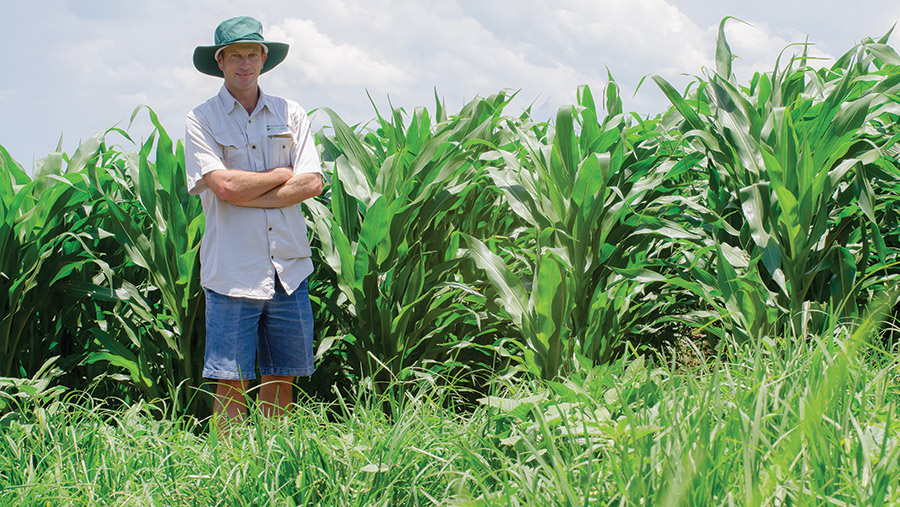
This all means the world has transformed. The “dead” crops have taken off and, while still stunted, are looking magnificent.
I am sure the yield will be more than satisfactory. The pastures have bolted, the cattle don’t know which mouthful of green grass to eat next. Best of all, the countryside is green and alive.
“I have set before you life and death, blessings and curses. Now choose life, so that you and your children may live.” Deuteronomy 30:19, The Bible.
My maize and soya looked dead and my grazing was as good as dead. While my cattle were alive, it felt like their feed bill was killing me.
Among all this death, I chose life.
Bruce Shepherd farms in KwaZulu-Natal, South Africa. He plants 320ha of rain-fed summer crops. He also runs 2,200 weaner oxen on pastures, finishing them in a feedlot with maize grown on the farm.