Farmer Focus: Wheat breaks farm average yield by 2t/ha
 ©Richard Stanton
We have certainly made progress since my last article, with the spring bean harvest finishing on 2 October and the combine now washed off and put away for another year.
Harvest has been very pleasing, particularly the yields, as we have improved on the farm’s previous highest average wheat yield by 2t/ha.
However, it has been one of those seasons where nothing ever quite went to plan, be it the weather or breakdowns.
It all added up just to make it that little bit more challenging. But thanks to the hard work of the whole team, we got there.
As I write, we are drilling the last field of wheat, which has come out of a three-year grass ley. This has highlighted how having grass in the rotation really helps improve soil structure.
See also: Read more from our arable Farmer Focus writers
The drilling campaign has gone very well, with the cereals going into good seed-beds with plenty of moisture. Running two drills has enabled us to cover the ground quickly.
We have not managed to roll as much as I would have liked, as by the time the ground was suitable for rolling the seeds had already chitted.
Pre-emergence sprays are also going on as they work well for us – in some fields last year it was the only herbicide we used.
We have taken on more contract work on local farms this autumn, which I hope could be the start of an opportunity to work more closely together. It could potentially help bring the benefits of economies of scale to the smaller farm, while allowing the equipment with a high capital investment requirement to run over a larger area.
Inputs could also be purchased together, while at the same time each business could still be run independently.
So being able to instigate this on a larger scale could bring benefits to all those involved, and add to the advantages that are already being seen to soils in our area from mixed farming.
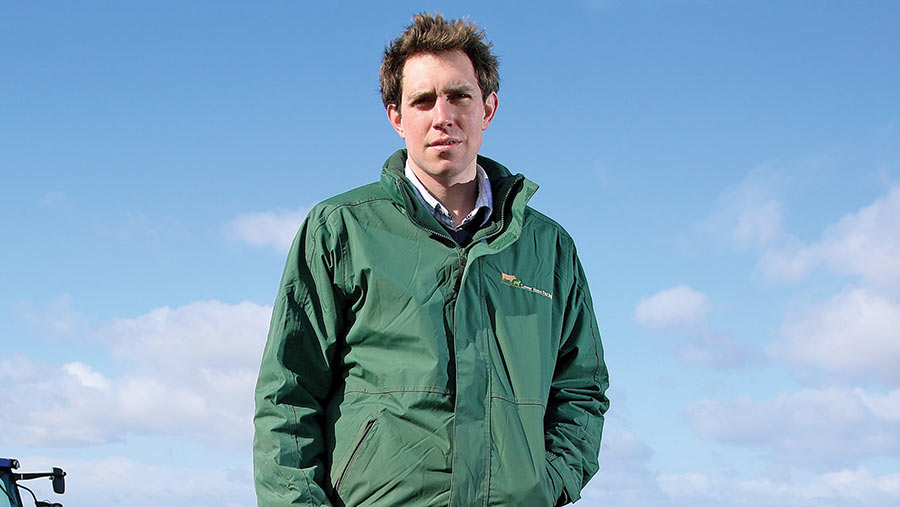
Jack Hopkins is the assistant farm manager on a 730ha estate in North Herefordshire on predominantly silty clay loam soils. Cropping includes wheat, barley, oilseed rape, spring oats and peas, plus grassland that supports a flock of 1,000 ewes and 25 pedigree Hereford cattle