Farmer Focus: A la carte weather is rarely on the menu
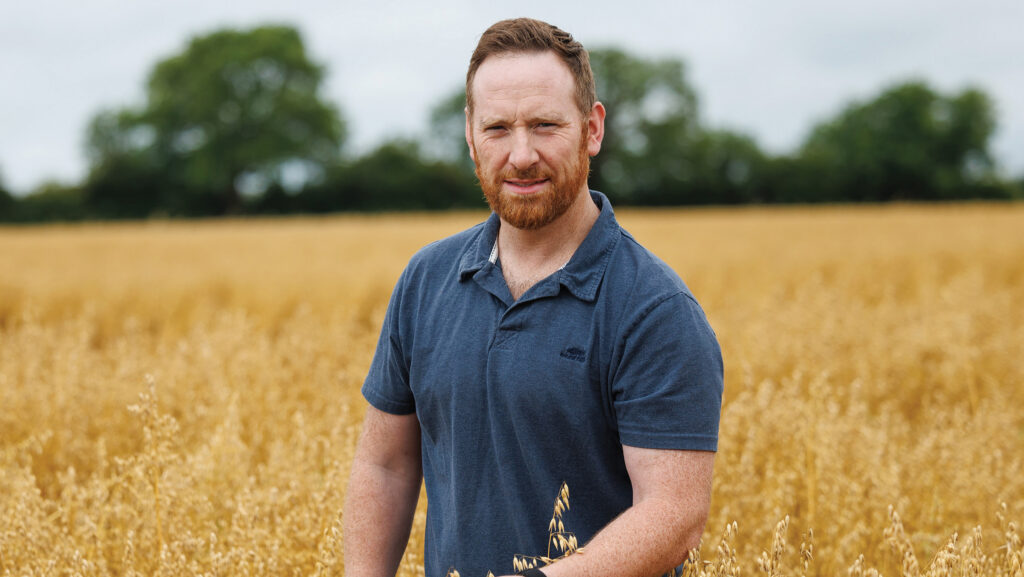 Peadar Whyte © Damien Eagers Photography
 Harvest is halfway through at this stage, and it’s wonderful to be able to get up and work every day with no weather interruptions.
That’s the positive side of our current heatwave, so I’ll start with that.
At a time when energy is so expensive, we’re delighted with how little drying we’ve had to do. Even though we use a biomass burner as our main fuel source, there is still a huge cost to drying grain.
See also: How a colour sorter investment helps secure milling premiums
About the author

Usually, we have mountains of grain in the yard waiting to be dried, but this year we’ve just run the grain through the dryer to clean it up.
We have just finished harvesting our oilseed rape. It has been trickier than usual because the pods and the top of the plant have burned off in the sunshine, while the bottom of the plant is still green.
I’ve seen farmers across the UK and Ireland on social media, dealing with the same issue.
Much of the crop was cut almost 3ft high to avoid taking in too much of the green material.
We struggled with all sorts of problems, from not being able to get the crop into the front of the combine, to not being able to get it out the back, and especially producing a clean seed sample.
The good news is the OSR has done quite well this year, and with good prices at the moment, it’s one of our more profitable crops.
In our experience, the old adage “well sown is half grown” is very true. Once established, it’s quite an easy crop to manage.
Winter barley exceeded its mediocre springtime potential after a difficult winter, for which I’m grateful. However, straw yields from the winter barley were quite poor.
Winter oat crops were average to good and a positive was they were easy to harvest and came in at reasonably low moisture.
We await the wheat harvest in the coming days, and in true farmer fashion, I’m complaining even when we’ve had good weather.
The potatoes are really struggling in this drought and it remains to be seen how it will affect yield and quality.
With the dispersed nature of our farm, it’s not possible to irrigate much, so a few days of rain while we wait for the wheat would be wonderful.
Unfortunately, à la carte weather is rarely on the menu.