Farmer Focus: Crops dry quickly but grains look plump
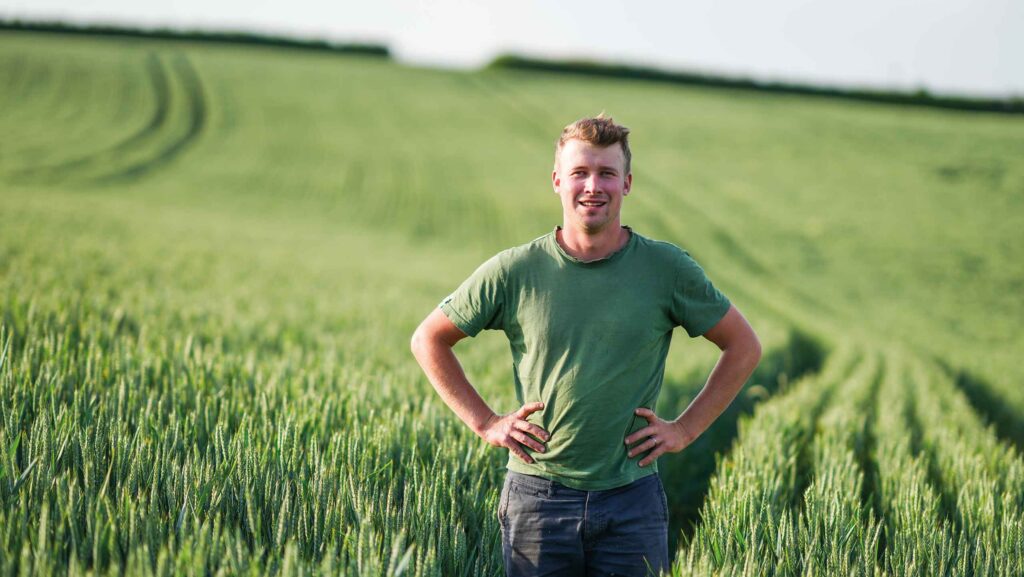 Richard Harris © Emily Fleur
 As crops dry down very suddenly, we live in hope they have built enough yield before the heat got to them.
Grains look plump when you rub an ear out, so there is a chance it could still be a decent, early and dry harvest.
Reflecting on the 2025-26 crop, it would be fair to say barley yellow dwarf virus (BYDV) and yellow rust are going to be the main concerns for us going into next year.
See also: Project aims to unlock nitrogen savings through soil biology
About the author

One autumn BYDV application was just not enough this season, and I feel we’ll have to be more militant in future.
We have seen BYDV appearing both before and after Christmas, with different levels of plant damage and, therefore, yield loss.
With margins very tight and aphids very cost-effectively controlled with insecticides, the idea of being insecticide-free on the farm is totally uneconomic.
However, I have seen varieties in trials this summer that look promising and might well solved the problem in time.
With a large amount of current wheat varieties carrying the YR15 gene, it’s going to take some time for the breeders to solve this problem.
Our current blend consists of Champion, Solitare, Palladium, Bamford and Mayflower – I believe all of them have yellow rust problems.
The fungicides did, however, keep it out this year, so the yield potential should be there.
Second wheat blend
As we are quite committed to second wheats on the farm I wonder if I should be creating a specific second wheat blend, as varieties like Champion are not completely suited to this slot.
With the yellow rust issues, there is not a wide range of choice when creating a blend unless you want to take on some risk.
The blend has reduced the speed and severity of the yellow rust this spring, like it does with other problem diseases, so for us in the feed wheat market, it’s still one of the best disease management tools available.
The spring linseed looks to be enjoying the sunshine. It has had a good couple of weeks flowering and has now set all its bowls soaking up the sunshine.
It’s hard to predict yield on a crop like this, but it looks fair and seems to cope better in a drier spring than other spring break crops.