Farmer Focus: Final stewardship payment arrives on time
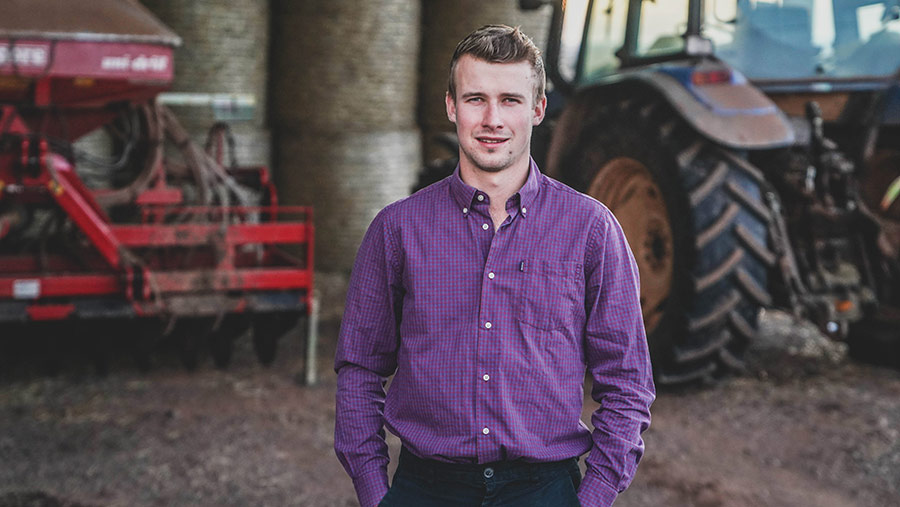 Richard Harris © Emily Fleur
 At the start of every new year, I like to kick off with some positivity, as it is far too easy to just concentrate on the negatives. So, here goes…
We’ve come to the end of our first Mid Tier stewardship scheme, and were paid on time, for what feels like the first time during the five-year agreement.
This has worked well for us, with the main draw being the overwinter cover crops, which helped us transition to a no-till system, getting plenty of diverse roots into the soil profile.
About the author

See also: Spring oat miller looking for supplies of variety Merlin
We reapplied and were accepted, so we will carry on like before, investing in the eight-way mixes, along with some wild bird seed and nectar flower mixes.
We’ve used these options to target poor parts of the fields that always underperform, by either aiding soil structure via AB9 or fertility in AB1. We now hope these poorer areas will start to make a profit.
Winter crops are looking healthy and tillered out nicely in the past six weeks. Brix readings are hovering near the 8-10 mark, which should, hopefully, keep any aphids at bay.
Grass seeds have established well, with minimal competition from the volunteer wheat. It was certainly an easier entry than after spring barley, which we followed in previous years.
As we approach the spring, our cover crop, grass seed and wheat grazers are due, helping to prepare spring seed-beds, grazing out diseased leaves and inoculum before the spring growth phase.
We will again be growing spring linseed as our break crop, as it has served us well the past few years.
I hear there were a few positives to come from the Oxford Farming Conference, increasing the value on the stewardship schemes along with opening our eyes to gene editing.
A part of me still believes we can get there without the need for this, but the road would be longer and not without its stumbling blocks, which could financially cripple us before we get there.
So, this approach to reduce our reliance on synthetic inputs will no doubt boost our environmental credentials and, hopefully, profits.