Farmer Focus: Inspecting wheat fields in the Somme
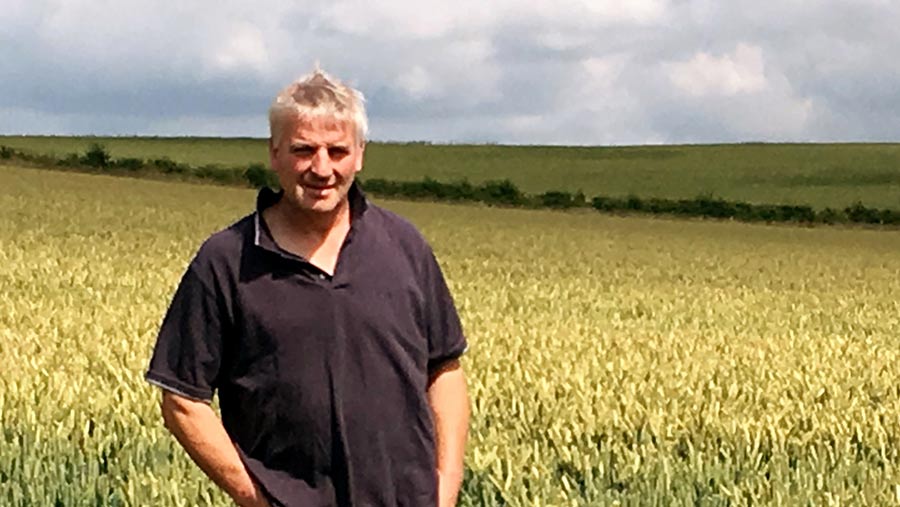
Early morning on Friday 1 July, I found myself stood in a field of wheat in France.
This was a special field as it was at the Somme and it was 100 years to the hour since what is generally agreed to be the worst day in British military history began.
It was eerily quiet with nobody else about, no planes in the sky and no vehicles to be seen anywhere.
I could have been walking one of my own fields at home in Hertfordshire, but what was different here was the barrenness of the landscape.
See also: Read more from our Arable Farmer Focus writers
There were no hedges, ancient woodlands, old barns, church towers or historic villages in the distance to be seen. These had all been obliterated by the almost one million shells that had been discharged in the area during the offensives.
The only other clue that gave the location away were the incredibly well-kept cemeteries dotted around the fields in the area.
It took me some 50-odd years to get there, but I will keep going back.
Many thanks to everybody who attended Cereals 2016. We were very lucky with the weather in what has turned out to be one of the wettest Junes ever.
Attendance over the two days was similar to that attained at the two previous events we hosted in 2010 and 2014.
A “kind” growing season for us ensured that all the plots were the best I have seen at the event and were commented on favourably by many.
The die has now been cast – we are coming out of the EU. It is now time to move on and make plans for the future and to get on the front foot in shaping a new UK agriculture.
We are all in the same boat now and with the rough seas ahead, we are going to need all hands on deck for the next few years. This is not the time for recriminations.
One thing many of us seem to agree on is that we don’t expect to see a bonfire of the rules and regulations that so many growers blamed Brussels for.
Robert Law farms 1,700ha on the Hertfordshire, Cambridgeshire and Essex borders growing cereals, mustard, a range of forage crops for seed, sugar beet, up to 200ha of catchcrop stubble turnips and 300ha of grass supporting a flock of 2,500 ewes. All land farmed is in environmental stewardship schemes. He also manages 500ha of sandland in Nottinghamshire.

Staying sharp shouldn't be a chore