Farmer Focus: My agronomic decisions to reduce BYDV
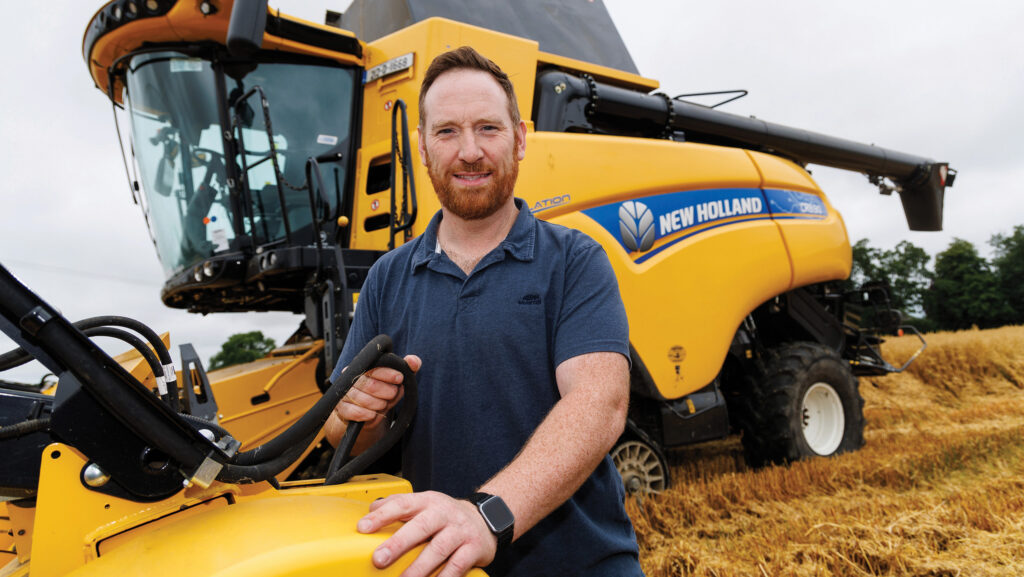 Peadar Whyte © Damien Eagers Photography
 We have made great progress sowing our 2027 crops. With good conditions in September, everyone was itching to start. It is a balancing act, and starting early has a lot of benefits.
Crops are planted in super conditions, guaranteeing strong establishment.
The major concern with going early is just how mild it has been, with aphid numbers very high.
See also: BYDV: Lessons from 2026 on how to reduce risk
About the author

Last year, the weather broke in late October and the sprayer barely left the shed until March.
There was barley yellow dwarf virus (BYDV) in plenty of our wheat. It is hard to quantify the yield impact, but it was significant across the farm.
Even more concerning, the only farm which did receive insecticide was still completely decimated with the virus.
Bottom line, it was sown too early and no amount of aphicide was going to solve the problem.
An integrated pest management approach is needed. We factor in both previous crops and geography, sowing the lower-risk farms first.
About 30% of our wheat follows winter oats with chopped straw, making the carbon:nitrogen ratio high and the wheat less susceptible to aphids.
Wheat after beans is a particular problem, so we try to delay sowing as much as possible.
Our home farm is close to the coast, and soil temperatures drop more quickly further inland, so we focus on farms to our west, if possible.
There is a big difference in BYDV outcome depending on cultivation type, with more tillage having a negative effect due to the visual impact of greater contrast and less residue on the soil, as well as increased mineralisation.
I mitigate this by applying autumn nutrition in an attempt to make the plant a less favorable host.
My understanding of what is happening inside the plant may be basic, but it is a critical part of the equation. These agronomic decisions alter the plant’s composition and ultimately give us a different outcome.
It raises the question of why most research focuses on aphid numbers, what insecticide to spray and what timing is best?
Perhaps we need to spend as much time understanding the plant the aphid lands on as we do working out how to kill the aphid once it gets there.