Farmer Focus: Regen farming invites aphids into crops
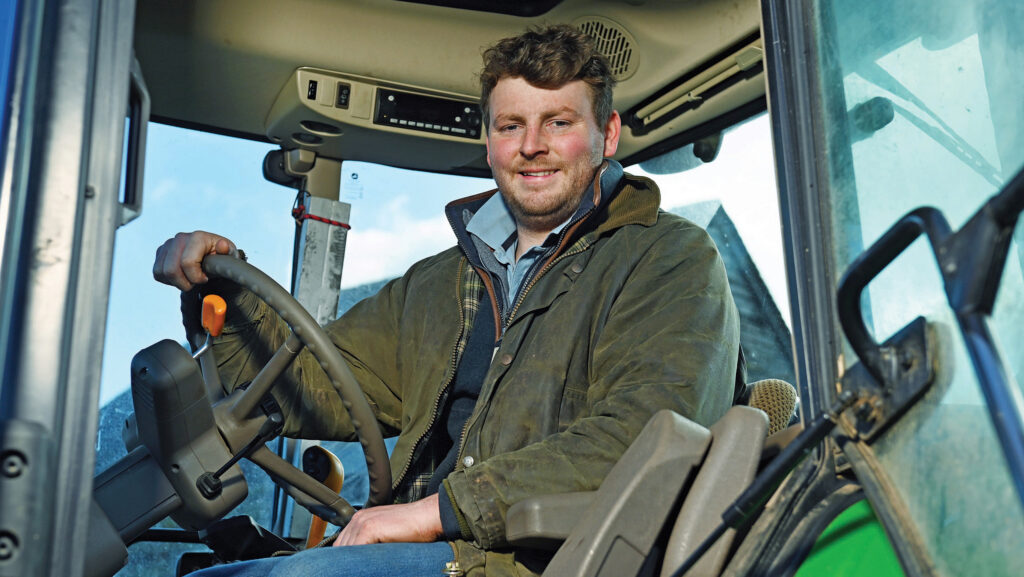 Billy Lewis © Richard Swingler
It has been a very straightforward autumn. We’ve had perfect ground conditions from around mid-September, through to now. With the exception of a few wet days, the weather has also posed no cause for concern.
This means that all of our autumn planting is complete. Not only is it finished, but now that everything is up and growing, it’s all looking pretty spot on.
See also: Spray or stay in SFI? Aphids force tough choice
About the author

No wet or bare patches, no rivers flowing through fields and no slug pressure. That makes it two very stress-free autumns in a row now. The quagmire-like planting conditions of 2024 seem like a lifetime ago.
However, due to the unseasonably mild weather, there has been one small catch: aphids. All of the cereals have hosted them, most notably the triticale which was drilled first up at the beginning of October.
Some people claim that, with a more regenerative style of farming, your crops should be at a reduced risk of being affected by aphids. I just don’t buy this theory at all.
We are all aware of the effect that a “green bridge” can have on aphid transfer. If you are striving for continuous living roots in your soil, alongside a diverse cropping rotation across a farm, you are essentially inviting aphids into your crops.
Our local countryside is that open invitation. It resembles that lovely, picture postcard image of a patchwork farmed landscape, with a range of different crops and environmental features, rather than the vast blocks of monoculture stubbles you might find in some parts of the country.
So naturally, there’s plenty of habitat for aphids to lurk in around us. The same also goes for beneficial insects, but upon inspecting the crops it’s apparent the beneficials alone haven’t been enough to keep the aphids at bay.
As a result, we’ve reluctantly chosen to apply insecticides this autumn. It’s something that really shouldn’t be done unless necessary, and in this case, it most certainly has been.
With the economics so tight in the combinable crops sector, no farmer can afford the risk of finding a bad barley yellow dwarf virus outbreak in the spring. Nature ends up paying in some way.