Farmer Focus: Spring field work is well under way
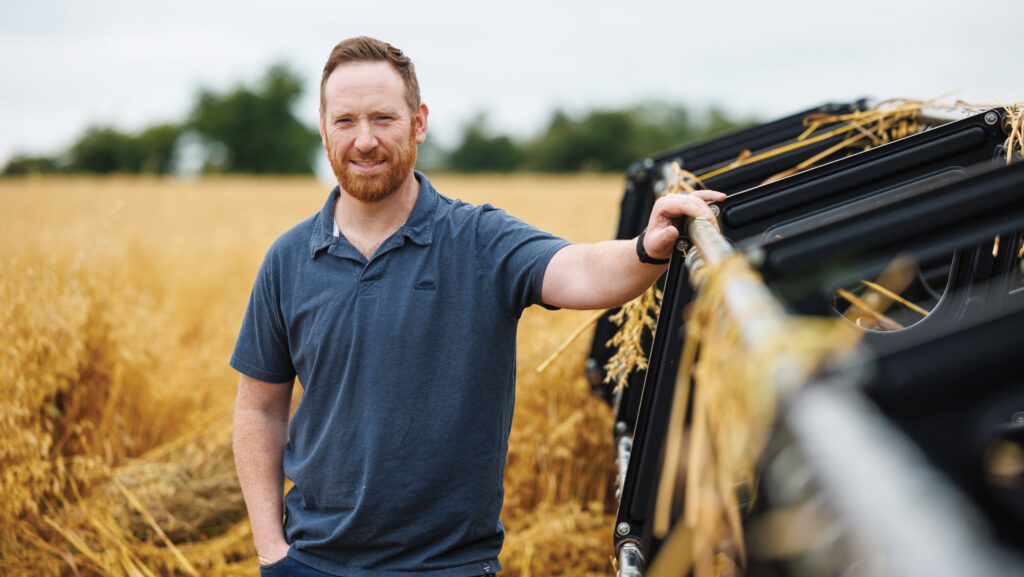 Peadar Whyte © Damien Eagers Photography
 Spring can happen so fast. It’s like flipping a switch. January and February had massive amounts of rainfall. If it didn’t rain at all between now and June, we would still have above-average rainfall for the first five months of the year.
A few days ago, it looked likely that no field work would be happening for weeks, but we are now in the thick of spring field work, thanks to longer days, sunshine and a drying wind.
Winter barley, oilseed rape and weaker wheat have received some nitrogen, and we have started to spray some spring herbicides.
See also: High crop yields key to better gross margins and lower emissions
About the author

It’s amazing how well crops have done, considering the horrible winter. Of course, with so much rainfall, there are small patches which have been affected by waterlogging.
However, in general, while walking crops over the last week, I have been pleasantly surprised with the plant counts and crop colour.
We have some advanced growth in oilseed rape. Crops have a green area index of 1.5-2.5, meaning we should be able to grow the crop with a low-input cost again this year.
Despite the colossal rainfall, it seems there is more soil available nitrogen than you would expect.
I hope it’s due to some of our farming practices, though I imagine there was a little bit left behind from 2025’s crops, which were just a small bit behind the yields they promised.
Our focus is now turning to spring planting. Thankfully, we got all our winter crops planted in the autumn.
We just have spring beans and potatoes to plant. It’s still a bit early for potatoes, but we are aiming to get the beans in soon.
Beans are an important part of our rotation, with massive benefits to the soil from their root structure and nitrogen-fixing capabilities.
They require low inputs to grow a good crop, but must be planted in March or else they ripen too late and harvest becomes difficult.
An Irish government subsidy for home-produced protein has backed up the agronomic benefits with a financial boost too.
However, Hopefully, they will be drilled soon, leaving staff and machinery to concentrate on potato planting.

Staying sharp shouldn't be a chore