High crop yields key to better gross margins and lower emissions
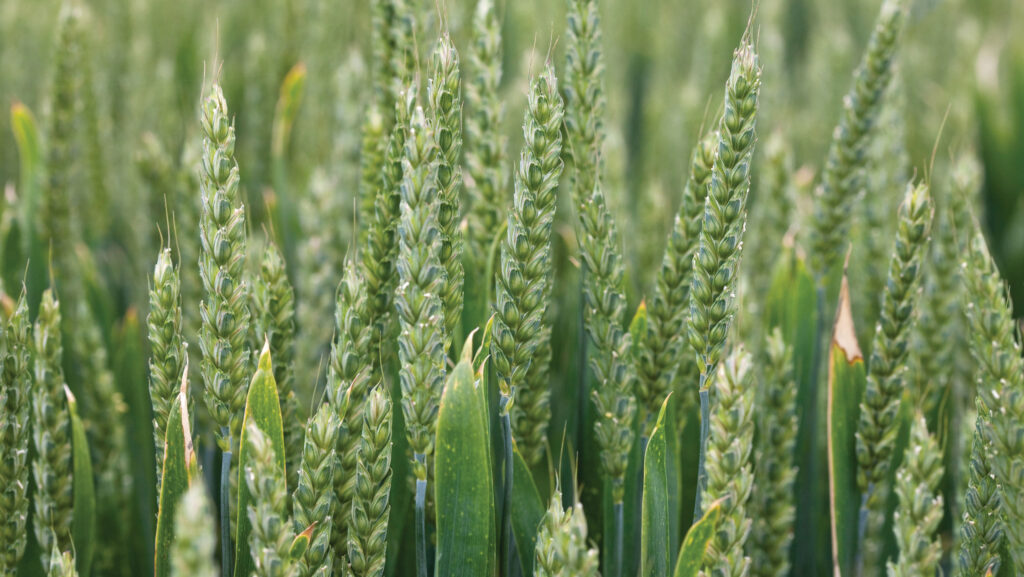 © Tim Scrivener
 High yields are often associated with inflated input costs that erode profit and intensive systems which damage the environment, but emerging evidence tells a very different story.
Insights from the UK’s Yield Enhancement Network (YEN) which analysed data from more than 1,200 winter wheat crops from 2013-22, reveals high-yielding crops are key to farm profitability and sustainability.
See also: How crop nutrition and structure can boost yield potential
“Our research shows higher yields lead to greater gross margins (£/ha), and lower greenhouse gas emissions per tonne of grain,” says Dr Christina Baxter, senior research scientist at crop consultant Adas.
“Yield is king in the right contexts. Contrary to popular belief, high yields don’t come from high spending on inputs,” she says.
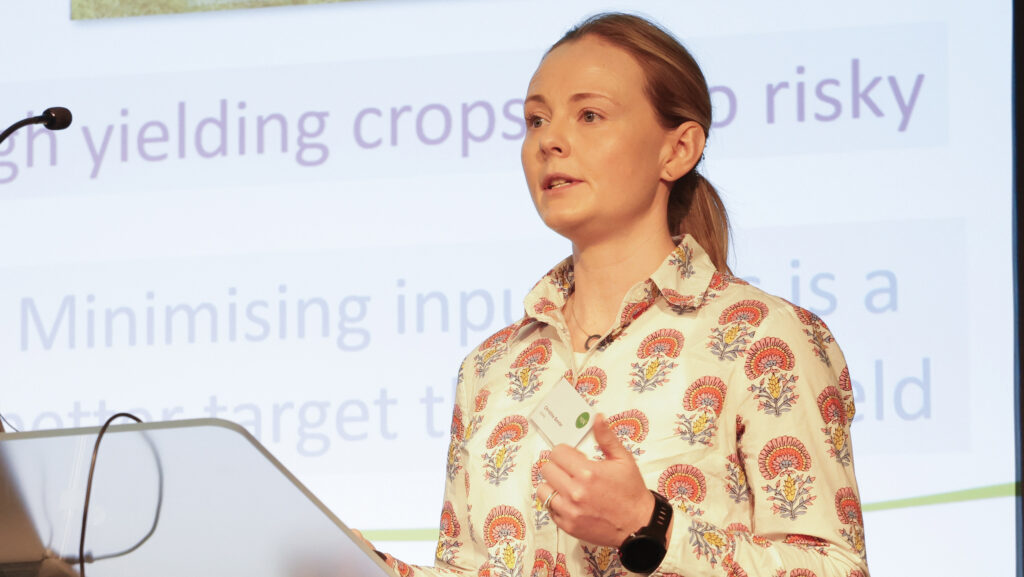
Christina Baxter © YEN
Across the YEN dataset, winter wheat yields averaged 10.9t/ha, with a wide range of variable costs to show for it, averaging about £450/ha.
There was a weak relationship between variable costs and yield.
“High yields do not necessarily mean high inputs. In fact, crops which had variable costs of £700/ha or more were associated with repeated applications of herbicides and fungicides or attempts to correct P and K indices,” she says.
“When we calculate variable costs on a £/t unit basis, yields dilute the input costs. Here, we see a stronger relationship with higher yields associated with lower variable costs,” says Christina.
Gross margins (£/ha) were strongly and positively related to grain yield. On average, less than 3t/ha of grain paid for average inputs, while higher-input systems needed closer to 5t/ha to break even.
Beyond this threshold, additional yield generated substantial returns. An 8t/ha crop typically achieved a gross margin of around £800/ha, while a 12t/ha crop delivered closer to £1,400/ha.
The message here is that higher yields make economic sense and they remain a major driver of profitability.
Fixed costs such as labour, rent and machinery were not included in this analysis and, therefore, must be considered. However, the relationship between yield and margin remains strongly positive.
Carbon footprint data
YEN carbon footprint data tells a similar story. Higher yielding crops reduced greenhouse gas emissions per tonne of grain by one-third compared with average yielding crops.
Higher-yielding crops were found to have slightly higher emissions per hectare due to modest increases in nitrogen use and a greater quantity of crop residues left in the field, which releases nitrous oxide emissions when they decompose.
However, when emissions were assessed per tonne of grain, the trend was reversed.
This is because more efficient production spreads the embedded environmental cost of inputs and operations across a larger output.
Nitrogen balance
High-yielding crops showed only a weak relationship with increased nitrogen application.
As yields increased, nitrogen balance became increasingly negative.
This indicated high-performing crops were more effective at capturing nitrogen from non-synthetic sources such as soil reserves, organic matter and previous crop residues.
In effect, productive crops were more biologically efficient and less reliant on synthetic fertiliser per tonne produced.
That said, negative nitrogen balances do need careful management to avoid compromising future crops.
Land use policy
Christina notes that the UK needs a more targeted land use policy. “In the UK, the least productive 20% of land produces only around 3% of calories.
The remaining 80% of high-yielding land covers 55% of our surface area. How can we manage this area to support food security and biodiversity?” says Christina.
The balance between food production and nature recovery underpins the debate between land sparing and land sharing.
“Productivity is essential for food security and allows land elsewhere to be used for semi-natural habitats and low intensity farming. But context is important to ensure the right land is used in the right place,” she says.
The UK government All-Party Parliamentary Group on Science and Technology in Agriculture has published a 30:50:50 target, which seeks to increase agricultural productivity by 30% by 2050 while reducing environmental impact by half.
The target includes allocating around 50-60% of land to high-yield farming, 25% to natural habitats, and 15% to low-intensity systems.
Dr Christina Baxter was presenting at the 2026 Yield Enhancement Network (YEN) conference held in Peterborough