Glyphosate curbs could threaten regen farming, report warns
 © Tim Scrivener
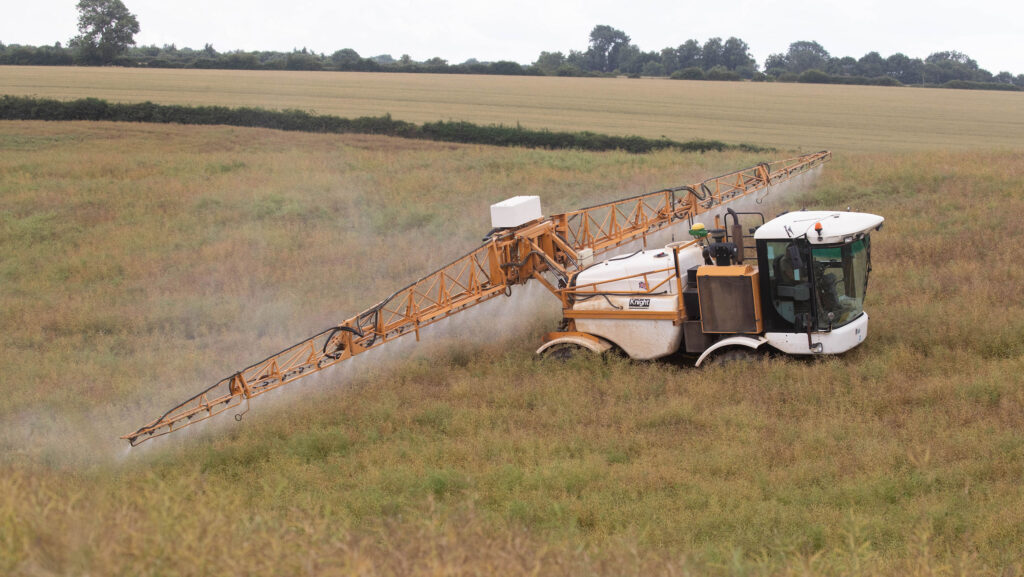
 A new report launched in Parliament has warned that restricting glyphosate use could increase production costs, reduce yields and undermine environmental gains made through conservation and regenerative agriculture.
The report – Seeding the Future through Conservation and Regenerative Agriculture to Meet the UK’s Agricultural and Climate Challenges – was produced by the European Conservation Agriculture Federation and the University of Gloucestershire.
Its publication comes as glyphosate’s Great Britain licence undergoes renewal assessment by the Health and Safety Executive (HSE) ahead of its expiry on 15 December 2026, and amid mounting pressure from the Soil Association and other campaign groups to ban pre-harvest use of the herbicide.
See also: Row intensifies over pre-harvest glyphosate use
Speaking at the House of Commons report launch event on 19 May, hosted by Environment, Food and Rural Affairs Committee chairman Alistair Carmichael, NFU president Tom Bradshaw said the debate went beyond a single chemistry.
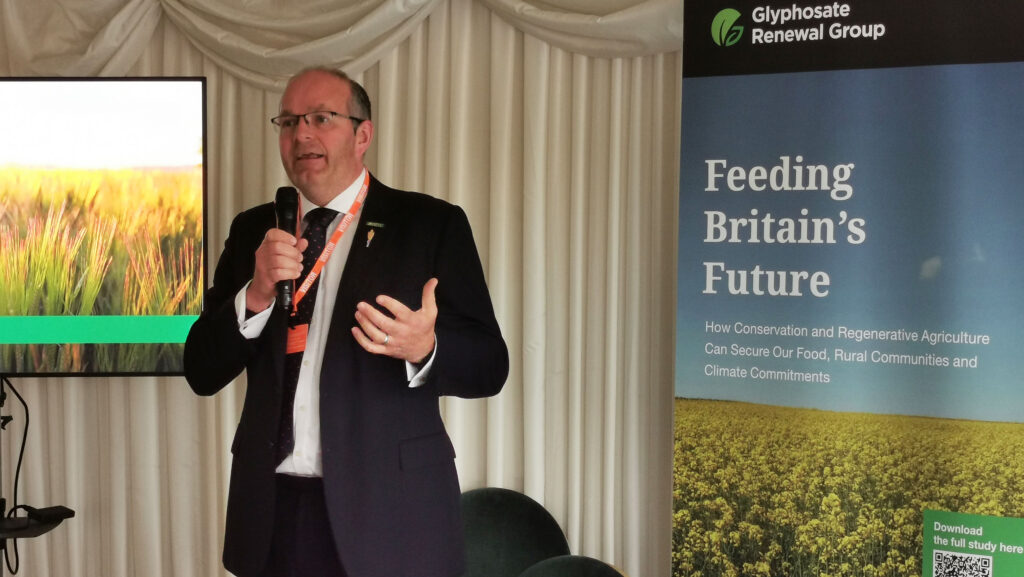
NFU president Tom Bradshaw speaking at the event © MAG/Philip Case
“It’s about having a regulatory regime that recognises science and evidence,” he said.
“If we then burden ourselves with unscientific proposals about removing agrochemicals, which are such an important part of maintaining a resilient food system, then we don’t stand a chance to feed a growing population.”
Flexible approach ‘key’
Mr Bradshaw added that farming systems should not be forced into a “one-size-fits-all” model, arguing growers needed flexibility to balance food production, environmental delivery and business viability.
The report argues glyphosate plays a central role in reduced tillage and direct drilling systems by allowing growers to control weeds without repeated cultivations.
It estimates glyphosate underpins about £679m of UK crop output, with up to 80% of key crops treated during the growing cycle (See box).
Glyphosate – key facts in UK
£679m – crop production linked to glyphosate use annually
5.8% – share of total UK crop output reliant on use
40-80% – wheat and oilseed rape treated during crop cycle
6-8% – more effective weed control than alternatives available
3.3% – contribution to total UK agricultural GDP
(Source: ‘Seeding the Future through Conservation and Regenerative Agriculture’ report)
Authors warn losing access to glyphosate could increase fuel use, soil disturbance and carbon emissions as growers revert to more intensive cultivations.
Northern pressures
Scottish mixed farmer and Voluntary Initiative chairman Dave Bell said pre-harvest use was particularly important in northern regions where shorter growing seasons and unsettled harvests create additional pressure.
“Pre-harvest glyphosate used in Scotland is therefore less about speeding up crops and more about managing risks, ensuring harvestability, reducing drying requirements and protecting grain quality where weather pressure is high,” he said.
Mr Bell stressed that glyphosate was “not a silver bullet” but “one tool within a much wider toolbox” alongside crop rotations, cover crops and integrated pest management.
Meanwhile, Mr Carmichael described the renewal debate as “the future of farming in microcosm”, arguing food production and environmental delivery should not be treated as competing priorities.
“These are not competing interests, they are entirely complementary interests,” he said.
The HSE is expected to launch a public consultation on glyphosate’s renewal in Great Britain in June.
Northern Ireland is not included in the GB review and will continue to follow EU pesticide regulations under post-Brexit arrangements, where glyphosate is renewed in the bloc until 2033.