Grower reaction to underwhelming sugar beet price offer
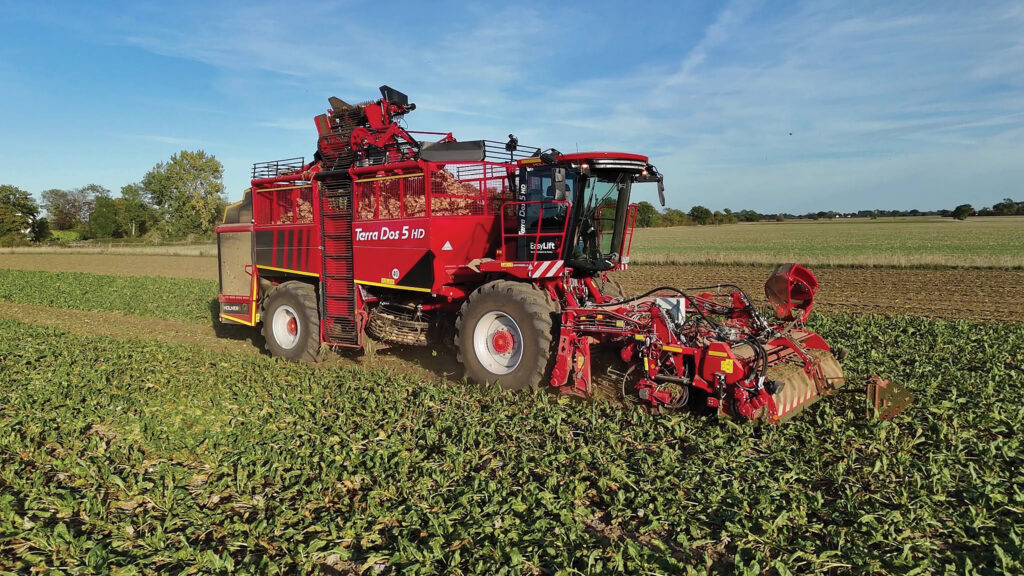 The beet harvest at Hitchcock Farms © Malc Pearce
Sugar beet usually offers the highest gross margin for Suffolk farmer Will Hitchcock, but with yields down 20-30% this harvest, that is set to change.
Despite British Sugar’s reduced contract pricing offer for next season and escalating on-farm costs, Will plans to continue growing the crop as it remains a key income source for the family business.
See also: Why sap-feeding planthoppers are a threat to UK arable farms
“We are heavily invested in sugar beet,” says Will. The family grow 260ha of the crop on the home farm, and contract lift a further 1,200ha and drill 800ha for local farms.
“Sugar beet has been grown on this farm since 1926. We’ve grown it for 100 years, and I’d like it to be grown for another hundred,” he says.
Pricing under scrutiny
The contract pricing announcement by British Sugar and NFU Sugar for the 2026-27 campaign has been a mixed bag, with some growers expected to cut back on sugar beet area or stop growing it altogether as prices no longer stack up.
“We have a lot of contract customers who are significantly reducing acreage or dropping the crop entirely. It is going to be difficult for us from a contracting point of view.”

Will Hitchcock © Malc Pearce
Depending on market bonuses and whether contract tonnage is met, Will estimates between a £1-£2/t price cut on last year.
“The pricing announcement was better than some thought, but it’s a challenge considering the escalation of on-farm input costs,” Will notes.
“I’m always optimistic about sugar beet, and I’m trying to stay that way. It is hasty to make a long-term decision based on one bad year. That’s why we try to look at the bigger picture.”
With capital invested in machinery and a new harvester purchased this year, Will is committed to the crop and sees it as a vital part of the rotation.
“Sugar beet reduces blackgrass pressure, spreads workload and extends our rotation. We are limited in alternative break crop options. Beet is usually our most profitable crop. That won’t be the case this season, but we are hopeful it is just a temporary blip.”
The upfront pricing structure at least provides some clarity on what growers will be paid so they can budget, which isn’t true for most other crops, notes Will.
The family avoids selling beet on the futures market as it appears too much of a gamble.
“It’s not something we’ve done before, and we’re not prepared to start now.”
Low plant populations hit yields
Low plant populations, which are down 40% to 50% on worst affected fields due to the lack of rain post-drilling, are thought to be the main cause of reduced yields.
The farm received 300mm of rain from January to the end of September. Over the same period last year, 280mm of rain fell, but yields were respectable.
“The timing of rain is critical. This year, crops didn’t receive meaningful rain until June and seed sat in the ground for up to two months before germinating. When it finally did, the plants were small and lacked vigour,” says Will.
“Across the board populations would be down 10-30%, which automatically puts yield at risk of being down 10-30% even before any extreme weather was factored in.”
The main crop is yet to be lifted and the poorest fields are being harvested first, so there is hope yields pick up as harvest progresses.
Yield protection scheme
British Sugar is offering a yield protection scheme, where growers forego 90p/t applied to the fixed and market-linked bonus contract prices to help manage crop performance risks and yield variability.
“In hindsight, it’s something we should have done last year, as the cost penalty would have been far lower than the losses we’ve endured this season. It’s something I am seriously considering going forwards,” says Will.
Looking to the future
Going forward, Will believes multi-year agreements are a must. “This has been done before, and it’s something we definitely need to return to soon.”
“The sugar beet sector is a fantastic industry with a wealth of knowledge from the research team at the BBRO, alongside a great network of machinery manufacturers, agronomists, hauliers, and breeders. It’s something the government really needs to get behind.”
”It is a shame price negotiations took so long this year. If prices had come out sooner, growers might have stayed loyal to the crop. Sugar beet is still a great crop to grow. I just hope things pick up next year,” he says.
The farm’s contract five-year average yield across a range of soil types and a volume of 11,000t is 93t/ha. “Before this year we’d seen some similarly extreme weather so it goes to show how resilient the crop can be,” concludes Will.
Applying 100% of fertiliser to the seed-bed
Applying 100% of crop fertiliser requirements to the seed-bed rather than the standard 50-50 split at drilling and at the two to four true leaf stage, is enhancing nitrogen use efficiency.
Liquid nitrogen applied during the dry spring caused leaves to scorch and left nitrogen on the soil surface to be volatilized.
“Placing it all in the seed-bed should be a more effective way of getting nitrogen into the crop early so it can grow away, while reducing scorch damage. It also saves a pass with the sprayer,” says Will.