Harvest 2026: Harvest starts in North and finishes in the South
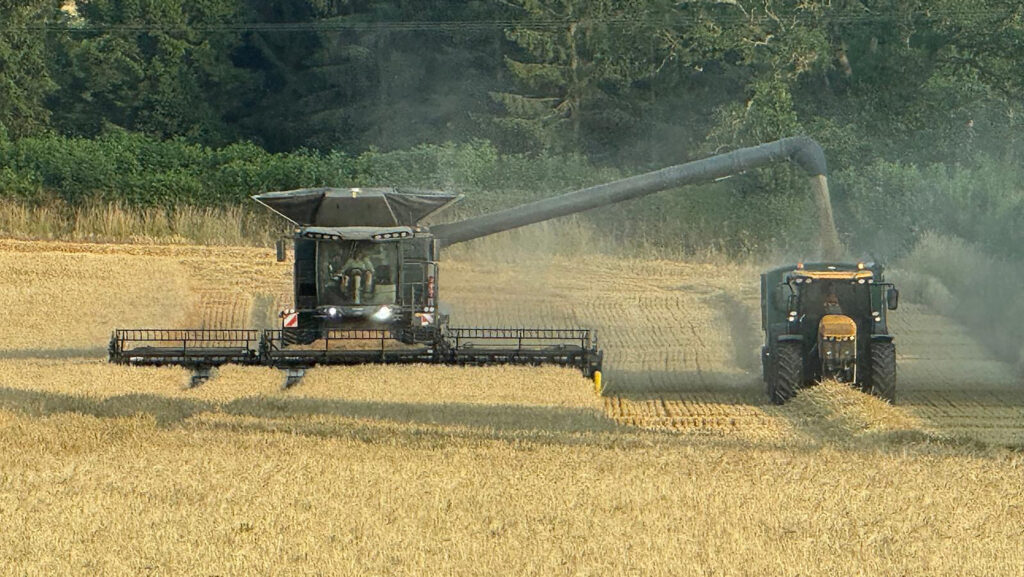 The winter barley harvest at Dawson Farms, Northallerton © Dawson Farms
 Hampshire
In the South East a lot of farmers are finishing this week. “It’s been a real mixed bag,” explains Jonathan Arnold, trading director at Robin Appel. “The heat has diminished potential for many crops.”
However, highlights include spring barley – especially on chalk land, which retains moisture well. Buccaneer and Maris Otter malting barleys have fared very well in comparison to feed varieties, with Laureate also pleasing at 7t/ha.
See also: Regen premium helps West Midlands family battle blackgrass
It’s been good news for wheat crops too – with Bamford and Vibe particularly doing well. “The wheat quality is exceptional; I don’t think we’ve ever seen two such high-quality wheat harvests back-to-back,” notes Jonathan. “Proteins are high and specific weights are 80kg/hl plus.”
Spring oats have been a bit poor at 35-40kg/hl specific weights, but there are exceptions.
“Oilseed rape has been OK in the main. Clearly the more rain you’ve had, the better the crops have done,” he adds. “It has been a really tricky growing season: The industry needed a good harvest, but the edge has been taken off by these extreme conditions.”
Wiltshire
Across to the west in Devizes, oilseed rape yields have been good overall, according to Nick Hobson, commodity trader at United Oilseeds.
“No varieties are standing out at present as we are just getting test results back,” he says. “While we don’t have clear data yet, yields have been very good – which has been a surprise to the market.”
With harvest in motion for four weeks now, there was initial concern about the impact of the heat wave on moisture content and yields, but that doesn’t seem to have materialised. “Everything seems to have settled, and we’re not seeing too much damage.
“In the first two weeks of harvest we were seeing quite low moistures (under 6%), but after farmers were encouraged to cut earlier in the day, we started to see improvement. With more recent loads coming in a little bit higher at 9%.”
With the oilseed rape harvest in the South now complete, and the Midlands almost finished, attention is turning to harvest results further up the country. “We’d expect the North East to finish off in the next week, with the barn doors closing in Scotland by mid-August.”
Yorkshire
It’s a slightly different story for Rob Holywell, farm manager at Dawson Farms near Northallerton, whose harvest has been stop-start, so far.
“The barley was a challenge to cut, with that much life in the stems, while the ears were ready,” he explains. Starting on 8 July, he completed winter barley last week with Kingsbarn and Inys averaging 10-11.1t/ha.
“We tried a bit of oilseed rape on Monday (27 July) but it’s still very green. Having been sprayed off three weeks ago, it looks fantastic,” says Rob. And samples coming into the farm’s central store have given reason for optimism, looking clean and averaging 7-8.5% moisture.
Winter wheat will meet the combine in the next week. “It shouldn’t be ready now; I can’t help but feel it could have lost some of its potential.”
Scotland
Fin Hay, who farms with his family at Easter Rhynd, near Perth, also contract farms 42 farms totalling more than 4,500ha, with soils ranging from heavy to lighter sandy land.
Winter barley has proved disappointing, averaging 8-8.6t/ha, although Funky stood out at 9.6t/ha. Caravelle and Tardis averaged about 8t/ha, against a five-year average of 9.2t/ha. “Specific weights averaged 60-65kg/hl, which is lower than we would like,” he says.
“We’re hoping to start oilseed rape later this week; it’s looking well – we’re hoping for 4t/ha plus against our five-year average of 4.2t/ha.”
Winter wheats and spring oats are also looking well. “We hope to be into the oats in late August. We had moisture in springtime so they’ve come away well, but only time will tell.”
And there’s one definitive advantage to drier conditions, notes Fin. “Up in Scotland, grain drying is a big thing for us, so that’s been a big saving, especially with fuel prices as they are.”