Harvest 2026: Scots start OSR and Norfolk spring barley poor
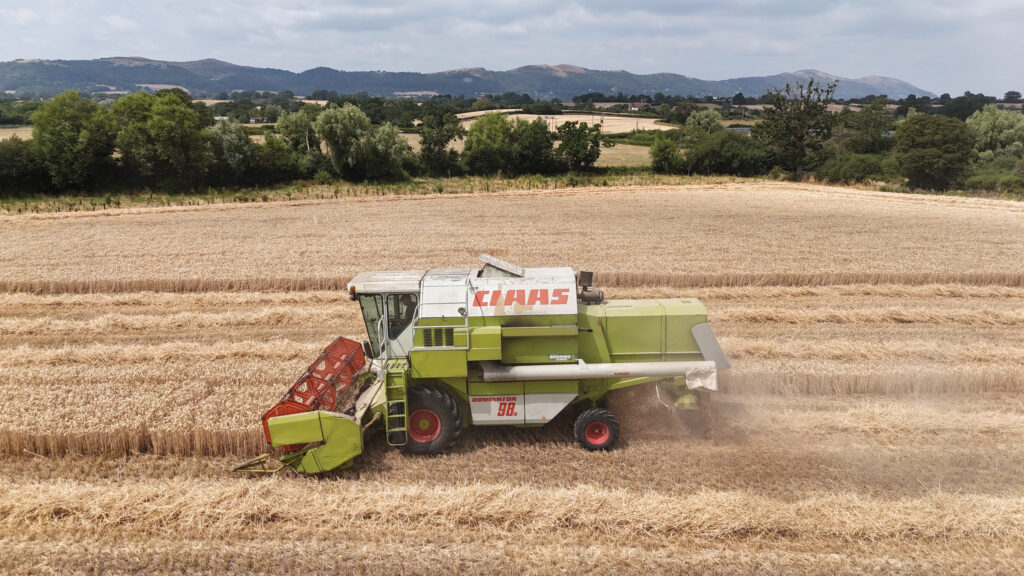 © Tom Mills
 In the East, the cereal harvest is beginning to wrap up, as both wheat and spring barley hit the stores. Reports suggest lower yields, but good quality, particularly on wheat. Meanwhile, in Scotland, the oilseed rape harvest gets under way
See also: How high-protein spring barley can unlock bigger premium
Scottish Borders
Just north of the Scottish border, Jim Macfarlane has made a start on his 45ha of Academic and Adapt oilseed rape at Edrington Mains Farm, near Edrington.
With 10ha left to cut, he is happy with the yields despite the challenging year.
“The best yield was 5.8t/ha, and the worst has been 5.3t/ha,” says Jim.
“We’re cutting it between 8-9% moisture so it’s going to have to go for a whistle stop tour through the dryer. We’re on pretty heavy land so it can take a drought quite well,” he adds.
His 73ha of Bamford and Zealum winter wheat is about a week away, which is likely to clash with his 38ha of Diablo spring barley.
“We’ve had a bit of rain so they’ve looked well all season, so I’m fairly optimistic about the prospects,” he says.
“I also have spring and winter beans, but they’re around three or four weeks away – if I can get the beans away in the first half of September I’ll be happy.”
North Yorkshire
The wheat harvest is near completion near York, according to David Padgett, managing director at Argrain.
“It’s very dry, the quality is good, but the yields are mixed,” he says.
Average wheat specific weight is 76kg/hl, with the Hagberg at 300 seconds.
“We have found that anyone who hasn’t put on added nitrogen, has low proteins. Anyone who has winged it with Group 2 varieties like Arnie and Extase have low proteins, but the yields are there.”
On spring barley, yields are down, but quality is surprisingly fine. “The nitrogen is 1.5-1.6%.”
Norfolk
Harvest will also soon be wrapped up in the East, with most of the wheat and spring barley cut, according to Andrew Dewing, managing director at Dewing Grain.
“We are at, or very close to the end of harvest – it’s extraordinary,” he says.
However, spring barley yields are 30% down. “It’s a reasonable grain size, but lots of the light land ended up with very high nitrogen; some of the medium to heavy land performed OK, but there’s very little under 1.65% nitrogen,” says Andrew.
And similarly on wheat, yields are 20% down. “In Norfolk, it’s a nice quality crop, but it just hasn’t got the yield.”
Even feed wheat proteins are high at 10-13%. “The specific weights have ranged up to 84kg/hl; it’s quite a small grain, but it’s very dry – it’s lovely.”
On the coast, the cooler temperatures have helped some crops. “The good barley is closest to the coast; it’s just a tad cooler to keep it going.”
Hertfordshire
Further south, it’s a similar story near Essex as wheat yields are down 15-19%, according to Craig Martin, farm trader at Harlow Ag Merchants.
“From what we’ve seen so far, milling wheat has made the grade – we’re seeing high specific weights, high proteins and low moisture levels,” he says.
Protein has ranged from 13.5 to 15%, with moisture at 12%, 300 Hagberg and 80-82kg/hl specific weight.
“Skyfall looked good again, and Vibe, which is a new variety coming through, looked good too.”
Malting barley has had mixed quality, with nitrogen between 1.75% and 2.4% and retention at up to 85%, with spring crops up to 95%.
“We’re seeing high nitrogen, but very good retention – although on the winter barley we have seen some very poor retention. At the moment, the pass rate is going to be quite low,” he adds.
“I think we’re going to continue to see a mixed bag on the malting barley.”