Rain frustrates remaining harvest in the north
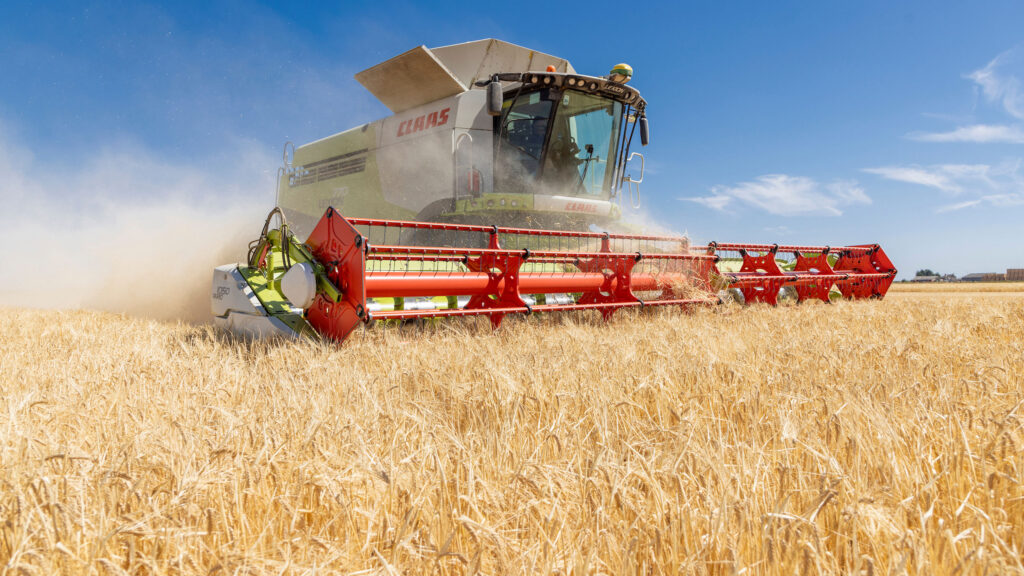 © GNP
© GNP The end of harvest is drawing close for many, but it’s a waiting game between rain to get the last of the harvest in
Yorkshire
Derek Lamplough, who farms at Manor Farm, Scarborough, had harvest all sewn up by early August.
“Usually, we would expect to be finishing in early September,” he says.
Derek’s Vessel winter malting barley yielded 8.6t/ha, while the Laureate spring barley came in at 7.4t/ha.
“Our barley has been around the average yields we would expect – we had a good soak of rain in early June which helped,” says Derek.
See also: Growers to hold nerve on oilseed rape drilling until rain arrives
“Our winter wheat did better than last year – but at 8.9t/ha it didn’t quite make our five-year average – usually around the 9.8t/ha mark. However, all in all, I’d say we’ve been pretty fortunate compared to others.”
Tyne and Wear
Further north, Geoff Alderslade only grew winter wheat and beans at West Fellgate Farm, Wardley this year.
“We’ve not grown oilseed rape for several years after yields were severely affected by cabbage stem flea beetle.”
The 56ha of Arnie and Extase winter wheat was disastrous.
“It was looking really good one month before harvest, but then the dry weather hit in late June and it dried off too quickly.”
While crops came off at 14-15% moisture, the yields weren’t there.
“We usually expect to average 9.8t/ha, but this time got 6.1t/ha. It’s possible there was a bit of barley yellow dwarf virus and take-all at play, but we just did not have the moisture.”
The 30ha of beans grown for human consumption would normally be cut in September or early October.
“But they are looking ready now so we could be finished by next week.”
Perthshire
In Scotland, Adrian Ivory is about 70% through harvest at Strathisla Farms, Meigle. Harvesting his own farm and neighbour’s ground, he has almost 750ha to bring in and, having had 70mm of rainfall already this August (the average for August is 75mm), Adrian is hoping for some dry weather to get the harvest done.
“We grew 60ha of winter barley including Caravelle and Quantock,” he says. “Quality was good with nitrogen at 1.4% or less and screenings below 2%, however yields were below average. Usually, we would get around 8.6t/ha, this time we averaged 7.9t/ha.
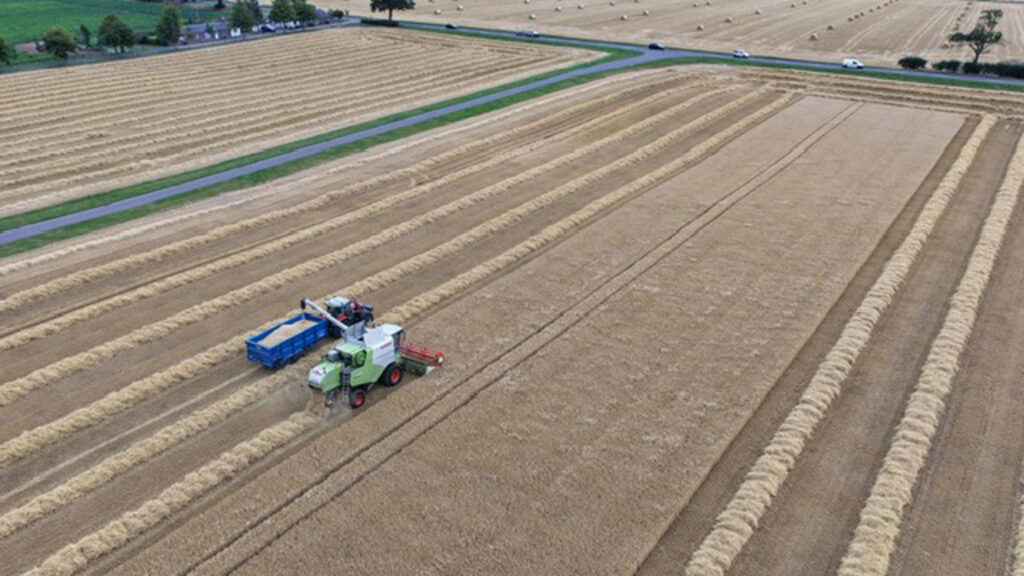
© Adrian Ivory
“We’ve harvested 404ha of the 567ha of spring barley – a majority of which was Sassy, but we also had Fairing and Soccer,” he adds.
“Sassy came off at 6.9t/ha – Fairing and Soccer are yet to be harvested.”
Adrian also has 120ha of winter wheat, including Redwald and Skyscraper, which he is waiting to cut.
“Our winter and spring barley looked amazing, but while the quality was good, yields were disappointing. The wheat is looking good too – but given our barley results we are nervous as to what yields will be.”
Normally harvest is not complete until mid-September for Adrian.
“Last year harvest was wrapped up by 24 August; provided the weather stays dry we could be finished next week.”
Londonderry
Across the Irish Sea, Robert Craig is pleased with the regenerative farming methods at Carse Hall, Ballykelly. Unfortunately, the winter oilseed rape failed due to wet conditions so was replaced with potatoes which he will harvest later in the year.
The 40ha of winter barley was a mix of five varieties and yielded 6.1t/ha; better than last year’s 4.9t/ha due to a hybrid variety failure.
“We only used 45 units of nitrogen, one spray of a milk mix, one fungicide application and one growth regulator – so the margins aren’t bad and we’ve seen a decrease in disease pressure.”
Robert also has 48ha of winter wheat, a mix of seven varieties on sandy loam soil, that doesn’t yield well. It’s currently averaging 6.8t/ha, with around 12ha left to cut.
“We are trying to put more focus on trace elements, understanding how to use milk and natural mineral sources and companion cropping to help plants access the nutrients,” explains Robert.
“We put 15-25t/ha of farmyard manure on in the autumn and a slurry application in spring to help with nitrogen. Apart from the odd foliar spray of potassium when needed, we haven’t used any additional P or K in 12 years.
“While yields might not seem record-breaking the margins are not bad.”