

Advertiser content
If farm costs won’t wait, why should pay day?
UK farmers and agricultural producers are the bedrock of supply chains across the economy, but they are operating in an increasingly challenging environment.
Costs are rising across raw materials, fuel, energy, labour, machinery and climate adaptations. This is putting pressure on working capital.
Waiting for invoices to be paid adds to that pressure. Farmers and producers face a delicate balancing act: covering today’s costs while waiting weeks, or even months, for payment.

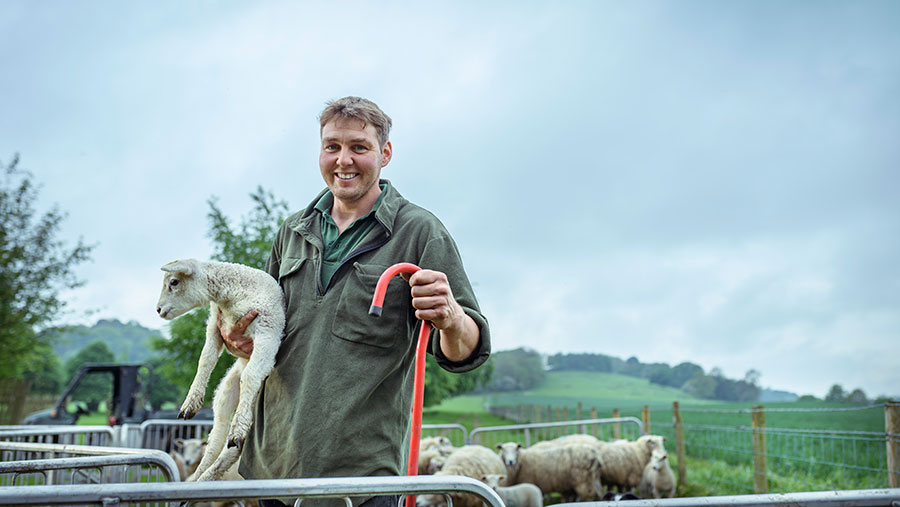
© ADM Agriculture
A growing challenge
Agriculture can be particularly working-capital intensive. High upfront input costs and lengthy production cycles mean businesses often receive income long after paying their costs.
Cash flow is also exposed to factors beyond their control, including commodity prices, crop failure, disease and extreme weather.
The Energy & Climate Intelligence Unit estimates that the summer heatwaves and drought of 2026 put the UK’s cereals and oilseeds harvest on course to be the smallest since 1984.
The period included the driest July in England and Wales since records began in 1836 (1).
Based on provisional yield estimates and June 2026 ex-farm prices, the unit estimates that the value of production could be £305 million to £390 million below the pre-summer forecast (2).
Healthy cash flow is becoming even more important as traditional sources of broad financial support change.
Government support remains available through other schemes, but the Basic Payments Scheme (BPS) ended in 2023 and was replaced by delinked payments.
These are due to end in 2027 as support shifts towards a more targeted approach.
In 2025, payments associated with the BPS and delinked payments fell by 34% to £1 billion (3).
Whether the pressure comes from higher input costs, lower yields, or changing support payments, the common thread is cash flow.
For many businesses operating in the agri-cultural sector, securing payment sooner may provide valuable breathing space, improve liquidity and free up capital for investment.
This is where Supply Chain Finance can help.
© ADM Agriculture
Crops to cash
Profitability and cash flow are different concepts. An agricultural business can be profitable on paper while still facing day-to-day liquidity pressures if cash is tied up in outstanding invoices.
For many businesses in the sector, the timing of a payment matters just as much as the amount.
Supply Chain Finance is an optional way of gaining early payments on outstanding invoices.
If the buyer operates a Supply Chain Finance scheme, the farmer or producer can choose to be paid earlier on any or all outstanding invoices through the non-recourse sale of receivables.
The cost of early payment is calculated as a simple discount on the invoice amount, which only applies to the number of days the supplier chooses to be paid early.
The facility could, therefore, help a farmer avoid having to finance an entire season’s worth of inputs while waiting to be paid.
Supply Chain Finance could potentially be cheaper than other forms of financing since the cost of early payment is based on the buyer’s credit strength.
As the arrangement involves the sale of approved receivables rather than additional borrowing, it does not affect the supplier’s credit rating.
With Lloyds’ Supply Chain Finance solution, there are no supplier set-up or transaction fees, although a disclosed discount is deducted from the invoice amount when a supplier chooses early payment.
Dispelling the myths of Supply Chain Finance
Supply Chain Finance isn’t a loan. Instead of taking on additional debt, it offers suppliers the opportunity to sell approved receivables.
It therefore remains an optional facility; farmers and producers can choose which invoices to submit for early payment on an invoice-by-in-voice basis, providing the flexibility to manage working capital according to the needs of the business.
The cost of early payment is shown be-fore the business chooses to sell the invoice, and there are no charges if they ultimately choose not to use it at all.
It may also be mutually beneficial, since improving a supplier’s cash flow and liquidity could improve their overall financial health, which in turn may result in more resilient sup-ply chains for buyers.
By giving eligible suppliers an additional way tomanage cash flow, it could support longer-term collaboration, building supplier resilience and contributing to more sustainable trading relationships.
An example from the field
ADM Agriculture is a leading grain origination, marketing and trading partner, working closely with farmers, growers and customers across the UK agricultural supply chain.
Supplying domestic and international markets, the business also offers a Supply Chain Finance programme in collaboration with Lloyds, enabling eligible suppliers to access early payment on approved invoices.
ADM Agriculture recognised that managing cash flow is an increasingly important part of running a successful business as a supplier in the agricultural sector.
Its suppliers were facing significant upfront costs long before crops were marketed and payments received.
These costs ranged from seed, fertiliser and fuel to machinery and labour.
To help address these challenges, ADM Agriculture’s Supply Chain Finance programme gives eligible suppliers the option to access earlier payment on approved invoices.
The facility can help businesses manage seasonal cash flow demands, purchase inputs at key points in the growing season and respond to changing market conditions.
The programme has become another way for the company to support supplier businesses beyond grain marketing, providing an additional tool that growers can use to manage working capital and plan for the season ahead, while supporting long-term trading relationships.
“For many farming businesses, managing cash flow throughout the season is just as important as achieving strong yields.
“Providing eligible suppliers with theoption of earlier payment gives them greater flexibility to manage working capital in a way that suits their business,” said Jonathan Lane, Managing Director, ADMAgri-culture and ADM UK Country Manager.
“By working closely with ADM Agriculture to design and implement a solution that met both their needs and those of their suppliers, we’re helping to strengthen supplier relationships, improve working capital visibility and create a more resilient supply chain,” added Mansour Davarian, Head of Transaction Banking Solutions at Lloyds.

© ADM Agriculture
Every second counts
Given the cash-intensive, seasonal nature of agriculture, timing is everything.
The date a pay-ment is received may be the difference between constrained cash flow and valuable breathing space with the flexibility to invest and grow.
Lloyds’ Supply Chain Finance facilities offer the opportunity to gain faster access to cash tied up in approved invoices, supporting liquidity without taking on additional borrowing. For farmers and producers, this can help unlock working capital when they need it most.
For more information, ask your buyers about their Supply Chain Finance facility or speak to the Lloyds team at openaccountclientmanagement@lloydsbanking.com
All lending is subject to status. Eligibility criteria apply.
Please note that any data sent via e-mail is not secure and could be read by others. While all reasonable care has been taken to ensure that the information provided is correct, no liability is accepted by Lloyds Bank for any loss or damage caused to any person relying on any statement or omission. This is for information only and should not be relied upon as offering advice for any set of circumstances. Specific advice should always be sought in each instance.
Lloyds and Lloyds Bank are trading names of Lloyds Bank plc. Registered Office: 25 Gresham Street, London EC2V 7HN. Registered in England and Wales no. 2065. Authorised by the Prudential Regulation Authority and regulated by the Financial Conduct Authority and the Prudential Regulation Authority under registration number 119278.
1 https://www.aljazeera.com/news/2026/8/13/uk-drought-imperils-farmers
2 Harvest-2026-heatwave-analysis-030826-2.pdf
Provided by
Operating from offices throughout the country, we offer a people-based quality service to farmers and consumers. We strive to deliver the best service in terms of prompt payment, timely collection and delivery of products.
As well as providing an integrated supply chain to ADMs UK assets in milling and oil seed crushing, ADM Agriculture supply a full range of non-grain feed ingredients to the feed and fuel markets, alongside a comprehensive range of seed and fertilisers.