

How mixed farmer feeds 450,000 laying hens
 © JCM
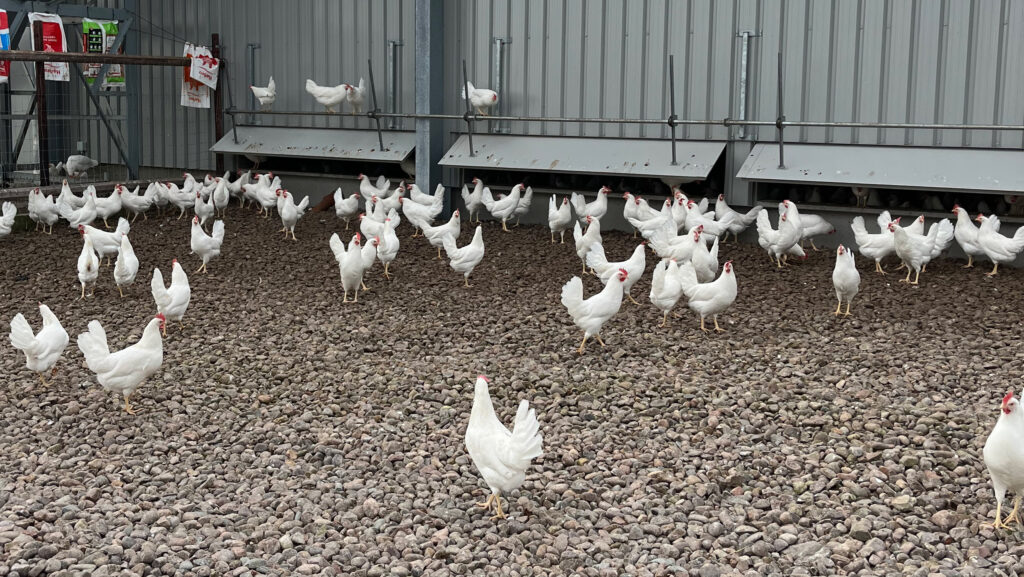
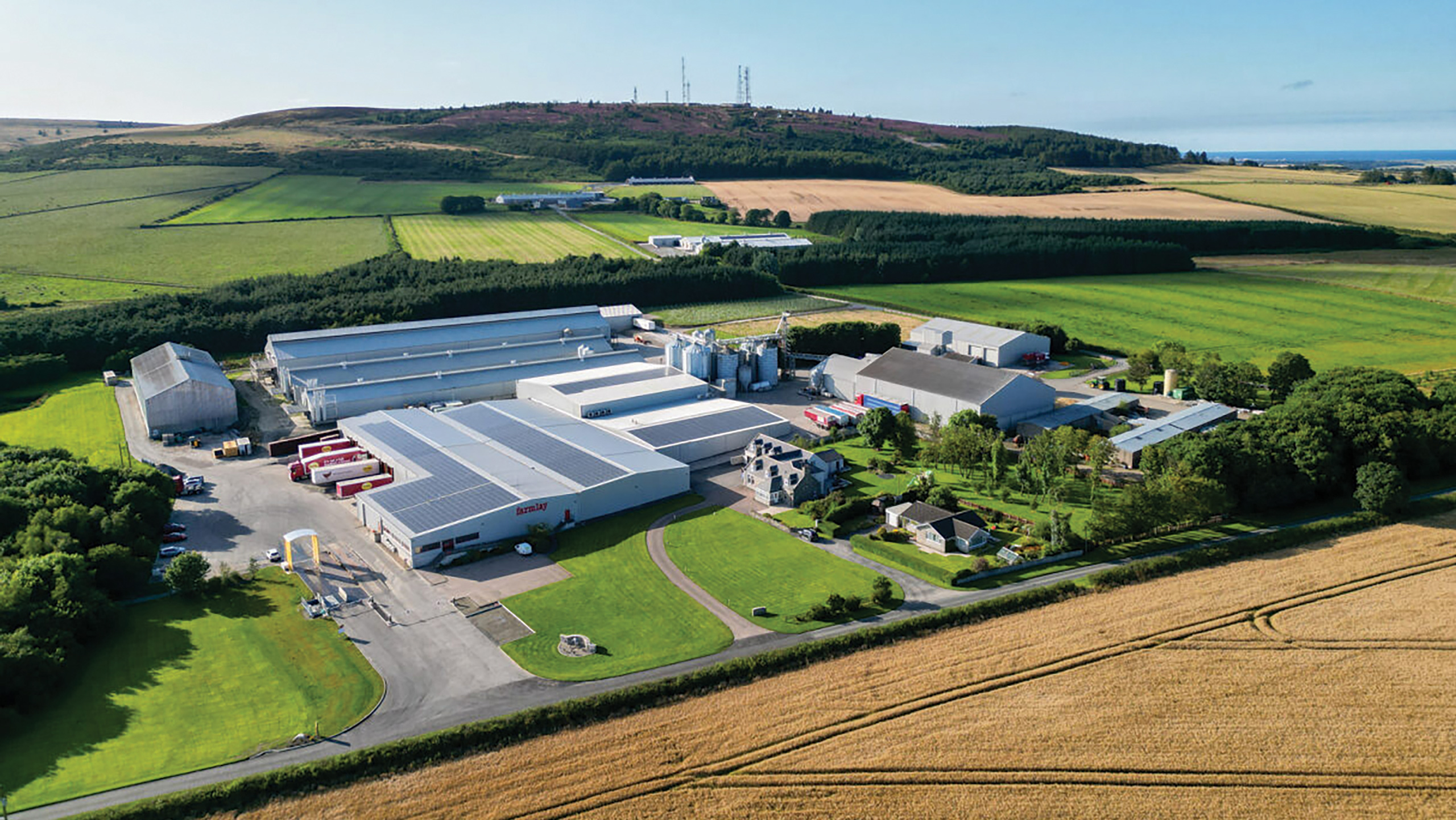
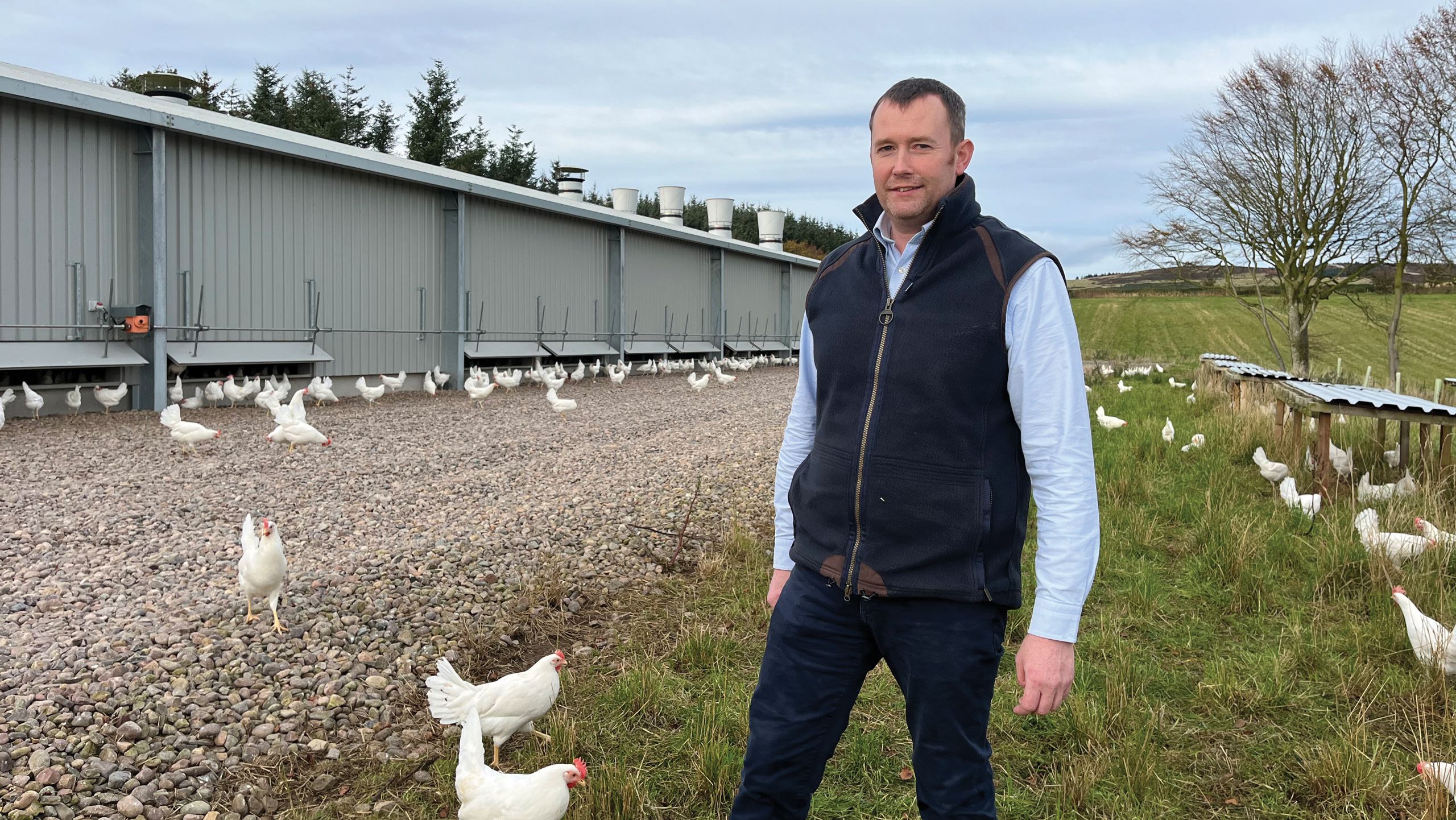
© JCM Feeding 450,000 laying hens is no easy task, and Farmlay managing director Iain Chapman requires 350t of wheat and barley each week to feed his flock in north-east Aberdeenshire.
This is either grown on the family farm across 850ha of cropping, or sourced from local farms within a 20-mile radius.
The farm also rears 1.2m replacement pullets each year for the wider Farmlay group, which sees a network of 30 farmers supplying the company with eggs from 1m hens.
Farmlays packs about 7m eggs every week and generates an annual turnover of about £50m.
See also: Farmer Focus: $3/kg radish contract was a defining moment
© JCM
On-farm ration
Producing the hen ration on farm remains at the heart of the business. The ration consists primarily of wheat, followed by barley, rape meal, soya, sunflower, minerals and limestone, with total finished feed production reaching 450t each week.
“Growing our own wheat, barley and oilseed rape is key, giving us greater control and flexibility over the hen’s diet,” says Iain.
Home-grown barley is nearly self-sufficient, but because wheat makes up the bulk of the ration, the farm can only grow enough wheat for up to 10 weeks of feeding.
The remaining volume is sourced from neighbouring farms to meet the demands of feeding 450,000 hens.
“What’s great about sourcing feed locally is that we have created a new and consistent marketplace for local farmers who can supply grain to us,” he says.
This relationship works both ways. About 3,000t of poultry manure is sold to neighbouring farms each year, improving soil fertility before grain is purchased back for hen feed.
Iain has also grown 72ha of continuous wheat for the past seven years.
“Average winter wheat yields typically reach 4t/acre, with continuous wheat yielding about 3.5t/acre. Yield is king. We need the grain to feed the birds,” he says.
Iain Chapman © JCM
Plough remains critical
Crop establishment relies on ploughing and a combination drill. Iain experimented with reduced-cultivation systems, but found yields suffered.
“We tried a more minimal approach, but there was a yield penalty. At the end of the day, we need the grain, which is why ploughing is so important.”
Nitrogen applications are carefully managed due to the high nutrient value of poultry manure. Lodging is a risk, particularly given the exposed nature of the farm and the strong winds common in Aberdeenshire, explains the farm’s agronomist, Iain Learmonth, from Gardiner ICM.
“Disease control follows a robust four-spray programme, reflecting moderate disease pressure and high rainfall levels,” he says.
Soils can often have a high pH, due to the inclusion of limestone in the hens’ diet and, as a result, muck, which is spread on the land. This can lead to manganese deficiencies in crops. To counter this, all cereal seed receives a manganese treatment, with additional foliar applications used during the season.
Cereals are drilled in late September. “Early October is as late as you would dare to go,” says Iain Chapman’s father, Robert. “When the weather turns, it can go wrong big time,” he says.
However, Robert highlights how variety development and warmer summers have brought harvest dates forward. “Combining now frequently takes place in July, when previously we would have cut in September.”
Being located so far north brings it’s advantages. Blackgrass is largely absent; ploughing has an important role in keeping levels low. However, brome is becoming more of an issue, says Iain.
Cabbage stem flea beetle pressure remains low compared with southern parts of the UK, allowing oilseed rape to remain a viable crop in a one-in-four rotation.
The oilseed rape is sold to a local supplier, who crushes it and sells the oil into supermarkets, while the meal is bought back and fed to the hens.
© JCM
How the farm evolved
Today, Iain oversees a business far removed from the 70ha farm his grandparents started more than 80 years ago.
The expansion has been gradual but ambitious. Following the break-up of the mixed family farming business in 1997, when the dairy and pig enterprises were separated, Iain was left with a small poultry operation and 40ha of land.
Over the years, the farm has expanded, which he puts down to taking risks and using opportunities. One of his most significant milestones was the purchase of an 320ha block of land, which transformed the scale of the arable operation.
Despite the large-scale nature of the business, the foundation remains mixed farming.
The farm also runs 250 Simmental and Charolais cows, retaining all followers through to finishing. About 200 cattle are finished annually, with bull beef taken through to 13 months on ad-lib barley and treated urea. More recently, biscuit meal has also been introduced into finishing rations to improve performance.
The livestock enterprises play an important role in maintaining soil health. Farming predominantly sandy, silty loam soils, the business has built organic matter levels to an impressive 8-9%.
For Iain, however, one of the biggest changes has been the shift from hands-on farming to managing a large and diverse business.
“The best thing about having varied enterprises is that every day is different,” he says. “But when you move from day-to-day farming to managing a business of this size, it becomes much more about delegation and people management.”
© JCM
Staff, haulage and a new mill
The business employs 100 staff, from farmworkers to lorry drivers and egg packers.
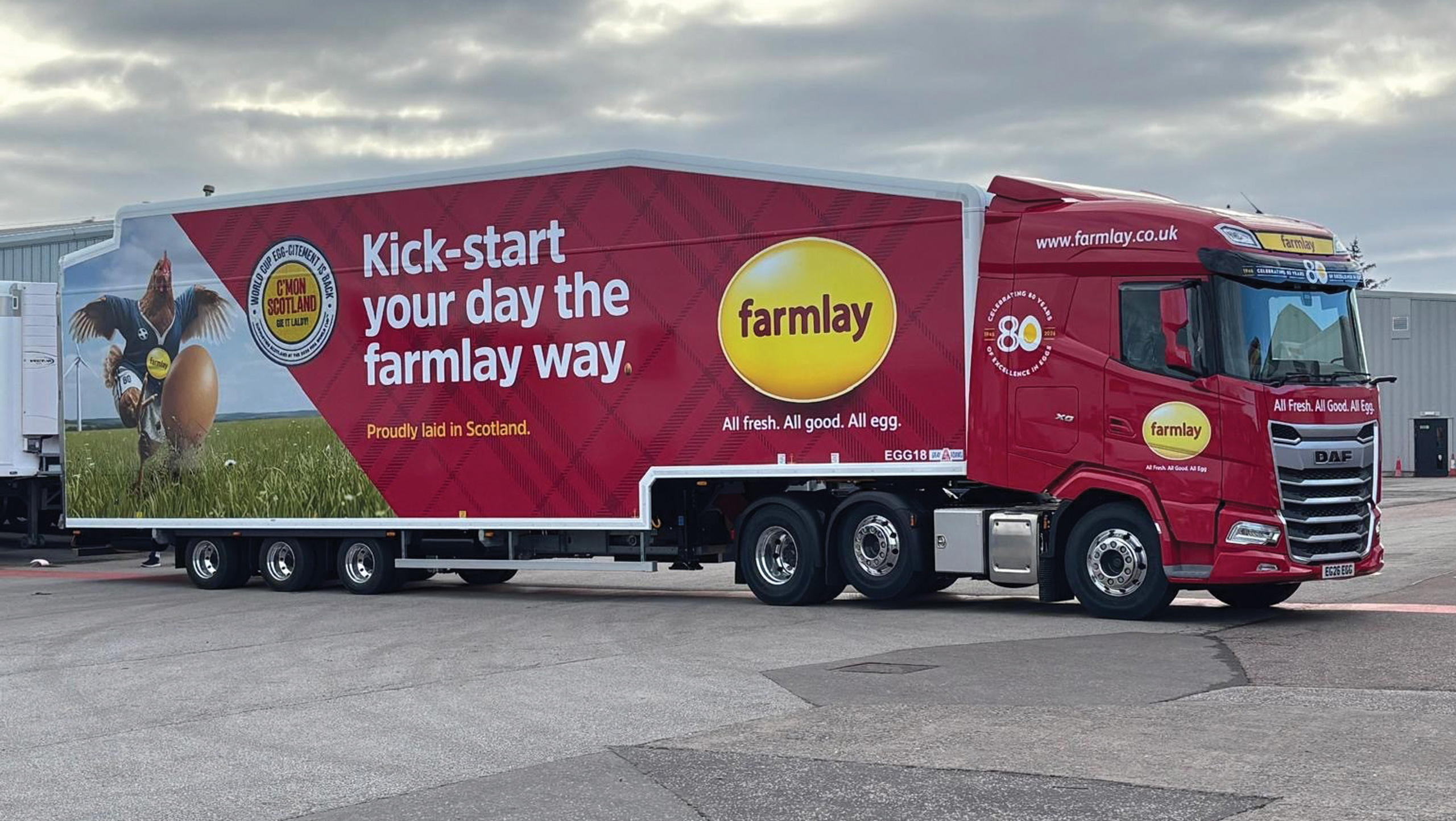
The farm’s own haulage fleet operates year-round, delivering eggs, transporting grain and supplying feed.
Looking ahead, investment continues across the business. A new stationary feed mill is being installed to replace the existing mobile mill-and-mix system. The move is designed to improve efficiency, reduce labour requirements and make greater use of the renewable energy generated on farm.
Powered by a 500kW solar array and wind turbine, with battery storage planned, the mill will have the capacity to produce 8-10t of feed an hour, and will be capable of operating overnight so feed is ready for the morning rounds.
Additional grain storage is also being constructed, increasing total capacity to 8,000t and providing greater flexibility when purchasing grain from local growers.
Rearing own replacement hens key to egg quality
Farmlay rears 1.2m pullets annually as replacement laying hens to the wider producer group. Day-olds chicks are purchased and reared through to point of lay.
Pullets are transferred into laying accommodation at about 15-16 weeks before coming into lay at 19 weeks.
“They need a good start,” says Farmlay managing director Iain Chapman. “That’s why rearing our own birds is so important.”
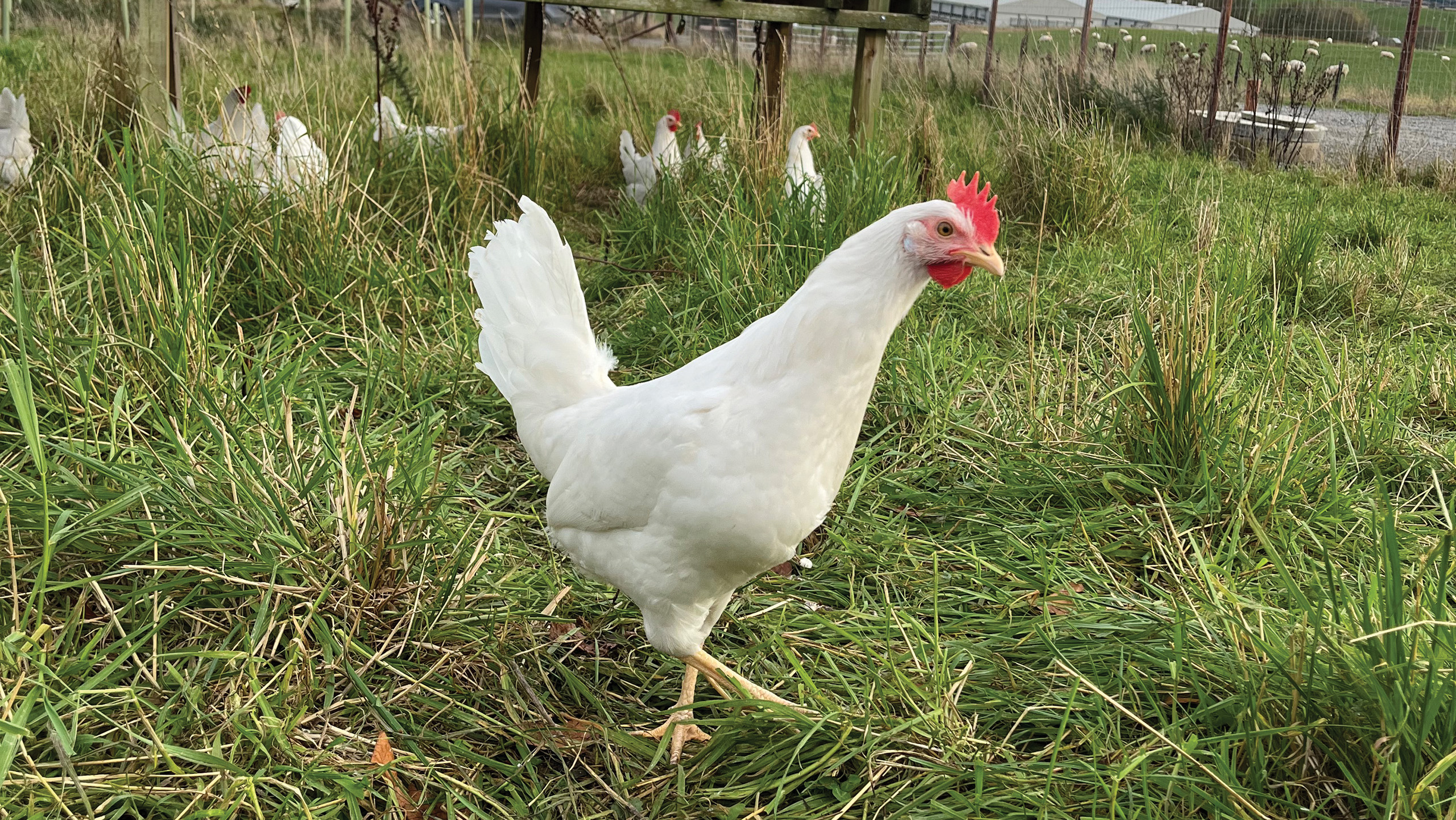
The business has traditionally relied on brown birds, which produce brown eggs and remain productive for about 86 weeks. However, changing consumer preferences and advances in genetics are driving a move towards white birds, which produce white eggs.
“White birds are more efficient, eat less feed overall and lay more eggs in the nest, which makes collection easier,” says Iain. “They can also stay in production for about 100 weeks.”
