

How project is helping French growers adapt to climate change
 © MAG/Richard Allison
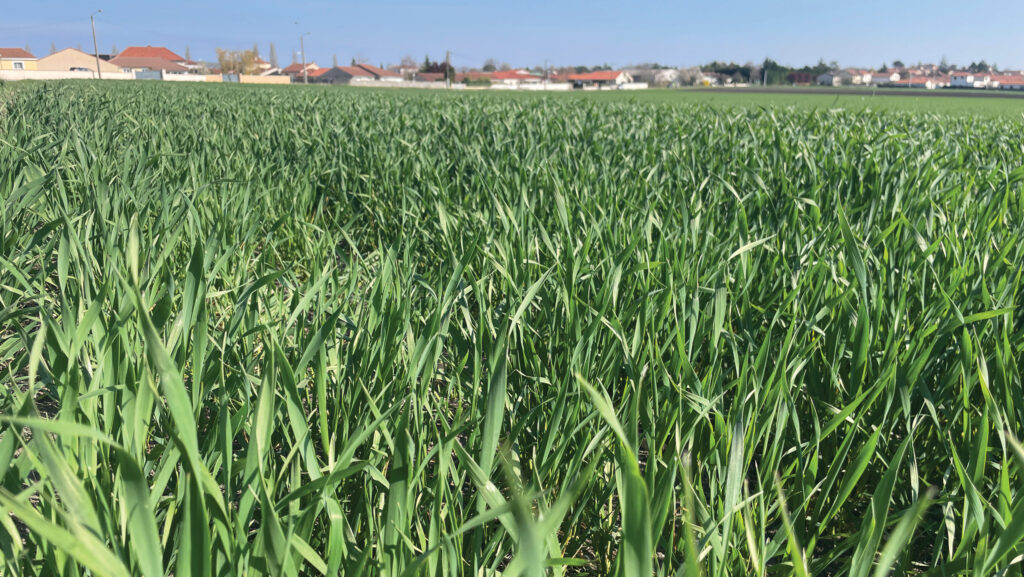
 Like arable farmers in the UK, growers in central France are counting the high cost of climate change with reduced yields and the greater risk of crop failures.
For members of a farmer co-op on the Limagne-Val d’Allier plain, solutions could become available in the next two years thanks to a major project.
The Limagrain co-op, parent company of the seed business familiar to UK farmers, is funding a major 12-year €7m (£6.1m) Matrix project which is trialling and testing solutions which incorporate more resilient crop varieties coming out of its breeding and seeds arm.
See also: How climate change is reshaping crop agronomy
Farm facts
- The family farm is on the edge of the village of Les Vignots, in the Auvergne region in Central France.
- About half of the 180ha of cropping is maize, most for seed and a small proportion to make semolina.
- The other half comprises winter milling wheat, oilseed rape and sunflowers, which varies depending on the season.
- Black volcanic soil – both light and heavy.
- Grows milling wheat (15% protein); is one of 450 farmers supplying the local LG mill and bakery selling under the Jacquet and Brossard brands.
Local arable farmer and vice-chairman of vegetable seeds at Limagrain, Pierre-Antoine Rigaud says that climate change is becoming an increasing problem.
He points to last year where there was only 30mm of rain over the whole summer and three heatwaves with temperatures in the high 30Cs. They would normally see 100-150mm over the summer months.
From 1976-2018, when his dad managed the farm, there were three seasons affected by drought. But since Pierre-Antoine took over, there have already been four.
Heatwaves are a particular concern for seed maize crops, as extreme temperatures can affect flowering and pollination.
Last year (2025) was the worst year since 2015, says Pierre-Antoine. He points to unirrigated maize for human consumption which yielded 3.8t/ha instead of the typical 8t/ha.
Seed crops were hit hard too, with 25% of maize seed production not producing a crop and 40% rejections.
“There was a big impact with the lack of revenue,” he says.
Looking to the future he says climate change is accelerating, with poor years becoming more frequent and he is concerned with seed maize crops.
However, he is confident that practical solutions will arise from the Matrix project along with new genetics, which will secure the farm’s future.
Changes already made
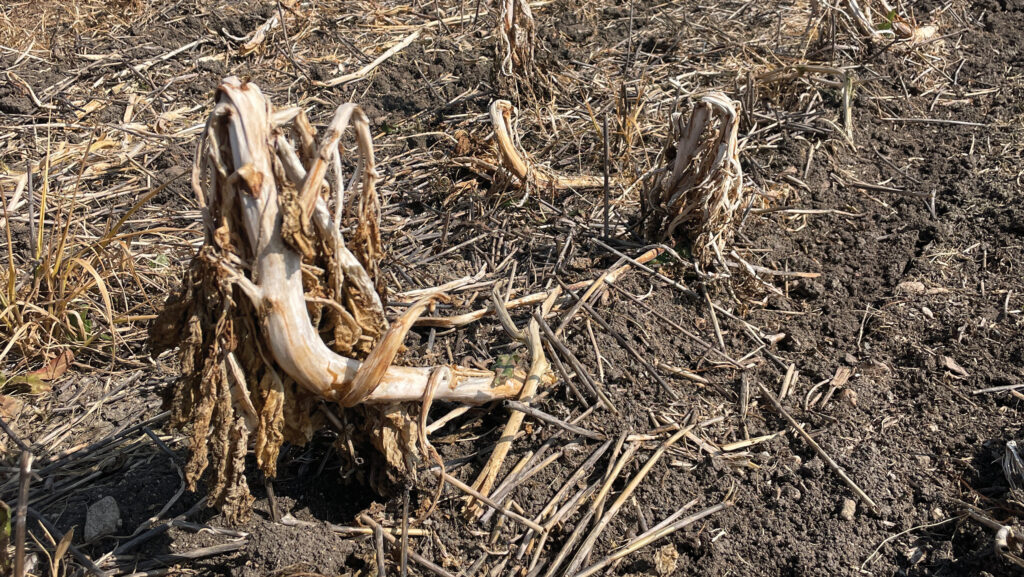
In the meantime, he has already made some changes: he has reduced soil cultivations by adopting direct drilling as well as growing cover crops – both to help conserve soil moisture.
In the local area, he says there is quite a range of cultivation systems with some farmers still ploughing and they in particular are seeing problems.
“They are going down a dead end road.” Pierre-Antoine has taken a direct drilling approach and has seen the benefits since he set out to move less soil, helping conserve moisture.
He typically sees 500mm rain a year, with 350-400mm over the winter.
After wheat and oilseed rape, he always grows a cover crop. Mixes over the years have included five to six species including pulses (beans and peas), forage rye, radish and clover.
However, he recently stopped using forage rye before maize because of the slug problem and is planning to use barley or wheat instead.
He is also looking to increase soil organic matter. He farms volcanic black soil, some of which is quite light.
He is applying digestate, incorporates some straw and also does muck for straw deals with some local cattle farmers.
Cropping has also changed with sunflowers added to the rotation which are more resilient to dry conditions as seen in the Ukraine.
However, after this year, there will be no approved herbicides for the crop.
Green deal
On top of this, the EU Green Deal means farmers face a target of reducing pesticide inputs by 50% and nitrogen fertiliser by 20% – all by 2030.
He says new varieties with better disease resistance are key.
“Genetics [better disease resistance] can help farmers cut chemical inputs for crops,” he explains.
Pierre-Antoine has already reduced pesticides a little and he uses minimal amounts on oilseed rape. For nitrogen fertiliser, he has cut back by 40-50kg/ha in good years.
Farming on the Limagne-Val d’Allier plain
Cropping in the area is constrained by rainfall as the Puy mountains to the west and Forez mountains to the east create a rain shadow with a typical annual rainfall of 600mm.
Therefore, with yields constrained, farmers tend to add value and that is one of the reasons why the co-op was formed. Today there are 1,300 members.
The average wheat yield for members is about 6-7.5t/ha and they grow milling wheat with high protein levels (15%) for milling.
Some maize is grown for milling into semolina. Dented and non-flint dented types yield up to 9t/ha dry matter.
About 10-15% of maize for human consumption is irrigated and this will yield 14-15t/ha.
Limagrain co-op in numbers
- Parent company – farmer co-op
- Started as a French farmer co-op. In 1965, established its own seeds business
- 1,300 active co-op members with 50,200ha of crops under contract.
- International seed and agri-food group
- No 4 seed company in the world and No 1 in Europe for OSR
- No 2 French industrial baker and No 1 in Europe for functional flour.
Solutions
Breeding and environment (envirotyping)
© MAG/Richard Allison
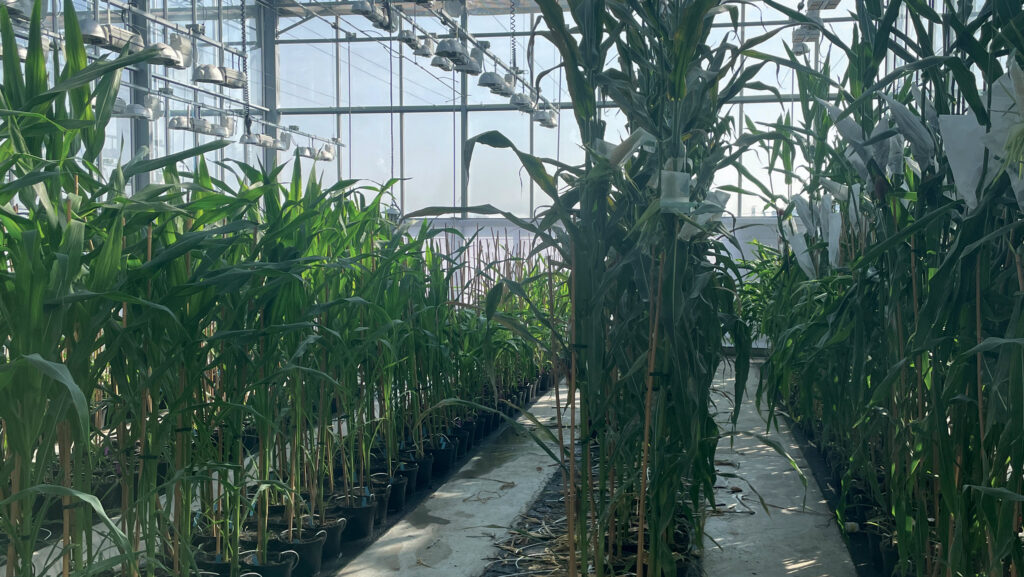
Limagrain is using novel breeding approaches such as envirotyping to help breeders select varieties that are better adapted to the greater weather extremes seen in recent years.
A good example is Geostar maize, which are varieties that have been selected as being the best-adapted to the different environmental conditions seen in different seasons.
As Manuel Personne, envirotyping team manager explains, in a given season, there will be one variety that outperforms all the others. And this will change according to year.
For breeders, this makes it challenging as the variety ranking will differ year to year. Therefore, there is a need to describe why they vary and then select for those varieties that can smooth out the year effects.
This is done by envirotyping, which is the characterisation and quantification of environmental factors like climate, soil and water and their impact on final yield. This means they can model performance in different situations.
By using this technology, the breeder is improving the stability and performance of its crops, says Manuel.
In addition, Limagrain can look at solutions for arising problems by looking at other countries or continents, where stresses are already happening.
Matrix project
Drilled sunflower stubble © Richard Allison
Declining soil health and increased soil erosion is a growing problem for arable farmers in the Limagne-Val d’Allier area of France.
To address this, Limagrain is funding and carrying out a major 12-year project with the first fields drilled back in the autumn of 2022.
Its main aim is to identify the most viable system by 2028, that will help member farmers become more resilient to climate change.
Other aims include improving soil water efficiency, optimising soil fertility and preserving the region’s agronomic and economic viability.
In addition, it will also help farmers meet the EU Green Deal targets, which need to be reached by 2030. These are to reduce chemical inputs by 50% and nitrogen fertiliser by 20%.
What makes the project unique is its design, which is based on an agricultural development tool designed and successfully used in the 1980s by French researchers (French Agricultural Research Centre for International Development) in tropical environments.
Called the matrix (matriche), this is the first to be carried out in Europe. Effectively, it is a complex matrix combining a systems approach underpinned by replicated small plot trials on the same site.
In practice, the trial covers 49ha.
- Systems approach: 61 larger field plots managed under typical farm conditions for the area using standard farm machinery and practices
- Replicated small plot approach: 28 plots used for a statistical approach (managed with support of Cirad expertise)
It is testing different combinations including:
- Eight different maize and soft wheat varieties
- Three soil types
- Three cultivation systems (plough, min-till and direct drill) with and without cover crops
- Seven crop rotations (some with irrigation and some unirrigated); crops include wheat, grain maize, sunflowers, chickpeas and oilseed rape
- Four different levels of inputs (combinations of standard or reduced fertiliser and chemicals).
Results will cover:
- Technical: Yield, protein, weed control, disease, pests, nitrogen
- Financial: Gross margin, operating costs, fixed costs
- Environmental: Carbon footprint, soil carbon, soil moisture.
Results from the micro and field plots are reviewed each year and the systems continually evolve. “If something doesn’t work, it will be dropped,” he says.
At the end, they hope to have a cropping system that stands out. Then from 2028 to 2034, they will undertake knowledge transfer of the findings to Limagrain co-op members.
