

No-till farm evolves to combat frequent flooding
© Mike Abram
Frequent flooding, poor arable prices and a desire to share knowledge with others is driving on-farm change for Tess Lincoln and her husband Tom.
Their Leicestershire farm has a history of innovation. Tess’s grandfather, Tony Reynolds, was one of the pioneers of no-till establishment in the UK.
His changes were partly initiated to reduce sediment and nutrient run-off into two rivers which run through the 560ha farm – Burton Brook and the River Eye.
The switch avoided the farm being converted completely to permanent grassland, or areas being compulsory purchased to prevent run-off.
See also: How a colour sorter investment helps secure milling premiums
Frequent flooding
However, flood defences for the nearby town of Melton Mowbray, built around the same time in 2003, have caused increasingly large parts of the farm to become a flood storage facility, forcing a rethink of land use.
“When they first introduced the defences, we were given a map with the area most likely to flood and told it could be a one-year-in-20 occurrence, possibly a little more,” says Tess.
“We grassed that area down because it wasn’t worth the risk of cropping, but we’re finding that one-in-20-year occurrence has become more like a 20-in-one-year occurrence, with the area being affected much larger.”
While the damage to cropping has been frustrating and upsetting, recognising the new reality has prompted a rethink on how to best use that land.
Initially, Tess used Sustainable Farming Incentive (SFI) options, such as unharvested cereals and winter bird food, to buy some time for a decision on whether to permanently grass down a larger area.
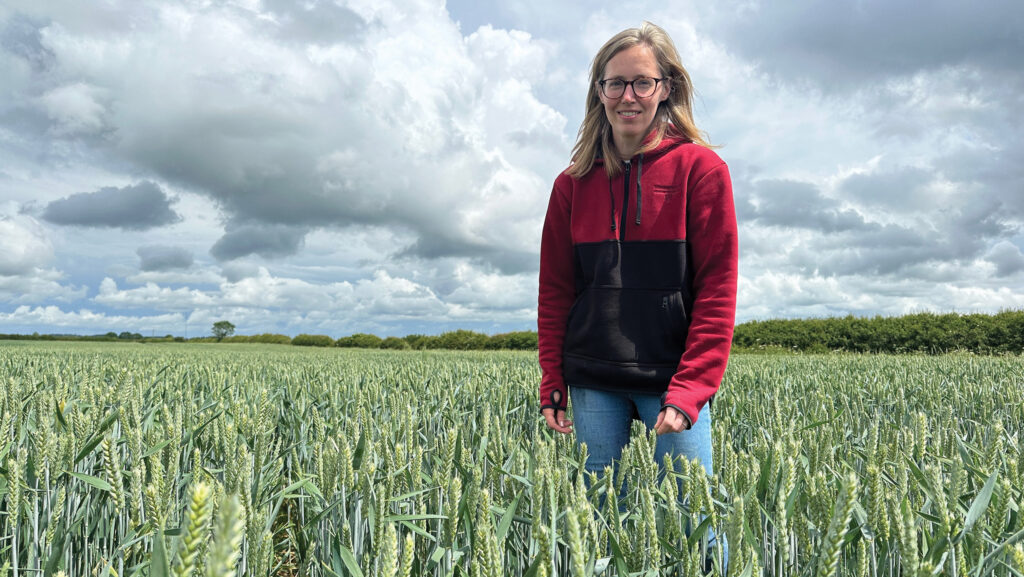
Tess Lincoln © Mike Abram
More beef, less arable
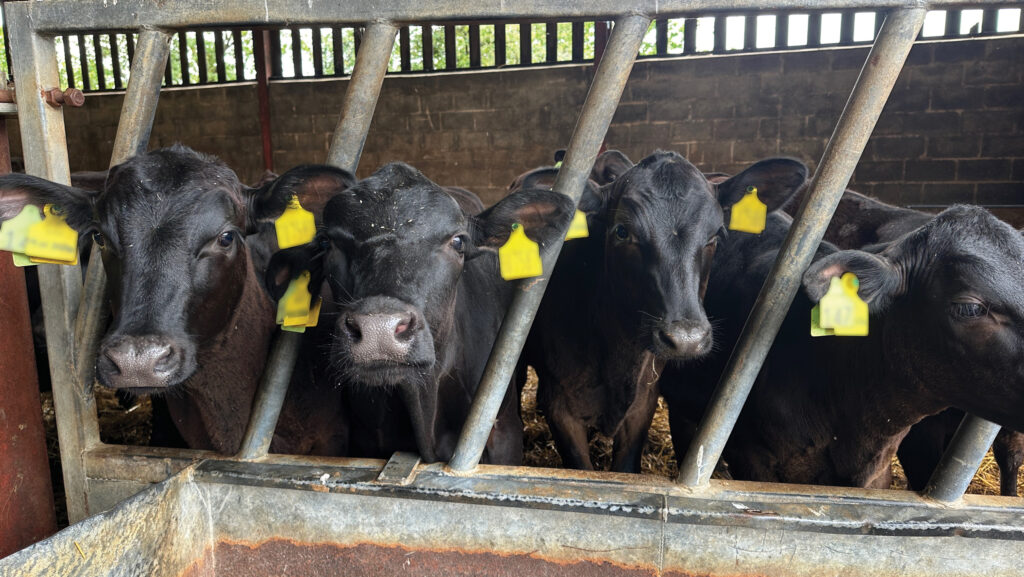
With the beef enterprise started by Tess and Tom in 2019 performing well, it’s likely a further 80ha will be converted to permanent pasture over the next two to three years.
That will coincide with the expiry of a long-term Higher Level Stewardship (HLS) agreement next year.
The inflexibility of the current HLS scheme is a key reason Tess will be happy to see it end. Under the current agreement they can only use very low stocking rates on the permanent pasture, making it difficult to implement mob grazing, which Tess would prefer to employ in line with the farm’s regenerative practices.
The agreement also includes 60ha of overwintered stubble, which doesn’t fit with the farm’s current approach. Tess explains: “If we have more grass in the rotation, that 60ha becomes a bigger proportion of the arable area, and we find on our heavy clay soils spring cropping doesn’t work for us. It will be good to get out of it.”
To make the transition easier, Tess has deliberately picked small areas of options, such as herbal leys and low-input grassland that she can increase within SFI.
The changes in land use will allow the farm to double cattle numbers over time. Their model currently brings in batches of 15-20 Aberdeen Angus-cross calves from a local dairy farm to fatten through to 18 months, on a Tesco Aberdeen Angus contract.
“Originally we were doing around 60 calves a year,” Tess says. “This year it will be nearer 80 to 90. We’re not in any hurry to double, but we’re building towards that.”
Helping Tess and Tom navigate the changes to build a more resilient business has been George Cook at Andersons, with the eventual aim of having a business that doesn’t include any SFI or outside support.
A key decision will be made shortly on whether to start using more contractors for arable operations. “The big one is harvest,” says Tess. “We have an old combine that is due for renewal and obviously that’s a huge cost, particularly with arable not paying that well.”
With George’s help, Tess is analysing factors including repair, fuel and labour costs, to make the correct decision for the business.
George also encouraged the couple to consider what they enjoyed about farming, and they decided they were getting greater reward from the livestock than from arable. “We do love the arable, but we hadn’t been able to as much because of the flooding and the stress that’s been bringing,” she says.
“Now [the ethos] is prioritising the livestock side while making sure the arable doesn’t suffer. I think we’re getting into a bit more of a rhythm with it now.”
On-farm educational visits bring rewards for Tess and Tom
© Mike Abram
Having grown up watching her grandfather host farmers from across the world interested in learning more about zero tillage, and with her father equally keen on helping young people into farming, it is perhaps natural for Tess Lincoln to want to host educational visits on farm.
The first step for Tess was to undertake a Countryside Educational Visits Accreditation Scheme (Cevas) course through Leaf (Linking Environment And Farming).
“I think the health and safety side of hosting visits scares a lot of people away, but Cevas made that straightforward, and covered what paperwork was needed,” Tess says.
“A lot of the health and safety isn’t that much different to what should have in place for your employees. We do a risk assessment for each visit, which we provide to the school (and keep a copy for our insurance) that covers the basics of making sure hands are washed after touching animals and not climbing on bale stacks.”
It reinforced the idea that farmers do not need to be professional teachers to be effective educators and provided clarity on what infrastructure was required.
“You don’t need special facilities like a dedicated classroom – just basic toilet and handwashing facilities.”
Having gained accreditation, Tess received funding from Leaf to host two free school visits as a test. “We loved it and decided this was definitely something we wanted to do.”
The farm has received capital grant funding for 25 such visits a year for three years, worth about £360 a visit. Together with employee Jo, a former teacher, Tess has hosted 15 funded educational visits so far this year, ranging from primary school classes to colleges.
“We try to do something different each time,” Tess says.
For the college students Tess made a booklet of common wheat diseases, telling the students they were her agronomists for the day. “We then talked about how we might cure the disease or prevent it in the future.”
Those kinds of activities open older students’ eyes to different career paths.
On a personal level the farm visits offer a break from the stresses of commercial farming, Tess adds. “When everything is a bit dark and miserable with farming, it’s nice to have the kids on farm.”

Staying sharp shouldn't be a chore
Explore more / Transition
During the series we follow our group of 16 Transition Farmers through the challenges and opportunities as they seek to improve their farm businesses.
Transition is an independent editorial initiative supported by our UK-wide network of partners, who have made it possible to bring you this series.
Visit the Transition content hub to find out more.
