US research reveals benefits of regenerative agriculture
 © Tim Scrivener
 Regenerative agriculture is a proven route for arable farmers to break out of the high-input systems many of them are trapped in, claims a leading US researcher.
Speaking at Groundswell 2026, Dr Jonathan Lundgren of the Ecdysis Foundation pointed out that lots of companies are making money at the farmer’s expense by selling them products that destroy rather than increase life on the farm.
“The end result is that farmers earn just enough money to limp along,” he stressed.
“Getting out of that system and off the treadmill doesn’t mean sacrificing profit – don’t accept that you will lose money by changing the way you farm.”
See also: How the newest Group 1 breadmaking wheat stacks up
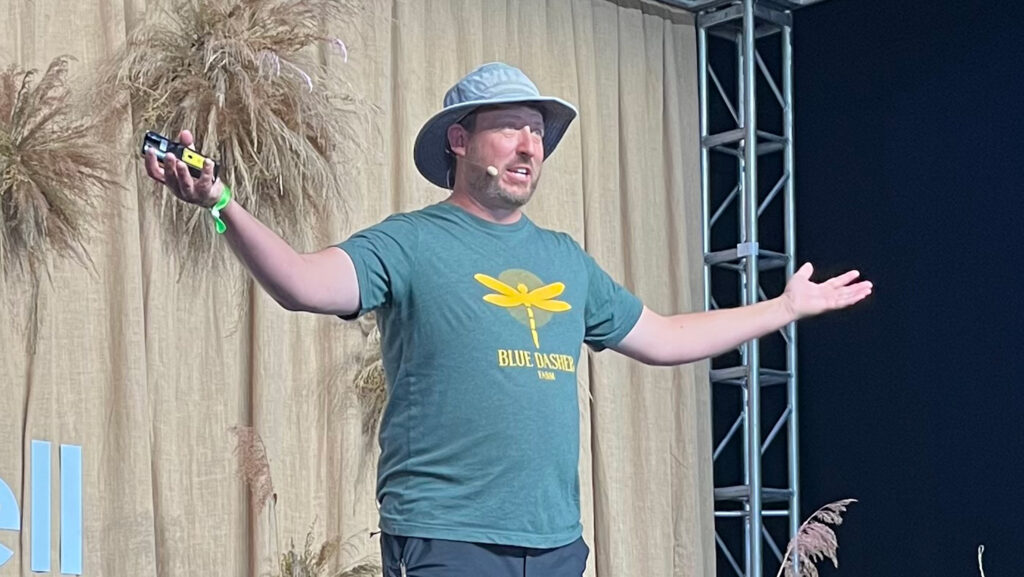
Jonathan Lundgren © Louise Impey
What the research found
Jonathan’s work in America has measured the regenerative outcomes on more than 2,000 farms across 38 states, with 500 data points recorded on each farm.
“Regenerative agriculture is outcome-based, not practice-based,” he added. “So we looked at seven outcomes to assess progress and understand more about its contribution.” These are:
- Biodiversity
- Nutrition
- Water
- Profit
- Farmer health and wellbeing
- Climate and carbon
- Pollution
Each of those farms had its own management philosophy and they were scored on a scale from one to eight (where one is conventional and eight is fully regenerative) to determine how they were performing.
Biodiversity benefits
Biodiversity was the most important outcome of all.
“All of the outcomes we want to see come from growing life on the farm. A useful guide to every management decision you make is to ask whether it will increase life or kill it. That way you will know which course of action is best,” said Jonathan.
In terms of pollution, over a three-year transition period regenerative farms had taken huge strides in reducing fungicide and insecticide use, with fertiliser and herbicide use also coming down (see table below).
Three-year transition: Input reductions (Washington and Northern Plains) |
||
| Conventional | Regenerative | |
| Eliminated bagged fertiliser | 0% | 66.67% |
| Eliminated insecticides | 60.71% | 88.89% |
| Eliminated herbicides | 0% | 62.96% |
| Eliminated fungicides | 28.57% | 92.59% |
“Many of these products are doing harm, especially where bioaccumulation is taking place,” he warned. “Where possible, we need to abandon agrochemicals or at least restrict them.”
In the US, a significant increase in biodiversity has been measured on regenerative ranchlands where grazing animals are used to help improve soil and habitats. Species abundance and richness have risen for both birds and insects.
“Regenerative agriculture celebrates life,” said Jonathan. “It’s real and it does deliver. Remember that it’s OK to try things on your farm.”
© Tim Scrivener
Profit, nutrition and farmer well being
Turning to whether regenerative farms make more profit, he acknowledged that the study shows conventional systems produce more yield, but that it comes at a much higher cost.
“The profit was the same. Put another way, you don’t lose money going regenerative.”
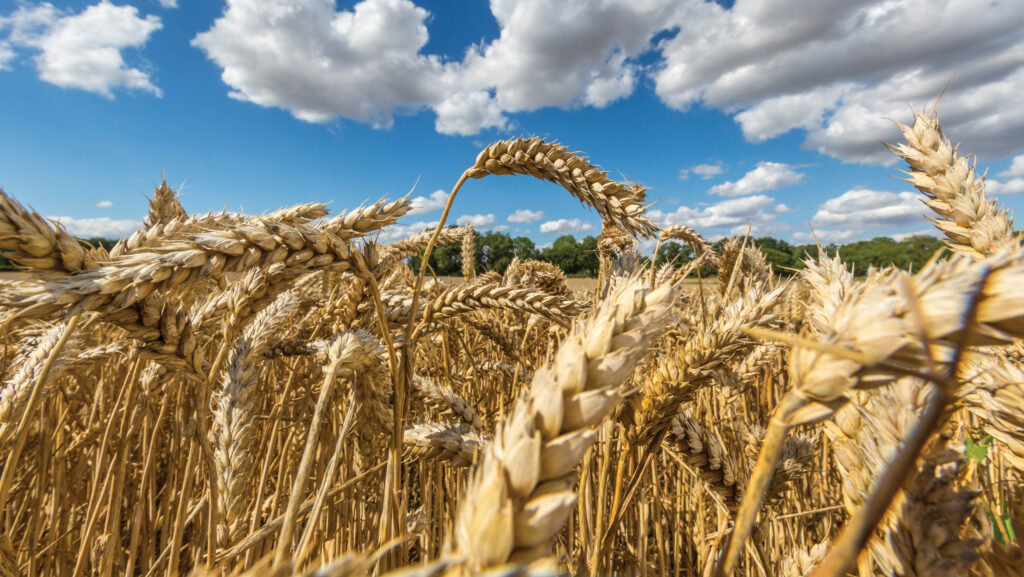
Regenerative agriculture also improves nutrition, according to the US work. Wheat with twice the protein content and higher micronutrient levels than crops from conventional systems was recorded on these farms.
Farmer health was also studied, with levels of allergies, asthma, anxiety and depression measured in all arable farmers and then compared to the national averages in the US.
“These results are still coming in,” said Jonathan. “But so far, they show twice the level of allergies among farmers and huge increases in asthma and depression. That’s not desirable at all.”
Water and carbon
On water, the data showed the amount of water required in regenerative orchards was 50-70% less than conventional systems, without reducing yield.
“When you consider that every individual almond needs two gallons of water, that’s quite a saving. Better water cycling is being achieved at scale.”
The study found that regenerative crops on arable farms had the potential to store enough carbon for twice the annual emissions of the US.
In pasture or rangelands, going fully regenerative would store enough carbon equivalent to offset more than four years of annual emissions.
“That’s because this way of management increases carbon levels deep down in the soil,” Jonathan said.
Project coming to the UK
Project Avalanche, a farmer-led science programme run by the Ecdysis Foundation, is coming to England.
Growers who want to be part of this initiative were urged to register their farms, so that soil, food and biodiversity can be measured over a three-year period.
“It’s free of charge,” said Dr Jonathan Lundgren of the Ecdysis Foundation. “It’s about collecting hard data from your own fields so we can understand more about what regenerative practices are delivering and share the learnings.”
Visit the Ecdysis Foundation website to learn more. The Ecdysis Foundation is a non-profit research organisation.