

Advice on cropping decisions for 2027 forage maize crops
 © Tim Scrivener
Maize growers whose crops suffered this year in the heatwaves and prolonged drought are advised to prepare for these extreme conditions again in 2027, as predicted by the Met Office.
See also: Maize list overhaul helps variety choice for 2027
But this doesn’t mean a radial overhaul of maize management, site or variety is necessary. Instead, the focus should be on getting a robust plant established as soon as possible.
The stronger it is, the better it will be able to withstand drought and get the crop to maturity, says KWS product manager Andrew Cook.
© Tim Scrivener
Follow best practice
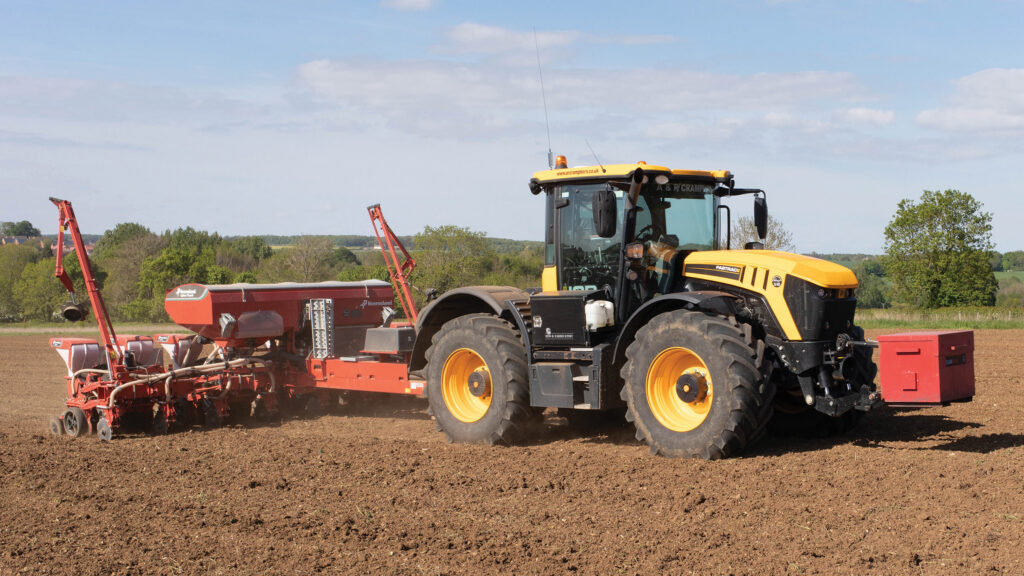
He says simply following best practice will be effective: this means paying attention to different ways of preserving soil moisture and making sure seed is drilled at the correct time for the site.
“Earlier drilled crops performed better this year as they caught more moisture and established well, so the plant was more resilient. Maize loves heat but won’t grow without moisture, even though it is quite deep rooting compared to ryegrass,” he explains.
Visiting maize crops throughout this year, Andrew observed that while drought naturally had a bigger impact on lighter soils, later-drilled crops also suffered from a lack of moisture.
He says this resulted in very site-specific yields, ranging from 4-5t of dry matter (DM) a hectare up to 18t DM/ha.
In fact, he found many crops were harvested before true maturity because they had died. Some were drying down at 8% a week pre-harvest, when typically the rate is 2-3% a week.
“They were dying on their feet and, with no moisture, they couldn’t finish cob filling,” he adds.
Choose a September-maturing variety
However, Andrew stands by his advice – for every farm, regardless of location – to select a maize variety suited to a September harvest.
He suggests farms whose crops were disappointing this year should look at their five-year average results, pointing out that although 2026 produced 20% higher heat units than normal, 2024 was very cold with fewer sunshine hours. That year, some crops struggled and were caught by frost prior to harvest.
“If you’ve had success with maize in the past, you can in future. You’ve got to focus on the right variety [for your farm]. If it has worked, you’ve to allow for good and bad years.
“We need to remember that we are one of the most northerly areas for growing maize and still see hot seasons and wet seasons.”
Feedback from 2025’s harvest also highlights the importance of remembering the bigger picture. Many farmers reported a lower yield but had “a nice product” in the clamp, says Andrew.
Soils were protected, not damaged at harvest, and the whole rotation, including catch and cover crops, worked.
© Tim Scrivener
Build soil organic matter
He also points to the visible benefits from having livestock or muck in the rotation. Manure is not a “one-year wonder” in terms of boosting soil organic matter, he says.
Rather, it pays dividends when applied annually over the longer term. Organic matter helps to hold soil moisture and provide structure, making soils more resilient for maize.
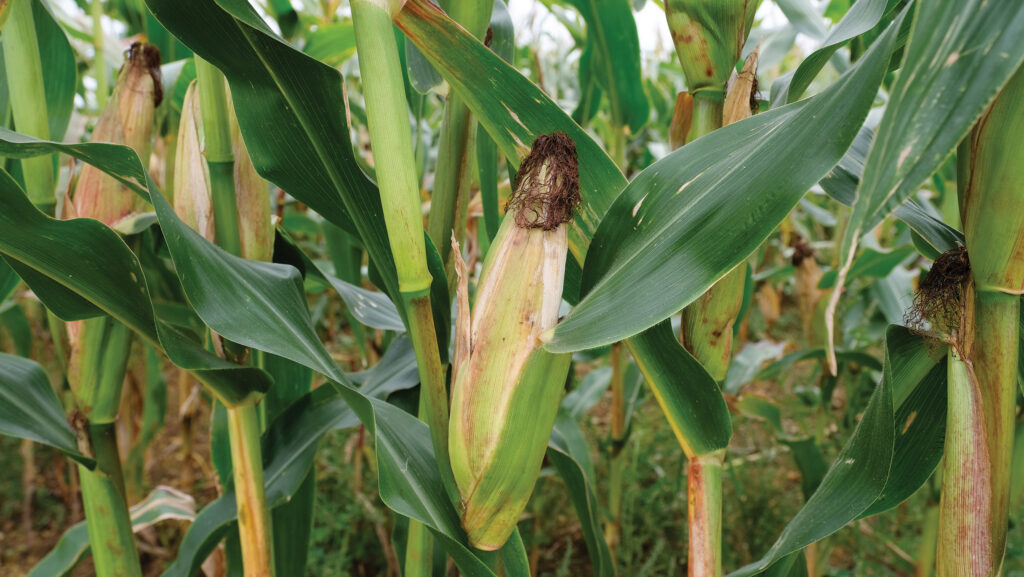
“It’s worth some extra yield: crops held onto green leaf for longer this year, and moisture gets cobs filled, which is massively important – 50-55% of a maize crop is cob,” he stresses.
Use soil temperature to guide sowing date
This winter’s weather will determine next spring’s seedbed preparation and sowing dates. Drilling at the correct time for the site is determined by soil temperature: 8C and rising for three consecutive days on light soils or 12C for heavier soils.
Andrew says it’s a crucial guide and advises growers to wait for the right conditions. Going too early risks cold and wet weather post-drilling, which will compromise establishment.
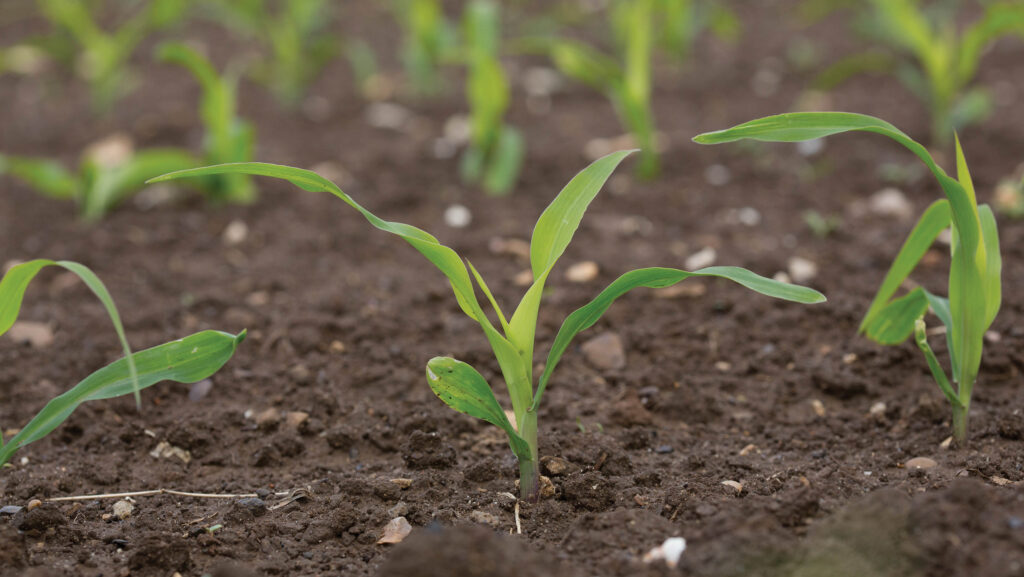
“Then adjust your drilling depth to manage moisture in the seedbed. Rules of thumb are 4-5cm deep on heavy soils and 6-7cm for lighter ones. Then, as water becomes a limiting factor, the advice is to sow deeper.
“Also manage cultivations to save moisture and if it’s dry, don’t be afraid to roll. Don’t be too greedy with a catch crop and rob the soil of moisture. Better to have a small, quality yield, then get maize a good establishment.”
Weed control is another factor influencing soil moisture content, as even a low weed burden deprives maize plants of nutrients and water. “It has an impact of 1-2tDM/ha on final yield and can be more,” he adds.
Another tactic is to reduce the maize plant population at drilling, as this makes more moisture available for each plant and protects yield.
For an early maturing variety, for instance, the recommended plant density in a good water supply would be 10-12 plants/sq m, but this falls to 7-9 plants/sq m for water-deficient soils. Adjusting drill settings is “time well spent”, Andrew says, for the results it brings.
Consider foliar nitrogen
Once crops have had a good start, he advises a late foliar application of nitrogen. He saw the difference it made to some well-established crops this year when the ground began to really dry up.
Under dry conditions, nutrients can become trapped in the soil. Without moisture, they can’t be taken up by the plant.
Peak demand (60% of it) for nitrogen is after the nine-leaf stage in maize, which occurs in late July or early August, says Andrew. If nitrogen can’t be mobilised from the ground, this is when cob filling suffers and yield is restricted.
“Only one application is needed, and this can help fill the gap, improve nitrogen use efficiency and boost cob development, but it won’t save a poorly established crop.
“Foliar [application] delivers small amounts of nitrogen: about 7-10kg/ha has the effect of 40-50kgN/ha on the ground. Go as late as you can get spray on, when the crop is about waist high and still bends as the tractor and sprayer go through without causing damage,” he explains.
© Tim Scrivener
Analyse maize clamps regularly over winter
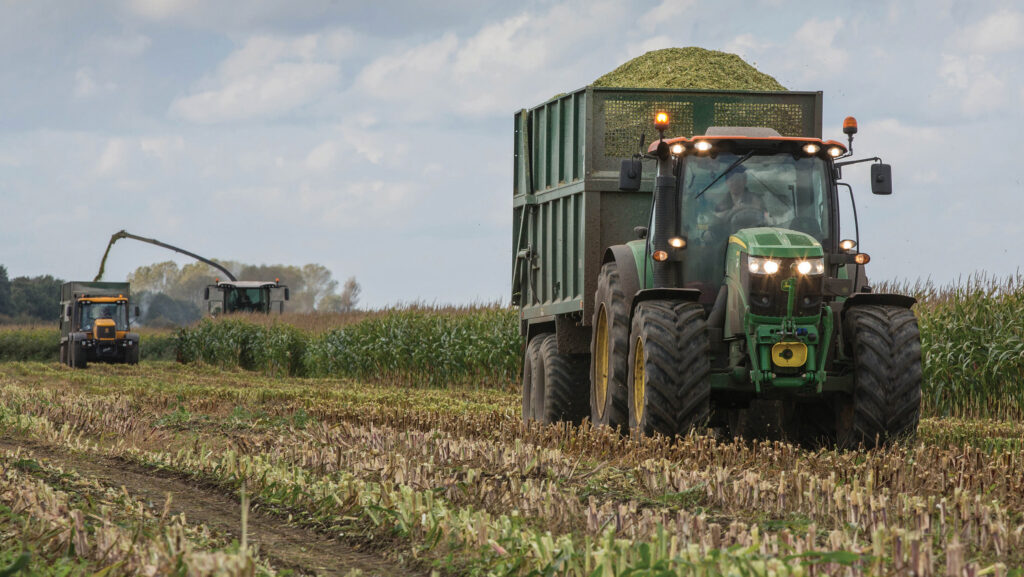
Maize feeding potential this winter will be a challenge for many farms, having harvested super-dry crops with a lack of cob fill.
There could be potential consequences from such crops making consolidation at ensiling difficult, says KWS product manager Andrew Cook.
It means clamp management will need to be “spot-on” all winter, to reduce the risk of heating, spoilage and rations with poor palatability for cows.
This includes all best practice techniques, from managing the sheets carefully, to using the right equipment that leaves a clean, tight face, and working quickly across the clamp.
Furthermore, Andrew says this is the year when regularly sampling the maize clamp all winter will help track changes in nutritional status, allowing rations to be altered accordingly.
As fermentation progresses, starch becomes more rumen-available, with clamps usually stabilised by Christmas.
“But work with your nutritionist to take good samples regularly and monitor the ration and cow performance – relate this back to silage quality,” he advises.