Making sense of the CAP reform proposals
‘Greening’ and ‘capping’ feature in the latest CAP reform proposals, but what will they mean for UK growers? Caroline Stocks takes a look
They were supposed to make things simpler and fairer for farmers across the European Union’s 27 member states.
But plans unveiled by the European Commission to reform the Common Agricultural Policy have left many UK arable producers fearing they face more work with fewer benefits.
Since being unveiled by European farm commissioner Dacian Ciolos in Brussels in October, proposals to revamp the CAP have been widely derided by politicians and industry leaders, both in the UK and further afield.
DEFRA secretary Caroline Spelman called the plans a missed opportunity and said they failed to respond to the challenges of securing food supplies in the face of climate change and rising costs.
At a meeting with Commissioner Ciolos in Brussels last month (14 November), she said the proposals did not offer the best deal for UK farmers, taxpayers or the environment and would actually prevent farmers from becoming more sustainable.
Simon Mountjoy, partner at agri-business consultants Brown and Co, said the area causing particular contention – especially for growers – was the so-called “greening” of direct support payments.
Under plans to justify CAP payments to the public by proving farmers provide an environmental good, the commission wants 30% of direct payments (Pillar 1 support) to be held back until farmers meet certain environmental criteria.
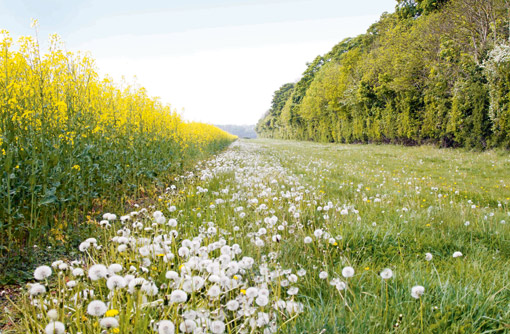
As well as maintaining permanent pasture, these will include putting at least 7% of farmland into an “ecological focus area” (see box).
And while it was initially believed farmers could opt out of putting land into environmental measures in exchange for giving up a portion of the payment, the commission has now said farmers who fail to comply will face fines.
“It’s a return to set-aside in all but name,” Mr Mountjoy said.
There has been some debate whether farmland currently put into Entry Level and Higher Level Stewardship will qualify as part of that 7%, or whether extra land will have to be put into environmental measures. But the commissioner’s office has indicated that farmers shouldn’t hesitate renewing or signing up for environmental schemes because they think greening will mean they pay twice. It stressed that it would allow stewardship options to count towards the ecological focus area.
Mr Mountjoy said current field margins and strips accounted for an average of 4% of an arable producer’s farmland, meaning an extra 3% of land would have to be taken out of production to comply.
“It’s a significant amount of land for most people to find and seems madness when we should be concerned about producing more food, not taking land out of production,” he added.
“For high-value crops like potatoes, that amount of land could make a serious dent on profits.”
Arable producers would also be hit by a crop rotation rule under the greening proposals, which would require them to have at least three crops on their farm and no one crop accounting for more than 70% of their land.
While organic growers would not have to comply, as the commission believes organic farming already provides enough environmental benefit, Ian Ashbridge of farm business consultants Bidwells says many growers may have to change their block cropping patterns.
It could also affect contract farming arrangements, as something simple like adding a neighbour’s field into your cropping would bring complications.
“People who grow continuous wheat or wheat/rape rotations will be most affected, as they are the most profitable crops to grow. It will be hard to find a third crop which is comparably profitable,” he said.
“At the moment we don’t know what will count as one crop – will all wheat be under the same category, for example?
“These rules could not only affect crop management, but also the physical management of the business if you have to introduce complicated rotations in order to comply.
“It’s likely you’ll have to think about crop planning more carefully,” he added. “But there are also factors to consider in whether renewing or exiting contracting arrangements will affect your crop percentages and cause problems.”
The NFU has said it will be pushing the commission hard on changing the crop rotation proposals, which it believes will bring more bureaucracy and confusion to the Single Payment System.
“People will trade entitlements and the Rural Payments Agency will end up in a worse muddle than it has been,” union president Peter Kendall told the Agricultural Industries Confederation’s annual meeting in Peterborough last month.
“It will be left struggling under even more paperwork, with no gain.”
The commission’s intention to define an active farmer in order to decide who qualifies for CAP payments is another area the NFU has said it would tackle (see box).
“The active farmer definition is going to be an administrative nightmare,” said Mr Ashbridge. “The test isn’t a test of farming activity, it’s about sources of income and the contribution subsidy makes to that income.
“You can understand that the commission wants to catch out claimants who have no agricultural income, yet claim a subsidy, but this could catch out bona fide farmers.
“For example, if a landowner sells some property one year, it could mean their non-agricultural income is huge. Whether that’s a once-in-a-lifetime event or not, under these rules it could hit their payment.”
The final major area of contention in the commission’s proposals is its plans to cap payments in a bid to reduce the amount large land owners receive in direct support in a bid to justify the payments to the European taxpayer.
Farmers who receive more than €150,000 (£128,000) in direct support (after the 30% greening element has been deducted) will be subjected to progressive capping (see box).
However, the commission has said there will be a mechanism whereby landowners who are genuinely helping rural communities by employing people will be able to offset the salaries and taxes from the subsidy.
“It will be interesting to see how large farmers in particular use this mechanism,” said Mr Ashbridge. “It’s straightforward for owner-occupiers, but it could cause particular problems for contract farmers or those in joint ventures as people are employed by a central business and not by the SFP claimant (see box).
“That means people might not have the opportunity to offset the labour costs on their direct payment and could lose thousands of pounds.”
But despite the uncertainties arising from the current proposals, Brown and Co’s Mr Mountjoy said it was still too early for growers to make drastic changes to their businesses.
“The proposals are expected to be delayed beyond January 2014 and the debate over what the final CAP will look like has really only just started,” he said. “There is still everything to play for at the moment.”
CAP changes which will most affect arable farmers:
Active farmerIn a bid to ensure EU CAP budgets only go to people who most deserve it, the commission has introduced an “active farmer” definition.
Under the rules, landowners will only qualify for their payment if they carry out a minimum amount of farming activity on their land.
They will also have to prove their direct payment accounts for at least 5% of any non-farming income.
Greening direct supportUnder rules to green direct support, 30% of Pillar 1 payments will be withheld unless a farmer meets certain criteria, including:
– Maintaining 95% of permanent pasture
– Cultivating at least three crops on arable land of more than 3ha (7.5 acres). No one crop can account for more than 70% of arable area, while none can account for less than 5%.
– Maintaining an ecological focus area of at least 7% of the farm area, excluding permanent grassland. This could include field margins, trees, hedges, buffer strips, fallow land and landscape features.
CappingIt is proposed the basic payment (but not the greening element) in bands from €150,000 will be subject to progressive capping:
€0 to €150,000 – no reduction
€150,001 to €200,000 – 20% reduction
€200,001 to €250,000 – 40% reduction
€250,001 to €300,000 – 70% reduction
€300,000 and above – 100% reduction
The impact will be mitigated by allowing claimants to offset the amount they pay in salaries the previous year.
How capping could hit:
A 1,000ha farm takes €320,000 before modulation. The greening element (accounting for €96,000) is removed, while a salary bill of €100,000 is offset, leaving a net payment of €124,000 – well below the €150,000 threshold.
A 1,000ha farm run under a contract farming arrangement would not be able to offset the €100,000 labour costs, as the employer (the contractor) is not the person claiming the single payment. This farm’s €224,000 claim would be capped at 40% under the new CAP rules – a loss of 6% on the original payment.