New entrant’s journey from photographer to regen farmer
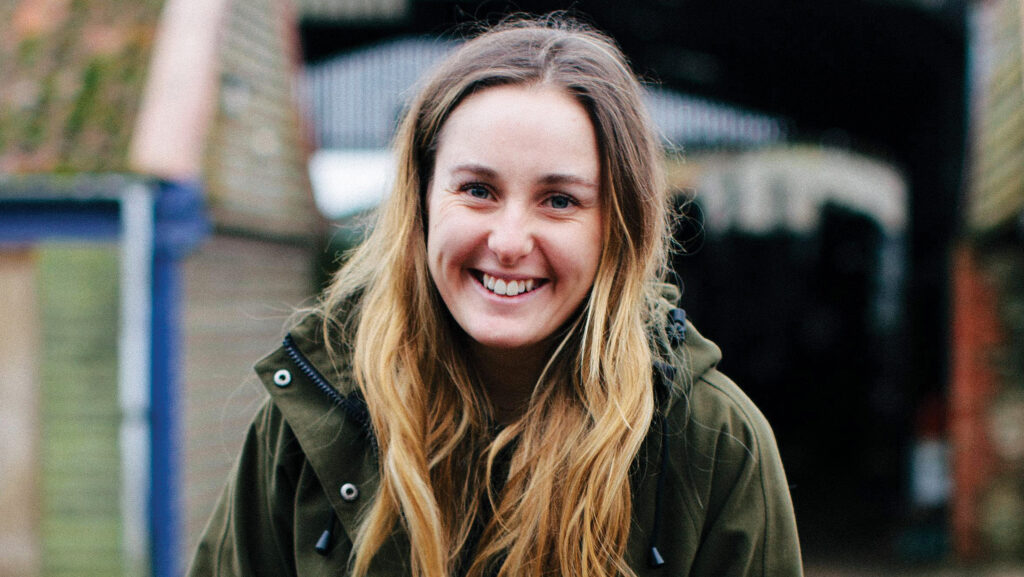 Anna Jackson © Anna Jackson
 Starring in a film, returning home to help run the family farm, and continuing the transition to a regenerative system her father had started three years earlier have all been accomplished by north Lincolnshire farmer Anna Jackson since 2020.
Familiar to many in the industry for her role in the 2024 documentary Six Inches of Soil, Anna’s life changed course dramatically at the start of the pandemic, when she was in her mid-20s, and she hasn’t looked back since.
See also: How heritage rye is used to produce regen premium whisky
Almost overnight, she went from being a commercial photographer in London to a trainee sheep and arable farmer at S Jackson & Sons near Scunthorpe, initially working alongside her father Andrew during lockdown.
Farm facts
- 405ha
- Cropping includes herbage, winter wheat, spring beans and spring oats
- Lighter land rented out for pigs with four year rotation, two years pigs followed by winter wheat then back into a grass ley
Anna admits she faced a steep learning curve and that coming into the industry as the Basic Payment Scheme was being phased out created extra pressure and uncertainty.
However, she has since embraced all that farming has to offer and is enjoying the variation every day brings.
“For a myriad of reasons, it’s really hard for young people to get into farming,” she says. “It’s a shame, as that’s when they have the most energy and are full of ideas.”
Being one of the three new entrant young farmers featured in Six Inches of Soil was a positive experience, she adds, even though filming tended to take place when she was most busy on the farm.
“That was stressful at times. However, it was worth it for the feedback we received and the interest it generated in the way we are farming.”
Low-input approach
The 405ha family farm is run as a low-input system, with regenerative principles applied wherever possible.
Advice from consultant Ben Taylor-Davies has been followed for the past three years, helping with any production issues and keeping the business on the right financial footing.
Their forward-thinking agronomist, Ben Treadgold, has also been a big help, adds Anna, and has worked with them to reduce chemical use and bring the agrochemical spend down.
Combinable crops and herbage seed are grown, while sheep are fully integrated across the rotation and some land is rented out for pigs.
The rotation is diverse, with two years of grass for herbage seed grown before going into a spring cereal, followed by winter wheat and then spring beans, then back into wheat.
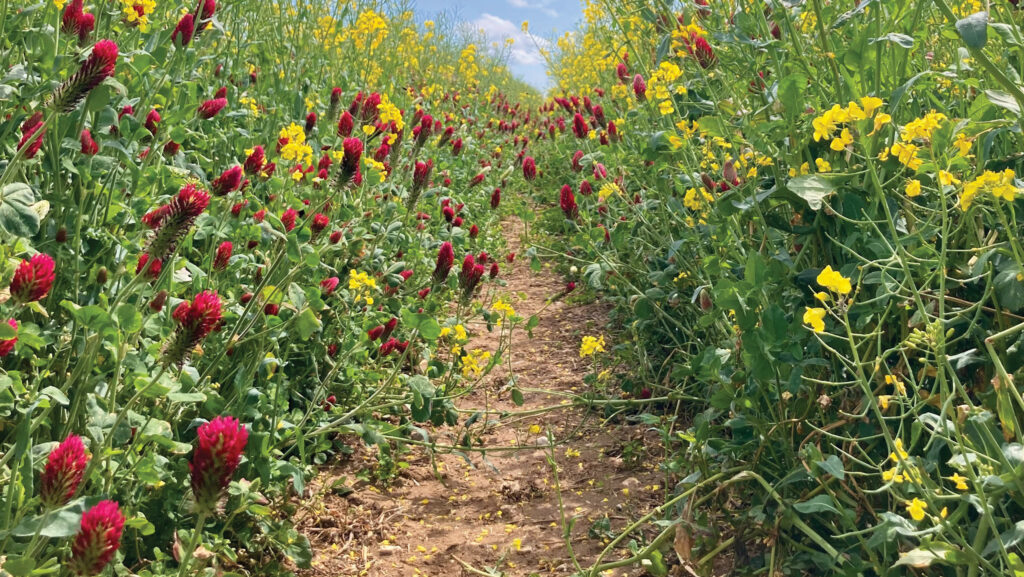
Cover crops are used ahead of spring crops, while variety blends and bicrops also have a place.
“It’s flexible,” says Anna. “We have grown ‘boats’ – or beans and oats – in the past, but we’re going to change to oats and clover this year, so that we can, hopefully, get a clover understorey established.
“The place for spring beans is still to be confirmed.”
© Anna Jackson
The purchase of a Horizon drill means the drilling of multispecies cover crops and the use of companion crops has become straightforward, thanks to its different hoppers.
Direct drilling is preferred if conditions allow, with just one field on the farm ploughed this year.
“To keep costs down, our cover crop seed tends to be taken straight from the shed,” she explains. “We’ll see what we’ve got on the farm and take it from there.”
While it is difficult to monetise regenerative farming, there are premiums on offer from companies such as Wildfarmed, providing specifications can be met, she points out.
Integrating sheep
The sheep flock has been one of her favourite projects.
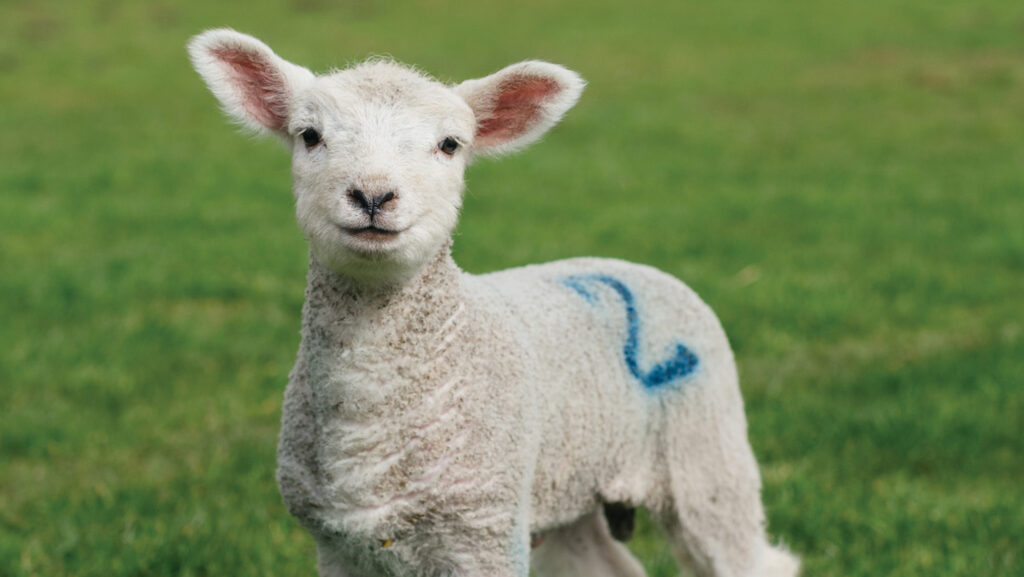
A plan to make the sheep as easy and manageable as possible is working – they now lamb outdoors and the first self-shedder has arrived, following the introduction of an Easycare ram.
“In four years, they should all be self-shedding,” she says. “As they shed, the wool releases a bit of nitrogen onto the land.”
Another reason for integrating sheep is that they have replaced fungicides and insecticides in most situations.
They graze the farm’s permanent pasture in the summer and then move onto the crops in the winter, where they perform a vital role in removing diseased foliage and preventing pest and pathogen build-up.
© Anna Jackson
“They go onto the grass crops in September, where we monitor them closely, before moving onto the wheat in January,” says Anna.
Crop growth stages and the weather forecast have an influence on their management and movement.
“The critical timing is to get them off the grass by February and only to leave them on the wheat until just before stem extension. After that, they go back onto permanent pasture or a herbal ley.”
They are also used to graze the overwinter cover crops.
The resulting lamb boxes are sold via social media and have proved to be very popular, as well as delivering additional income.
An area of very light, sandy land on the farm is rented out for pig production, with a four-year rotation working well.
Two years of pigs are followed by a winter wheat crop, before it goes back into a grass ley.
Manures and composts are used widely across the farm, with a straw-for-muck deal helping to supply what’s required.
A Johnson-Su bioreactor producing microbial inoculants has been shelved for now while they research the benefits in more detail.
What does the future hold?
The changes Anna would still like to make on the farm involve more sheep and less nitrogen fertiliser, along with better use of data for decision-making.
She also accepts there will have to be more hand-rogueing of weeds, as pre-emergence herbicides aren’t used as a rule.
“Every time we are thinking about using an artificial input or intervention, we ask ourselves whether we really need it,” she explains.
Sap testing is performed routinely, to optimise soil health. The use of Omnia software is helping her to interrogate the farm’s data and target actions accordingly.
The outlook for farming is scary, Anna says. “The Budget has given us plenty to worry about and we still need to sort out inheritance issues and reduce our tax liability.”
The future of the Sustainable Farming Incentive is another unknown. “Without it, we would have to shorten our rotation and grow more wheat.
“If we then didn’t make the protein requirement specified by Wildfarmed, our returns would suffer.”
She is also considering establishing a dog walking field, to boost income and take advantage of the farm’s location. “It wouldn’t require any additional labour and I could use my social media presence to market it.”
Other activities
Anna volunteers monthly for the Future Food Movement, an organisation that helps food businesses act with confidence on sustainability.
A two-way exchange of information, done via Zoom meetings, means farmers and food businesses are partnered to share their challenges and discuss possible solutions.
She is also involved with the North Lincolnshire Forum for Agriculture and Horticulture, which looks at more local issues and gives the industry a collective regional voice.
More recently, the farm has hosted the Farm Carbon Toolkit’s annual field day, with Anna opening the doors to other farmers and sparking discussion about the future.