£2.5m farm project marks first precision-bred OSR in Europe
 © Blackthorn Arable
 A £2.5m oilseed rape light leaf spot project is bringing the first precision-bred variety onto commercial farms in Europe.
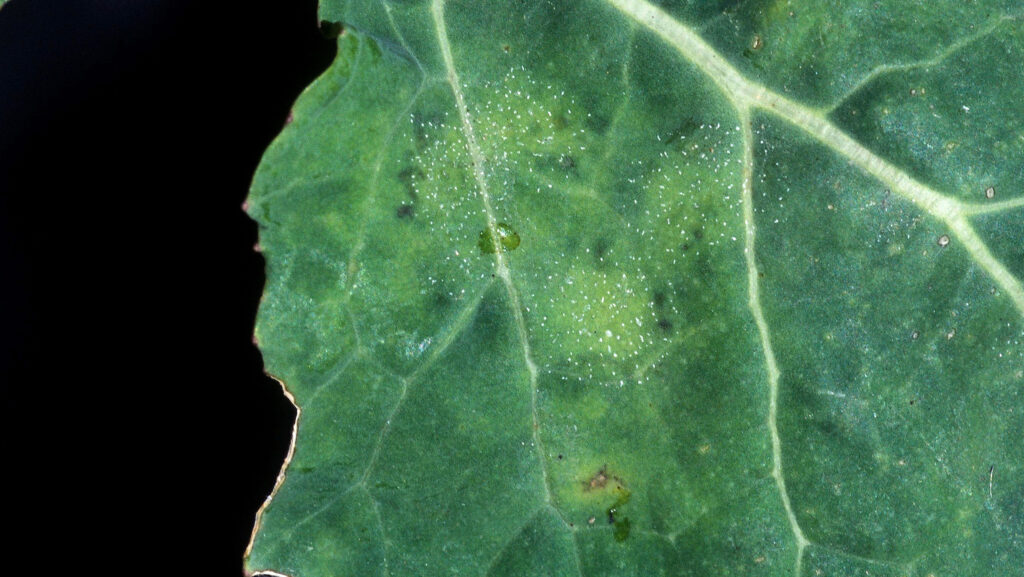
Crop researchers have identified a plant susceptibility gene for light leaf spot – the number one disease threat to UK oilseed rape.
By switching off this gene using a form of gene-editing known as precision breeding, researchers have discovered it is possible to reduce the light leaf spot pathogen’s ability to infect the crop.
See also: How Lincs grower reclaimed world record oilseed rape yield
Precision-bred varieties
The project, Light Leaf Spot Enhancing Resistance And reducing Susceptibility with Editing (LLS-Erased), aims to develop oilseed rape varieties using precision-breeding techniques.
“This will accelerate the introduction of beneficial traits without introducing foreign DNA with reduced susceptibility to light leaf spot,” says project lead Tom Allen-Stevens of the British On-Farm Innovation Network (Bofin).
The project will move traits beyond the laboratory and into farmer-led field trials on commercial farms. This will be combined with disease risk forecasting and a new decision-support tool to help with data-driven control.
“This project will put precision-bred oilseed rape technology on to farms for the first time across Europe, bringing together farmers, plant breeders, crop scientists and agronomists to tackle light leaf spot,” says Tom.
Three-year project
The project will run for three years and is led by Bofin and funded through Defra’s Farming Innovation Programme, in partnership with Innovate UK.
Science is being led by the John Innes Centre and the University of Hertfordshire, working alongside Adas and Scottish Agronomy.
John Innes Centre genomic researcher Dr Rachel Wells says: “I am excited to move our resistant material from the laboratory to field-scale trials to see how it performs in a real-world setting.”
A key element is collaboration with US-based Cibus. Its Rapid Trait Development System allows precise, transgene-free edits to be introduced directly into breeding lines, shortening the time needed to bring new traits to market.
Disease forecasting
A consortium of leading UK and European oilseed rape breeders is involved in developing the disease-forecasting and testing material. UK Agri-Tech Centre is overseeing project delivery.
Alongside new varieties, LLS-Erased will enable a farmer-led delivery platform designed to support the adoption of precision-bred crops.
This includes a new disease management tool combining weather data, pathogen monitoring and on-farm trial results, to guide fungicide use more accurately.
Adas technical director Dr Faye Ritchie says: “The project offers a well-timed opportunity to focus on improving the control of light leaf spot, and the field-based guidance available.
“Farmer collaboration and knowledge is essential to build effective disease management tools and IPM [integrated pest managment] testing protocols that are practical and cost-effective.”