How Lincs grower reclaimed world record oilseed rape yield
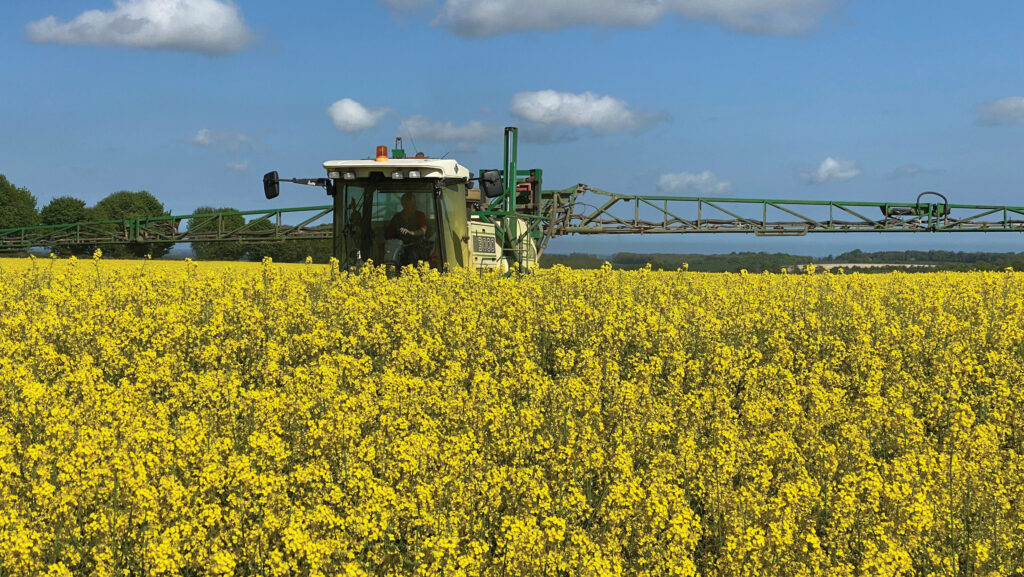 Tim Lamyman's oilseed rape crop © Tim Lamyman
 Lincolnshire grower Tim Lamyman has reclaimed the world record oilseed rape yield, with a staggering 7.71t/ha crop.
The record-breaking yield came during one of the driest growing seasons, where Tim recalls the rain gauge measured just 78mm from 15 February until harvest.
Keeping the canopy greener for longer to intercept as much sunlight as possible is a top priority to capitalise on yield, he says.
See also: Advice on gaining a clear picture of soil nitrogen levels this season
“We focus on an early nutrition programme which stimulates rooting and biomass. Having deep roots meant crops didn’t fold under the dry conditions.
“It was unbelievable just how green the canopy stayed. The canopy turned about two weeks before harvest.”
The latest yield figure surpassed Tim’s previous world record of 7.52t/ha set last year. It also saw him win gold for the highest oilseed rape yield in the 2025 Yield Enhancement Network (YEN) Awards.
Elevated levels of light intensity throughout the growing season and significant root mass were the likely factors that tipped the crop into new record-yielding territory.
“The fact three British OSR growers surpassed 7.5t/ha during one of the driest growing seasons on record is a testament to their skill in exploiting weather extremes,” said Adas head of crop physiology Dr Pete Berry.
Kent grower Richard Budd took silver with a yield of 7.61t/ha.
“October 2024 was warmer than average for most of the UK. This was followed by a winter without excessive rain and a sunny March and April.
“Looking at weather data and yields dating back to 1976, this pattern has been conducive to higher-yielding OSR years, but growers need to exploit them,” says Pete.
Establishment and agronomy
Total variable cost for Tim’s oilseed rape crop was £580/ha, including £145/ha on foliar feeds.
The variety Avenger was planted on 10 September with a Vaderstad Rapid disc drill, at a rate of 4kg/ha – 50% above the standard recommendation.
“We drill later to avoid cabbage stem flea [CSFB] beetle infestation. We find the higher plant counts make the crop more competitive and vigorous,” says Tim.
Total oilseed rape yield ranged from 6.5-8t/ha. The crop was uniform throughout reaching up to 2.4m in height.
The world record area was taken from an 8ha plot – the minimum area from which a world record crop yield can be calculated.
At the 2 to 4 leaf cotyledon stage a mixture of Leodita (humic and fulvic acid soil conditioner) and HNK Delta nutrition (stabilised nitrogen potassium fertiliser for improved rooting and stress tolerance) was applied.
Both products from the Bionature foliar nutrition range aim to help enhance speed of establishment and build biomass quickly.
“Unfortunately, we did see CSFB, so we had no choice but to use an insecticide which was applied alongside the foliar nutrition,” notes Tim.
Further foliar application of a broad spectrum micronutrient spray (Tip Top) and a repeat of Delta were applied 28 days later. A fungicide application and a final Delta spray was applied in November.
A total of 200kg N/ha was applied, alongside both pre- and post-emergence herbicides.
“We don’t apply pod stick as we find the nutrition programme we use gives the crop strength. We also use a shatter resistant variety to avoid losses.”
When the crop was sprayed off with glyphosate pre-harvest, Tim recalls the sprayer man driving delicately through the crop at 2.5 to 3km/hr to avoid damaging such a tall crop.
Tim’s top three factors to world record high yields
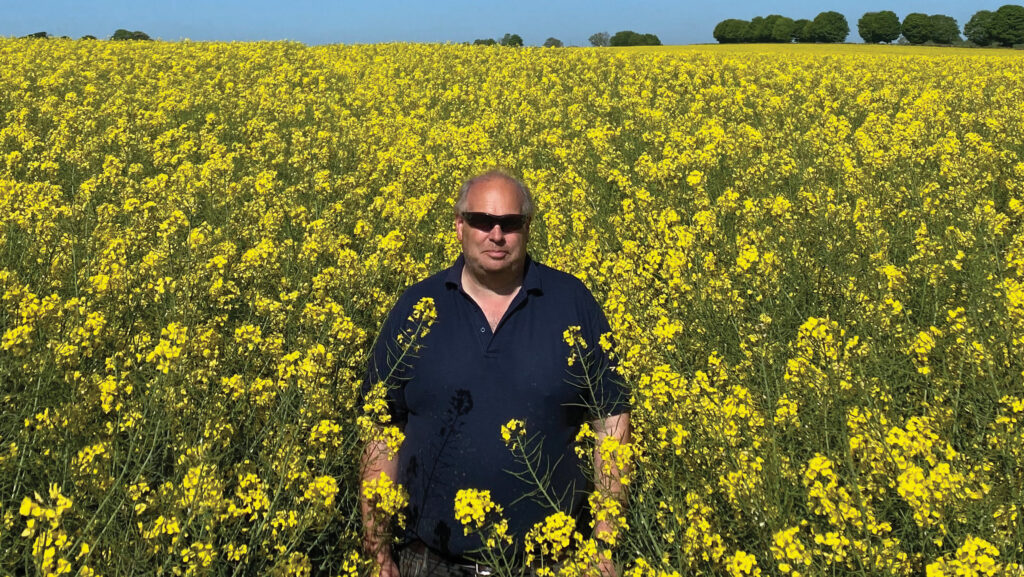
Tim Lamyman © Tim Lamyman
- Avoid compaction in the seed-bed
- Focus on early nutrition programme which develops root and shoot biomass
- Keep the canopy greener for longer to prolong sunlight interception
The 2025 YEN Awards winners
Best oilseed yield
- GOLD: Tim Lamyman, Lincolnshire 7.71t/ha
- SILVER: Richard Budd, Kent 7.61t/ha
Best % of Potential oilseed yield
- GOLD: Annabel Hamilton, Berwickshire 89% of 8.4t/ha
- SILVER: Richard Budd, Kent 63% of 12.1t/ha
Highest cereal yield
- GOLD: David Passmore, Oxfordshire 14.34t/ha
- SILVER: Martin Justesen, Kettinge, Denmark 13.45t/ha
Best % of potential cereal yield
- GOLD: David Passmore, Oxfordshire 117% of 12.2t/ha
- SILVER: Annabel Hamilton, Berwickshire 102% of 12.5t/ha
Best oat yield
- GOLD: John Anderson, Thurso 10.09t/ha
Best % of potential oat yield
- GOLD: John Anderson, Thurso 61% of 16.5t/ha
Best spring barley yield
- GOLD: Dyson Farming, Lincolnshire 10.39t/ha
- SILVER: Paul Spinks, Norfolk 9.35t/ha
Best % of potential spring barley yield
- GOLD: Dyson Farming, Lincolnshire 81% of 12.8t/ha
- SILVER: Simon Budden, Hampshire 71% of 12.0t/ha
Best pea yield
- GOLD: Ed King, Lincolnshire 6.70t/ha
- SILVER: Matthew Beech, East Yorkshire 6.31t/ha
Best % of potential pea yield
- GOLD: Ed King, Lincolnshire 69% of 9.72t/ha
- SILVER: Heathcote Farms, Bedfordshire 44% of 8.00t/ha
Best pea yield stability
- GOLD: David Pickering, Norfolk 7.20% deviation from an average yield of 3.81t/ha
Best bean yield
- GOLD: William Dakin, Northumberland 8.15t/ha
- SILVER: John Seed of Dunns 7.38t/ha
Best % of potential bean yield
- GOLD: Richard Budd, Kent 64% of 11.48t/ha
- SILVER: William Dakin, Northumberland 63% of 12.90t/ha
Best winter bean yield stability
- GOLD: Richard Budd, Kent 14.50% deviation from an average yield of 7.29t/ha
Best spring bean yield stability
- GOLD: Andrew Gentle, West Sussex 13.60% deviation from an average yield of 6.51t/ha
Regional awards: Highest cereal yield
- Scotland: Jack Carnegy, Angus 12.94t/ha
- East Midlands: Mark Popplewell, Lincolnshire 12.62t/ha
- East Anglia: Ed Salmon, Norfolk, 11.92t/ha
- South East: Richard Budd, Kent 13.23t/ha
- Outside UK: Lars Riis, Denmark 11.73t/ha
Highest % of potential cereal yield
- Scotland: Jack Carnegy, Angus 77% of 13.4t/ha
- East Midlands: Mark Popplewell, Lincolnshire 70% of 18.0t/ha
- East Anglia: Ed Salmon, Norfolk 70% of 17.0t/ha
- South East: Matthew Attwood, Sittingbourne 70% of 18.6t/ha
- Outside UK: Martin Justesen, Denmark 70% of 13.4t/ha
YEN innovator of the year awards
Tim Lamyman of Worlaby Farms and Richard Budd of Stevens Farm (Hawkhurst) for their innovative ideas, and use of data and trials for enhancing yield, nutrient management and crop sustainability.
End of era for cereal and oilseed YEN
Crop consultant Adas has announced it will cease facilitation of the Cereal and Oilseeds Yield Enhancement Networks (YENs) due to declining sponsorship.
The network has been a cornerstone of benchmarking, yield analysis and data sharing to push arable productivity forward.
Arable farmer Tim Lamyman has been heavily involved with YEN over the past 13 years it has run, using scientific theory to achieve high yields.
“The YEN reports have been fascinating to see how to improve yields.
“I will miss the incredible detail and hope the government realises this type of competition and work is key to improving productivity,” he says.
Tim plans to continue designing nutrition programmes and work closely with seed breeders to enhance cropping.
“I strive to maximise potential of any new variety we grow. If the field potential looks good enough to challenge any of the current records I have, I see no reason why we wouldn’t try again.
“The problem is getting a weather pattern suitable to achieving high yields; we haven’t had one in Lincolnshire since 2022 for winter wheat.”
While the cereal and oilseed YEN will conclude, the pea and bean YEN, along with YEN Nutrition and YEN Zero, will continue.
“This isn’t the end of YEN,” says Roger Sylvester-Bradley, head of crop performance at Adas. “It’s a transition – and we’re proud of the legacy we leave.”