Why Devon farmer is growing oilseed rape again
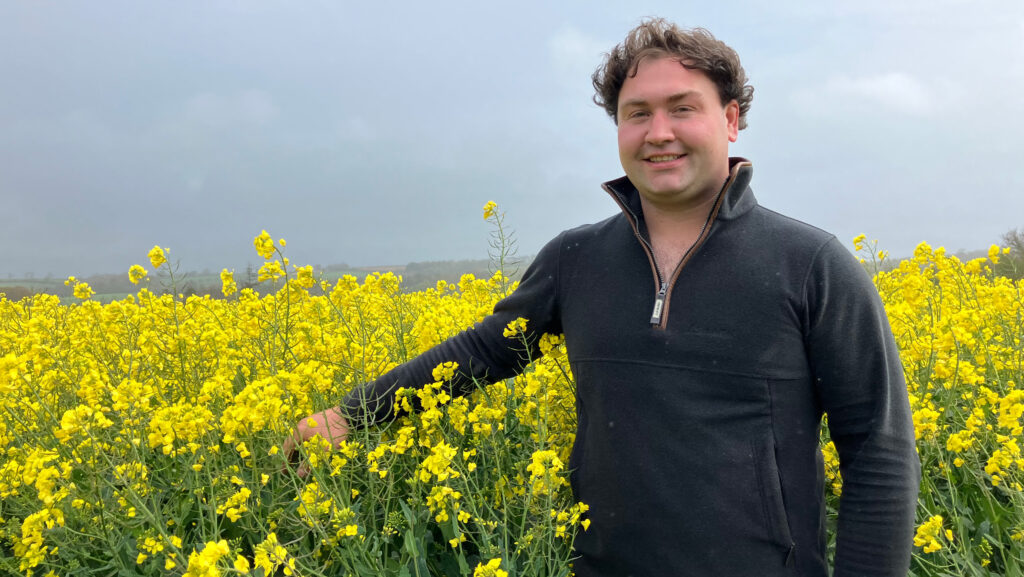 Joe Mawle © MAG/Emma Gillbard
 Oilseed rape crops across parts of the UK started flowering a month ahead of usual, following favourable autumn weather and mild winter conditions.
For Devon farmer Joe Mawle and his father Jim, crops began flowering on 10 March and were in full flower by the start of April – something the pair wouldn’t usually expect to take place until the end of April or beginning of May.
“Crops are looking well, but I’ve not known them to start flowering this early before,” says Joe. “The flowering period is key to setting yield and we’re a bit concerned this could affect yield potential.”
See also: 10-point plan to beat flea beetle in oilseed rape
After a few years’ break from the crop, Joe and Jim are back growing oilseed rape for the second year running now that market conditions have improved.
Strong crop establishment in the autumn, coupled with reduced cabbage stem flea beetle pressure and a mild winter, meant crops came into spring well developed.
As the warm temperatures hit, plants accelerated through their growth stages from vegetative to stem extension and into flowering.
Although oilseed rape is capable of self-pollination, insect pollinators – especially bees – are vital for optimum pollination and successful pod set.
When flowering happens earlier, pollinator numbers may lag behind, which limits pollinator activity and consequently yield.
Insect activity is driven by daylight hours and temperature which have an impact on crop yield and too-early flowering can bring this out of sync.
“Historic yield data on the farm shows later flowering varieties are more suitable,” explains Jim, who is Basis and Facts qualified and looks after the farm’s agronomy.
“The potential is there, crops are looking good – we just hope the early flowering won’t cause too much of an issue.
“It’s so hard to judge OSR yield before you’re in the field with a combine. We just need good weather now to set the seed well.”
Return to OSR
Currently, 50ha of oilseed rape is being grown at the family farm on the edge of Dartmoor.
The crop was reintroduced in place of a significant area of winter oats which have experienced a considerable dip in the market.
“Oilseed rape was undervalued. People weren’t growing it as much so we thought now was a good time to get back into it.
“Oats are a more reliable break crop, but markets have been knocked and OSR offers better margins now the oil price is high,” says Joe.
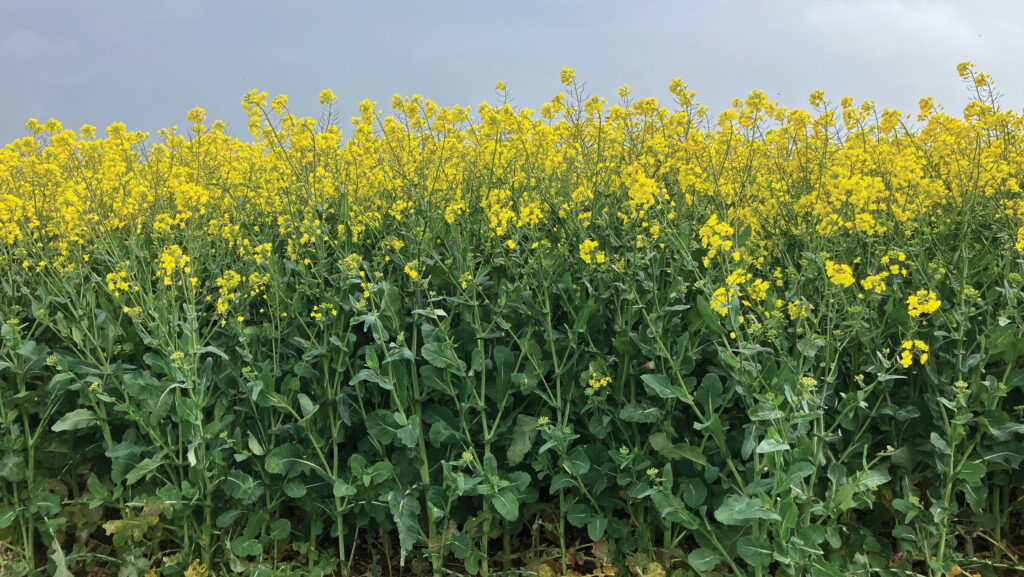
This year’s OSR crop drilled at the end of August © MAG/Emma Gillbard
© Emma Gillbard
This year’s crop
This year’s crop was drilled at the end of August, with Joe noting he was relieved crops weren’t sown earlier given how mild the autumn and winter have been. Last year‘s crop was drilled at a similar timing but flowered as normal.
“If we’d have drilled earlier, crops could have been flowering in January,” he jokes, reflecting on how rapidly the crop has developed this season.
“Our cut-off for drilling is 10 September, otherwise crops struggle to get going as we are in quite an exposed location being so close to Dartmoor,” says Joe.
This year crops were put into extremely warm and dry seed-beds, which is likely to have accelerated development and contributed to early flowering.
“We rolled ahead of drilling to conserve moisture, and thankfully it rained a couple of days after drilling,” says Joe.
Pest management
Establishment starts with biosolids applied to winter barley stubble, where the strong aroma helps to deter cabbage stem flea beetle (CSFB). This also acts as a dose of early nutrition for the developing crop.
The pass of a Sumo subsoiler is used to incorporate this before drilling with either a Horsch Pronto or Claydon drill. The pair opt for both hybrid and conventional varieties, where hybrid Maverick is looking particularly well this season.
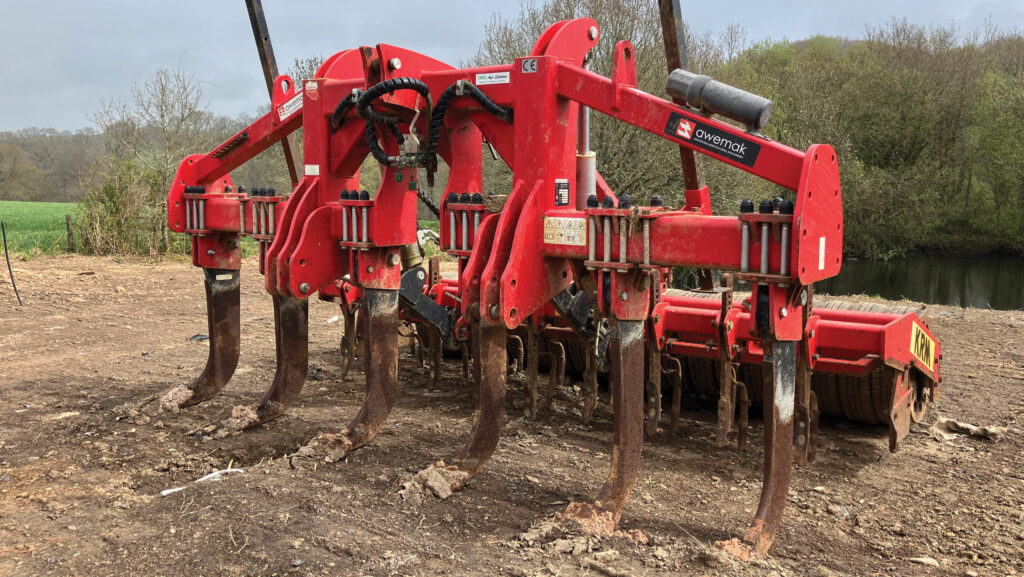
A Sumo subsoiler is used to incorporate biosolids before drilling © MAG/Emma Gillbard
Slugs remain one of the biggest ongoing challenges. Joe reports the first two weeks after drilling had particularly high slug pressure.
“We had to apply slug pellets and after that the crop turned a corner and it has grown full bore ever since,” he says.
Jim notes that by late February crops already had a green area index (GAI) of over 2.5, so they went in with a plant growth regulator to manage canopy height.
When it comes to flea beetle management, the pair ensure crops have adequate early nutrition to get them up and away.
“Getting nutrition in place early is essential to help the crop establish quickly and withstand pressure from pests through the autumn,” says Joe.
As a result, the pest has not yet wiped out a crop on their farm. Regular night-time monitoring with a headtorch is used to assess pest levels.
“We monitor crops accordingly, adopting an integrated pest management plan. Fortunately, no insecticides have been required on oilseed rape crops in recent seasons. We are keen to work with nature and enhance natural predation wherever possible,” says Jim.
Exposed Dartmoor location
Disease and canopy management is important given the farm’s high rainfall. That’s why a two-spray fungicide approach is deployed.
Typical challenging weather conditions at harvest make a pod stick application essential to reduce losses from pod shatter.
Harvest management also includes desiccating crops with glyphosate ahead of combining.
Straw is then baled and sold as bedding, which removes residue from the field, helping reduce slug pressure.
The farm rotation is diverse. Winter wheat, winter barley, winter oats, beans, grass and maize for a local dairy sit alongside Sustainable Farming Incentive options including herbal leys and wild bird food mixes on awkward field corners.
Last year was a great growing season for OSR. The crop averaged a yield of 4t/ha, peaking at 4.5t/ha.
Good sunlight levels during grain fill supported an average oil content of 47.6%, which brought a welcomed bonus to the base price.
While the current crop is looking strong, both Joe and Jim remain cautious the unusually early flowering could influence final yield.
In what has otherwise been a promising season, the key now is prolonging flowering and having a good period of weather to set seed and allow the crop to maximise yield as much as possible.
Livestock enterprise
Eight years ago, Joe decided to start integrating livestock on the farm.
He began with calf rearing which has since developed into buying in stirks and selling them as stores to a local beef fattening unit. About 70 cattle are sold annually, and there are plans for expansion.