Advice on stabilising soils to boost potato crop resilience
© Phil Weedon
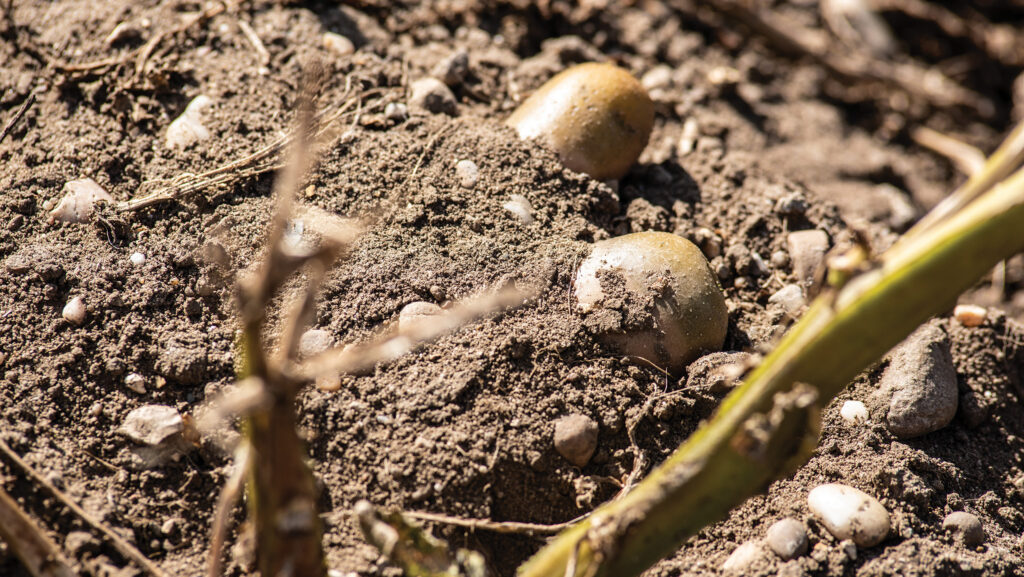
Potatoes can be a destructive crop to soil, but if resilience is built into the wider rotation, potatoes can be less damaging, and soil can recover much quicker.
“This really does work, and I say this with confidence,” says Hutchinsons agronomist Dick Neale. “A rotational approach to potato production will have healthier potato crops to show for it.”
Building diverse root systems that stabilise soil is a priority. “You can’t solve soil compaction with more machinery; we need root systems to work for us.”
See also: How optimistic potato grower targets soil improvements
Stabilising soil
A typical soil suitable for potato production may consist of 80% sand, 15% silt and a trace of clay.
Such high sand levels mean the soil has no natural structure. This leaves soil exposed to slumping, particularly when on irrigated land.
The question is: How can you stabilise soil? “Potatoes are not great at stabilising soil as they grow tubers, which swell, which in turn destabilises soil further,” explains Dick.
Moving less soil is a key component to promoting soil stability. “You obviously need to move enough soil to establish a crop, with good tuber-to-seed contact, but we don’t want to unnecessarily move soil.”
Dick recommends mechanically cultivating to a maximum of 10in (25cm) deep to create good bulk. Any deeper and this can impact soil structure, reduce worm populations and burn unnecessary diesel.
“We’ve now had a run of dry harvests. Potatoes have lifted out of the ground nicely, so we haven’t put much damage into the soil, so we don’t need to take the damage out.”
Diverse root systems
Adding diversity into the wider rotation, such as integrating cover crops and adding floral margins and floral tramlines, is really important.
“Growers must plan ahead in the rotation. Use a spade to look at the soil profile in the field. The aim is 10in of friable soil,” says Dick.
If compaction layers are present, this will need addressing accurately with metal.
A diverse range of roots in the rotation will then reduce re-compaction more effectively. Cover crops and floristic tramlines can be a great tool to achieve this.
Dick suggests avoiding radish in cover mixes when growing potatoes as radish has large tubers that can negate soil improvement benefits.
Species that release phosphate, such as phacelia, are more beneficial. “Really think about the species you put into the mix. You want systems that provide structure,” he says.
Avoid growing phacelia ahead of onions, as there is no herbicide control, he advises.
Another thing to consider is the C:N ratio. “If soils are high in nitrogen, avoid a legume heavy mix as this will pump more N into the soil and degrade organic matter levels.”
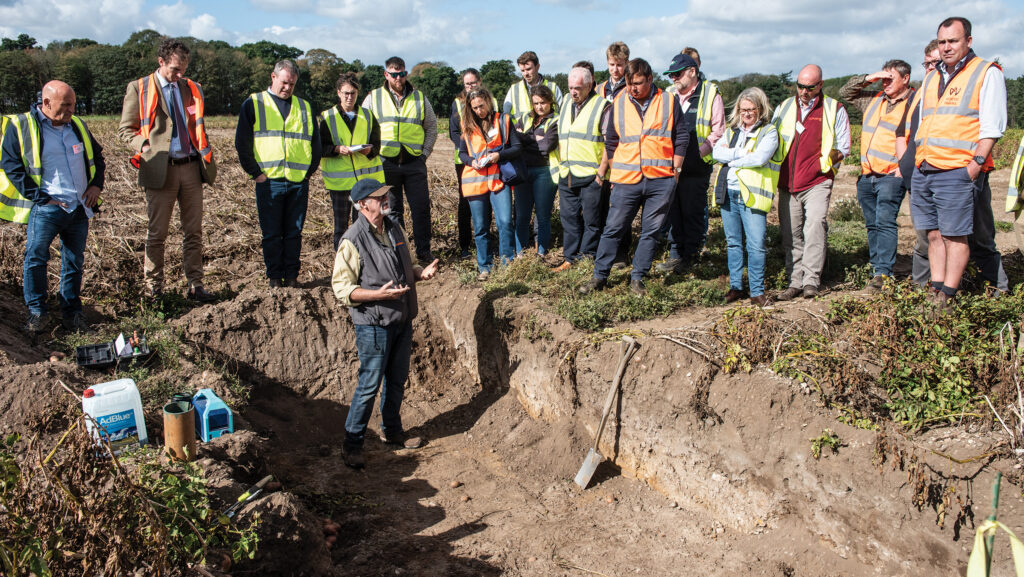
Dick Neale speaks at Arable Insights Live © Phil Weedon
Earthworms and soil
Earthworms play an important role in maintaining soil structure and supporting root development. Maintaining diverse root systems and encouraging deeper worm activity can help support soil structure and root growth.
Endogeic worms live within the upper soil profile and can be particularly vulnerable to dry conditions, while anecic worms are deeper-burrowing, creating channels through the soil that roots can follow.
Cultivation practices can affect earthworm populations. Ploughing once every five years in the rotation can reduce populations by 10-15%, but populations can quickly recover.
Repeated intensive disturbance, however, can significantly reduce worm numbers (up to 80%), with little opportunity for recovery.
Placement fertilisers
If placing fertiliser with the seed at drilling, ensure a specific placement fertiliser product is used, advises Dick.
“Placement fertilisers must have a low salt index. Too high salt content around the root zone can cause water to move out of the roots, which can restrict root growth and can reduce fertiliser uptake,” he says.
Calculating placement fertiliser needs careful calculations. Don’t go in with a full rate, when looking for precision – it needs to be specifically calculated.
Too much fertiliser can make yields go backwards. Growers should aim to place the fertiliser as close as possible to the tuber seed as possible.
The planting row width and width of the fertiliser placement area must be considered.
This report is from Farmers Weekly’s Arable Insights Live: Potatoes event on 17 September at Dyson Farming Research, Lincolnshire