Home-grown pulse incentive required to replace soya imports
 © Tim Scrivener
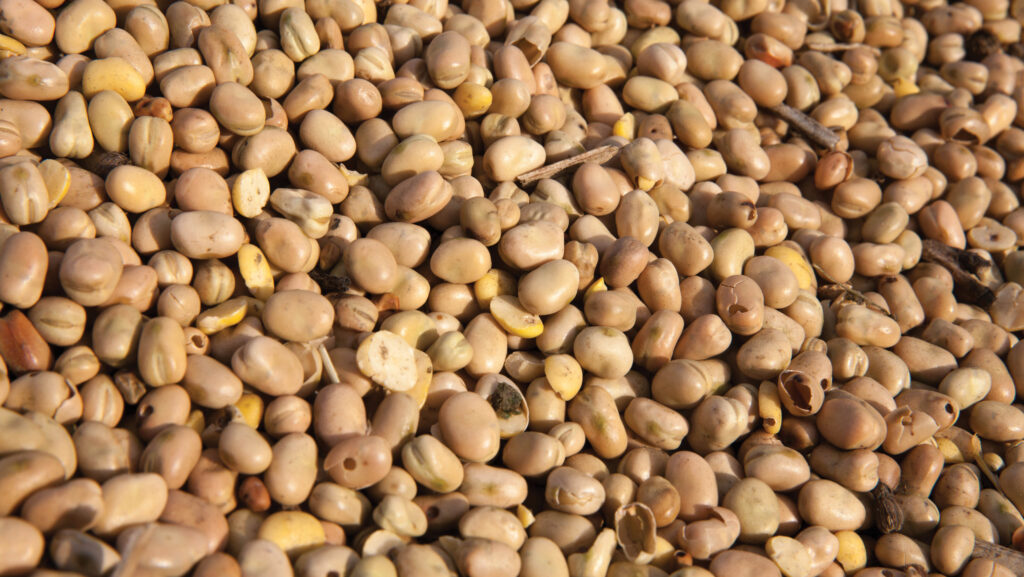
 The environmental gains of replacing imported soya in livestock diets with UK-grown beans could be substantial, but without financial encouragement for increased pulse production, targets may not be met.
About 1.6m tonnes of UK grown beans would be required to replace 50% of the imported soya currently used in UK livestock feed.
Meeting that demand would require pulses to expand to roughly 20% of UK arable rotations – which is the ambition of the Nitrogen Efficient Plants for Climate Smart Arable Cropping Systems (NCS) project.
See also: How Lincs grower reclaimed world record oilseed rape yield
Cost-benefit analysis
Senior economist James Webster-Rusk at the Andersons Centre carried out a cost-benefit analysis of increasing pulse production to 20% of the UK’s arable area.
It is the second of three studies which evaluate the economic and environmental implications of making these changes at farm level over the four years of the NCS project (2023-2027).
The results were extrapolated to demonstrate the potential impact on UK arable and livestock production.
Increasing pulses to 20% of arable rotations has the potential to reduce emissions by as much as 600,000t of carbon dioxide equivalent, or 9.4%.
This is primarily driven by the reduction in fertiliser needed in the arable supply chain.
However, the same modelling also exposes a fundamental imbalance.
Under the current five-year average economics of arable farming, those environmental benefits are not matched by improved margins for growers.
“While increasing pulse consumption delivers a net benefit for the livestock sector and society, the same is not currently true for arable producers,” says James.
Arable incentive required
“If we don’t incentivise arable farmers to produce the beans, then the beans simply won’t be there.
“We need 1.6m tonnes of beans to make it happen, and we don’t have that at the moment.”
For arable businesses, pulses already offer well-understood agronomic benefits: nitrogen fixation, reduced fertiliser requirements, improved soil structure and better performance from following crops.
Yet these benefits alone have not driven widespread adoption at the scale envisaged by the NCS project.
The findings highlight the need for targeted intervention across the supply chain, says Tom Allen-Stevens, founder and managing director of the British On-Farm Innovation Network (Bofin), which leads the on-farm trials within the NCS project.
“This analysis shows very clearly that the environmental gains are there for the taking, but the system is currently misaligned,” he says.
“Livestock producers and society would benefit from lower emissions, yet arable farmers are being asked to carry the financial risk.”
Livestock benefits
© Tim Scrivener
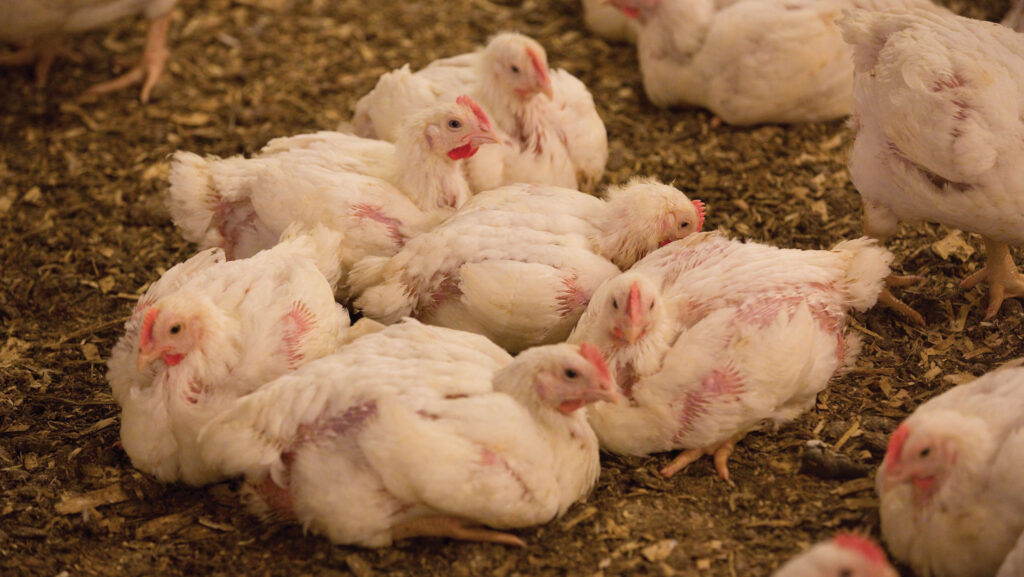
The biggest potential gains could be in the poultry sector. The environmental benefits of using beans in layer and broiler diets could outweigh the costs by as much as 20 times (a 20:1 benefit-to-cost ratio).
While early broiler trials suggest lower inclusion levels may improve producer margins and reduce emissions, the trials to date have been small-scale, underlining the need for further research.
For grazing livestock, the results from trials represented in James’s analysis are mixed and warrant further research.
“Beans may reduce the emissions from feed, but any decrease in growth rates can offset the gains,” he says.
“However, the project’s dairy trial revealed that the benefits to society of reduced emissions do outweigh the cost to the farmer of increased feed.”
Evidence from the pulse pioneers
The NCS project includes 30 “pulse pioneers” who have been recruited to run paid, on-farm trials and share results.
Consistent gains in pulse production come from improvements in establishment, nutrition, crop protection and rotation design.
To accelerate progress, the project has established small, focused groups of pulse growers to work collaboratively on shared challenges, such as improving yield stability, managing risk, or supplying into feed markets.
The approach is designed to turn the ambitions of the NFU Sustainable Proteins Plan into practical action by aligning farmer innovation with supply-chain demand.
“The question is no longer whether pulses can deliver,” says Tom. “It’s how we scale performance and connect it to markets in a way that works for growers.”
About the NCS project
Nitrogen Efficient Plants for Climate Smart Arable Cropping Systems (NCS) is a four-year, £5.9m research programme involving 200 UK farms and 17 partners.
It aims to bring about a reduction of 3.4m tonnes of carbon dioxide equivalent a year through increased legume cropping, and replace 50% of imported soya meal in livestock rations.
BritPulse aims to develop a stable market
A new initiative known as BritPulse is working with growers to create stable demand and fair premiums for UK-grown pulses.
The organisation aims to reward quality, traceability and good production practices.
It will offer growers a dedicated market for UK-grown pulses, with clear growing standards and long-term supply chain relationships.
This year, the organisation is carrying out pilot tests at farms in Lincolnshire and Yorkshire to identify practical on-farm factors and help shape how standards and premiums can be structured.

Staying sharp shouldn't be a chore