Red alert for slugs as pest flourishes
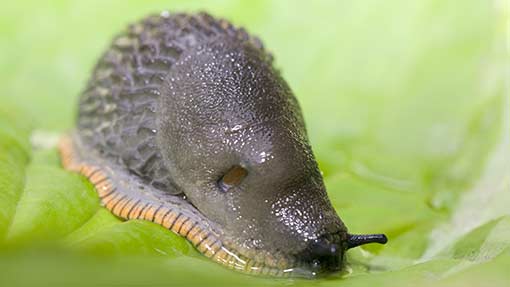 © Global Warming Images/Rex Features
 The recent mild winter has caused growers all sorts of headaches this season and another one could soon be on its way. Adam Clarke reports on the potentially damaging slug levels this autumn and what can be done to get one step ahead.
Growers should be monitoring slug populations in stubble as soon as the combine leaves the field gate and action taken to control them if populations are high.
As disease levels soared due to a mild winter, slug populations have also flourished in arable fields, helped along by a favourable spring, with reports of standing crops smothered in the damaging pest this summer.
Best trapping practice
- Nine traps per field (13 in fields above 20ha) in “W” pattern.
- Use two heaped spoonfuls of chicken layers’ mash under cover about 25cm across.
- Do NOT use slug pellets to bait trap
Pest control expert at Scotland’s Rural College, Andy Evans, says initial inspections indicate high numbers of slugs and their eggs in the soil and could be potentially damaging to the following crops.
“Although not as bad as last year, there are loads of slugs in some areas and the young ones are beginning to hatch now, too.
“There is still time for a period of hot, dry weather to suppress them, but growers need to know the risks now,” he explains.
See more: Multi-agency scheme to save metaldehyde slug pellets
Dr Evans advises growers to begin monitoring as soon as crops are harvested by using traps, but they need to ensure that there is adequate moisture to encourage slugs towards the traps.
Slugs need moisture and a food source to coax them out on to the surface, so in extremely dry conditions they will stay under the surface, where they can dehydrate or starve.
“At night after rain is the ideal time to monitor slugs with traps, as they will be much more active and give an accurate indication of the numbers you are facing,” he adds.
Simon McMunn, commercial manager at slug pellet specialist and metaldehyde producer De Sangosse, says that it’s vital to carry out this monitoring work as soon as possible ahead of cultivation or treatment.
“It’s a very low input activity, with traps easy to lay out in the evening and can be checked before breakfast in the morning,” he adds.
Pelleting thresholds
Depending on the following crop, thresholds for a slug pellet treatment will vary, with wheat requiring treatment if four slugs are found per trap. If the field is destined for oilseed rape, the threshold is just one per trap.
Mr McMunn suggests that if these thresholds are breached, growers should consider applying pellets to stubbles or cultivated ground ahead of drilling to try and get the upper hand ahead of the crops’ most susceptible stage.
Slug control
- Bait trap as soon as 2014 crop is cut.
- When thresholds are breached treat with high quality, wet processed pellet ahead of drilling.
- Ensure a fine, well consolidated seed-bed for the new crop
- Adhere to Metaldehyde Stewardship Guidelines (MSG) on slug pellet application
“Be prepared to treat early and this will have the added benefit of reducing the likelihood of diffuse losses – which has been an issue with metaldehyde – as the ground is unlikely to be too wet,” he says.
With just two active ingredients left to battle slugs – metaldehyde and ferric phosphate – growers need to plan ahead more than ever to ensure that they get timing and product choice correct.
Whatever active growers opt to use if an early application is required, pellet quality is the most important consideration – with wet processed type the preferred option, says Mr McMunn.
“You need the best quality bait to attract the pest to the pesticide and although the dry processed pellets are cheaper, they are less effective, less durable and don’t spread well. We (De Sangosse) stopped manufacturing them in 2008,” he adds.
Robust rates
Dr Evans says that timing is crucial and advocates using higher rates, explaining that reducing the number of pellets means less bait points and a reduced chance of taking slugs out.
An early application must coincide with moist conditions to ensure that slugs are active and will reach the bait points and achieve maximum kill.
“Following that, growers must try and aim for a fine, firm seed-bed ahead of cereal drilling to hinder the slug movement through the soil.
“On heavier land where this is difficult, a clothianidin-based insecticide seed dressing will help minimise the impact of seed hollowing. It also buys some time before the slugs start feeding on new shoots,” says Dr Evans.