SDHIs offer later saving when used at T2
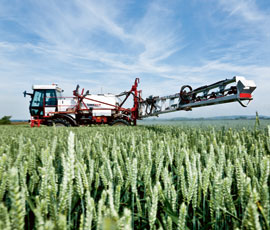
The practical flexibility of the new SDHI fungicides could change the focus and the cost of the T3 spray this season, agree agronomists.
The extra persistence on offer from the use of SDHIs on the flag leaf means that, in most situations, the three traditional roles of the T3 spray can be reduced to just two, they point out.
To clarify, before the SDHIs came along, there was a need to top up the foliar disease control provided by the previous sprays, as well as to give brown rust and fusarium control.
But the arrival of the new chemistry, with its greater persistency on foliar diseases when used at T2, has the potential to alter the requirements of the last spray by covering the foliar diseases. And that’s where there’s scope for savings, believe many experts.
“The need for foliar top-up might be less where an SDHI has been used at T2,” acknowledges agronomy consultant Bob Simons. “But the grain quality issues, such as ear blights and specific weights, are still to play for.
“So it’s not a case of forgetting about the T3. But it is an opportunity to re-visit what you’re trying to achieve.”
Peter Riley of Prime Agriculture, who advises in Norfolk, anticipates spending less on the T3 spray this year, with the cost coming back by around 5%, compared with two years ago.
“Our budgeted spend on fungicides for 2012 suggests that we’ll be spending 18%, or around £16/ha, of the total amount on the last spray,” he reports. “That’s in contrast to the year prior to the SDHIs being available, when the T3 represented 23% of the total, which was in the region of £20/ha.”
He adds that the disease priorities at this timing are fusarium and brown rust. “There’s always an outside chance that septoria may be threatening, but in most situations it will have been dealt with by then. And where SDHIs have been used beforehand at sensible rates, septoria shouldn’t be an issue.”
But those growers who choose to stick with a triazole-based approach at T2 won’t be able to change their T3 approach or drop their guard against the foliar diseases, he cautions. “Septoria and rusts will need another spray, as the triazole will have run out of steam.”
His choice of chemistry at T3 is a triazole, with a strobilurin added if the variety is susceptible to brown rust. “The strobilurin might not be needed – that’s a decision that can only be taken nearer the time. But remember that around half of the wheat in the ground has a brown rust resistance raying of five or less.”
His colleague, Bill Barr, who is based in Bedfordshire, agrees with the need to allocate a strobilurin at T3, in case it is needed for brown rust control.
“It won’t offer anything on fusarium,” he accepts. “But brown rust tends to strike later in the season and can be very damaging.”
This approach also allows him to pull the strobilurin forward into the T2 treatment, if necessary, should spray intervals have been stretched due to the weather, he points out.
But Lincolnshire’s independent agronomist Sean Sparling won’t be using a strobilurin in the T3 spray. “In this part of the country, it’s a waste of the strobilurin and it won’t help with fusarium control. I tend not to use them after the flag leaf timing.”
He added Comet (pyraclostrobin) to Aviator Xpro at T2 last year, to mop up rust and benefit from the strobilurin effect.
Mr Sparling has a total fungicide spend of around £95/ha and anticipates spending just £12/ha on the ear spray, although he recognises that it can cost anything between £5-25/ha. “The big spend is at T2, which will be around £48/ha.
“The T3 or ear spray is the treatment with the most flexibility, especially now that we have SDHIs. If we have a dry June and we’re on top of disease, then we’re likely to just apply a bit of tebuconazole at T3. That might only cost £6/ha.”
The persistence of the SDHIs does help, he believes. “Growers are more likely to get the spray timing right for fusarium control, as they’re not trying to do too much with one spray.”
And that timing is in the first two to three days of flowering, at GS61-63, before infection has taken place.

Staying sharp shouldn't be a chore