

Advertiser content
Septoria resistance – why management matters more than ever
Optimising both cost and performance is usually the starting point when developing fungicide programmes. Given the pressure on farms, resistance management is understandably a lower priority.
But with AHDB’s 2025 septoria sensitivity data prompting a broader conversation, should ‘protecting chemistry’ be higher up the list?
Protecting the SDHI toolbox
In 2025, shifts in SDHI sensitivity were recorded by AHDB and Niab in the UK. The data suggests that using either Iblon (isoflucypram) or Adepidyn (pydiflumetofen) can reduce SDHI sensitivity.
The cross-resistance inherent to the SDHI class is a concern that resonates across the agronomic community. All SDHIs are cross-resistant, meaning any reduction in sensitivity will impact the entire class, although the degree varies with the intrinsic activity of the individual active.
“On the AHDB fungicide performance curves, both Adepidyn and Iblon have good septoria efficacy,” says Steve Dennis, Head of Business and Technical Development at BASF.
“By controlling the highest level of septoria, you’ll select for less sensitive isolates. The advice to avoid sequencing those two new SDHIs in the same programme therefore makes sense.”
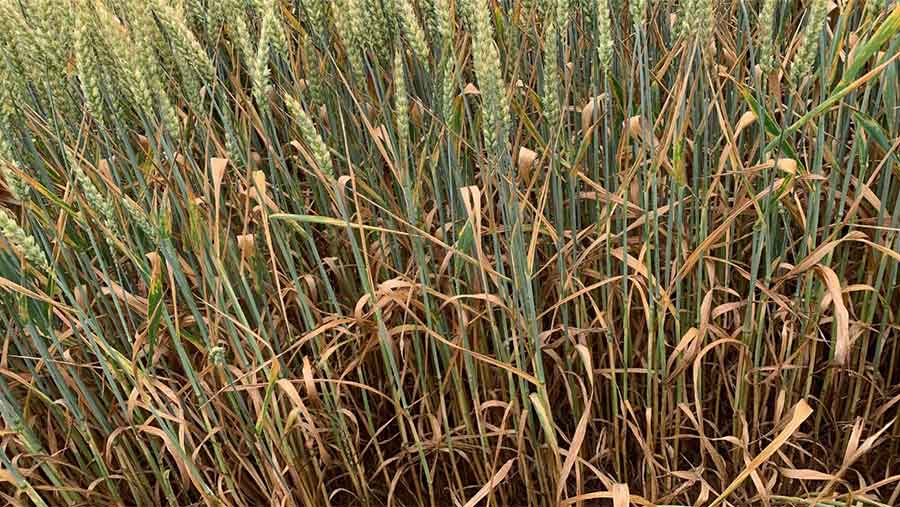
Wheat Crop Decimated by Disease © BASF
Diversity in modes of action is one of the best ways to mitigate the threat of fungicide resistance and is widely recognised.
However, BASF Business Development Manager, Jared Bonner, points out that while consideration is usually given in the context of tank mixes or across the programme, we perhaps give less thought to partner products.
“If you have one active ingredient doing a lot of the heavy lifting partnered with another doing much less, how much are they protecting each other in reality?” he asks.
Jared Bonner, Business Development Manager at BASF © BASF
“I’m not saying ‘don’t use those new SDHI actives’, just look at where they’re being used, what the higher resistance risk actives are being applied with, and ensure the programme is balanced accordingly.”
“Revysol solutions perform exceptionally well under field conditions,” says Steve. “But what remains of great comfort is the continued strength of Revysol in high septoria scenarios.”
Building a balanced programme
The consensus among BASF’s cereal fungicide experts is that the strongest line of defence is to combine the best tools available – strong genetics, paired with fungicide programmes containing SDHIs and effective alternative modes of action.

Steve Dennis, Head of Business and Technical Development at BASF © BASF
“Revysol is the only azole with useful septoria activity,” says Steve. “That makes it an essential part of a full programme because it is the optimum way to minimise any further resistance shifts.”
Jared agrees and adds a reminder to build in flexibility to react to the season.
“When planning your fungicide programmes, it is important to consider the resistance risk from the start and to understand that early fungicide choices may limit your options by the time you get to your T2 or T3 applications.
“Last season was a reminder that you can’t predict the spring. It’s worth building a programme that’s robust to both resistance risk and disease pressure from the outset.”
Looking ahead
Steve recommends applying balanced mixtures at appropriate doses.
“We all – manufacturers, agronomists and growers – have to work together and use good resistance management tactics from the start.
“That’s formulating product with supportive active ingredients, choosing a balanced programme and applying fungicides at the right rate, for example.
“There’s little point waiting until there’s a problem and then thinking about it, that is simply too late” he says.
BASF’s ongoing monitoring programme collects disease samples from across the UK and Europe, and it tracks changes in disease sensitivity to various modes of action.
“We will continue to closely monitor populations across the UK and Europe, but for now, the message is consistent: Revysol is an essential active ingredient in programmes, offering control and protecting other chemistry,” concludes Steve.
Provided by
BASF offers renowned and innovative fungicides, herbicides, insecticides and growth regulators for agriculture. Our products and services help farmers increase their yields and optimize the quality of their products.