Suffolk beet grower counts huge cost of beet moth
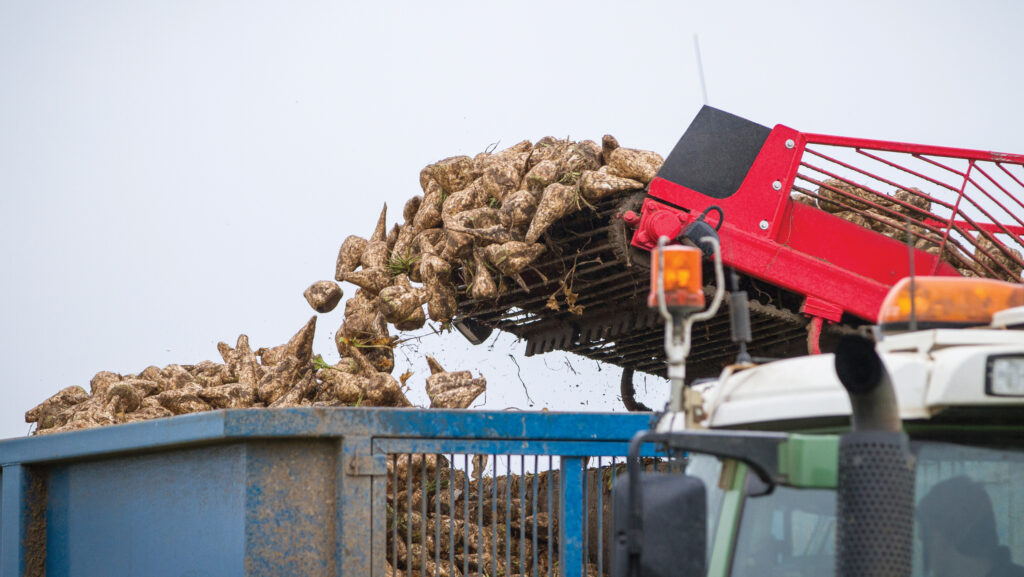 © GNP
© GNP Beet moth was responsible for a sugar beet yield reduction of 25%, a drop in sugar content and a forced switch to earlier lifting at Troston Farms in Suffolk, where farm director Edward Vipond is now expecting this year’s crop to show a six-figure loss.
Against a five-year average yield of 80t/ha, fields affected by the pest did 58t/ha, he says, pointing out that the beet price would need to be £45/t for the crop to be viable at such an output.
Last seen on the farm in 2022, when yields were also affected, moths flew into the crop in the warm and dry weather in April, with caterpillars being found in late May and June.
See also: Advice on clamping sugar beet for optimal harvest storage
Their burrowing activity caused both leaf and crown damage, leaving the beet susceptible to frost damage later in the year.
As a result, the crop had to be lifted early, with the business losing its late lifting premium.
Given the dry, settled summer weather, the moths continued to arrive until the end of September, so Edward was faced with overlapping generations of the pest and fears as to whether sugar beet can remain as part of a sustainable rotation.
“The concern is about what happens next year,” he says.
“We had as many as 60 larvae/root and we’re none the wiser about why this farm was so badly affected, when others in the vicinity seemed to escape the worst of it.”
Beet moth identification

Beet moth caterpillar © Ed Vipond
- Adult moths are small and brown, with a 1cm wingspan and a distinct dark spot on each forewing.
- The caterpillars are 0.5-2.0cm in length, mainly white in colour, but tinged with pink or brown.
Insecticide
An emergency authorisation for the insecticide Coragen (chlorantraniliprole) was obtained by NFU Sugar and British Sugar last summer, so he took the decision to spray some of the affected fields.
“The data on it wasn’t conclusive at the time, so I didn’t spray the whole of our beet area. With the benefit of hindsight, that was a mistake.”
The insecticide also came at a cost of £77/ha, points out Edward, who adds that getting the application timing right with multi-generational infection involved some guesswork.
Looking ahead, he suspects that the pest will become endemic. “The larvae numbers were so high and they pupate in the soil over the winter, where they are very temperature resilient and can withstand lows of -17C.”
His agronomist, Jock Willmott of Ceres Rural, explains that not much is known about beet moth, although rain or irrigation seems to stop them flying.
“Once the larvae are in the crown, it’s very difficult to control them.
“The insecticide must be applied at a high water volume to try and get it down through the canopy to where they are – we did see crops start to recover and the tops re-grow where it was used.”
A badly infected field will need to be ploughed, he advises, to bury the pupae and make it difficult for the pest to emerge in the spring.
“It is a very localised problem at the moment, but the likelihood of hotter, drier summers means it will become more widespread.”
British Beet Research Organisation advice
The first case of beet moth in the UK was confirmed in 2020, but it wasn’t until 2022 that the pest became more widespread, reports Professor Mark Stevens, head of science at the BBRO.
“It’s no coincidence that 2022 was also very hot and dry,” he explains. “If we have rainfall during the growing season, we see far less of them. The crop doesn’t wilt and the moth finds it more difficult to get to the heart leaves.”
That’s why the more traditional weather patterns in 2023 and 2024 kept it at bay until September, he adds. “It is very weather related, but we have to accept that climate change means that it is becoming another pest of the UK sugar beet crop.”
Beet moth is more of an issue in the Stowmarket/Bury St Edmunds/Newmarket region, particularly on lighter soils, but moved north into Lincolnshire this year, he reports.
“The eggs the adult moths lay are small and translucent, so can be difficult to spot,” says Mark. “Once they hatch and the caterpillars go into the plant, control becomes tricky.”
The emergency use of Coragen to control the pest was based on Polish and German data and its use did make a difference, with crops showing signs of recovery after application.
“At over £70/ha, we do recognise that it’s an additional expense that growers would rather be without.”
Beet moth is very specific in its host range, he explains, so cover crops aren’t considered to be a risk factor. Even so, work on cover crop mixes continues at BBRO and there are plans to launch a beet moth strategy next year.
Pheromone traps and AI-based moth traps are being used, to get a better idea of moth hotspots and have some warning of a likely infestation. BBRO is also in contact with European colleagues, to see what existing knowledge can be applied to the UK.
In the meantime, irrigation or rainfall and burying the pupae down will help, as will hygiene, he advises.
BBRO plans to launch a beet moth strategy next year.