Time to evaluate maize success
Maize harvest is the time to evaluate the success of this year’s crop. Count trailer loads off the field and estimate freshweight yields. Follow up with a silage analysis and check dry matter and starch content.
From this you can calculate DM yield – expect at least 12.4t/ha (5t/acre) with a DM content of 30% or more, and starch at 28% or more. Then think about next year – has this year’s late harvest created problems? Would anearlier maturing variety be better? Could agronomy be improved?
When weather allows, then after harvest, sow a follow-on catch crop of Westerwolds or Italian ryegrasses, to provide an early spring bite. Or drill cereals. Keep the land working for you through the winter, as well as creating ground cover to reduce run-off and soil erosion.
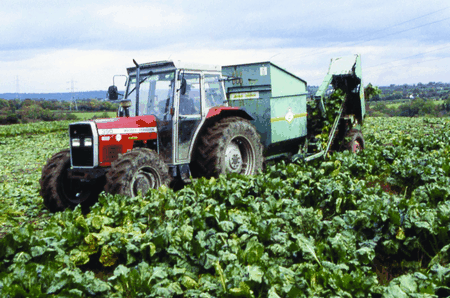
Fodder beet harvesting has also begun. Crops can gain 1235kg/ha DM a week (500kg/acre DM a week) over the six weeks from the end of September and into November. So delaying harvest will boost yields, but this needs to be balanced against the extra effort required at harvest when days are shorter and weather more likely to be adverse.
Monitor catch crops of stubble turnips, kale and forage rape and check for signs of disease. Alternaria causes brown circular patches on leaves rendering them unpalatable and eventually they can drop off. Powdery mildew – a white powder on leaves – can also be a problem. Fungicide spraying is an expense and not recommended over winter, so try to graze more infected crops first to limit disease impact.
After this month, the next chance to plant more crops to boost forage supplies is spring, when kale, swede and fodder beet can be drilled.
The weather this year and high commodity prices have highlighted the importance of home-grown forages. Breeding and development brings new varieties with ever better disease resistance and higher yields. Farmers should be taking advantage of these when reviewing forage plans.
By planning ahead, choosing crops and varieties wisely, and paying attention to agronomy, the performance of forage crops can be maximised and livestock feeding costs minimised.
This column is provided by Advanta Seeds, seed breeder and wholesale supplier of a wide range of forage crops. For a technical factsheet on any of the crop options mentioned, email roots@advanta-seeds.co.uk or call 01522 861 316.
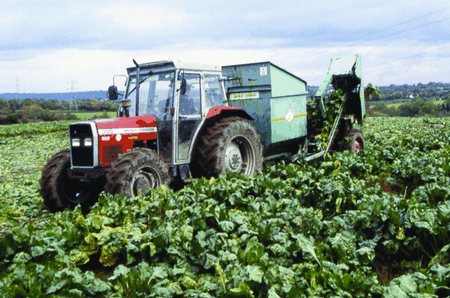
Harvesting fodder beet early may sacrifice yields, but means harvesting conditions will be significantly easier.
| Home-grown forages |
|---|
|

Staying sharp shouldn't be a chore