

Advertiser content
Trials go beyond the plot with Limagrain farm demo network
Limagrain Field Seeds has launched a new UK Demonstration Farm network designed to give growers a more practical and meaningful way to assess crop varieties – by seeing them perform across different farming businesses.
The initiative represents a shift in how varieties are presented and understood.
Rather than relying solely on small-plot trials and headline figures, the demo farms will showcase how Limagrain genetics perform at scale, under the real pressures and decisions that shape modern farming businesses.
For Nicolle Hamilton, Limagrain’s marketing director, the network is about offering a new perspective.
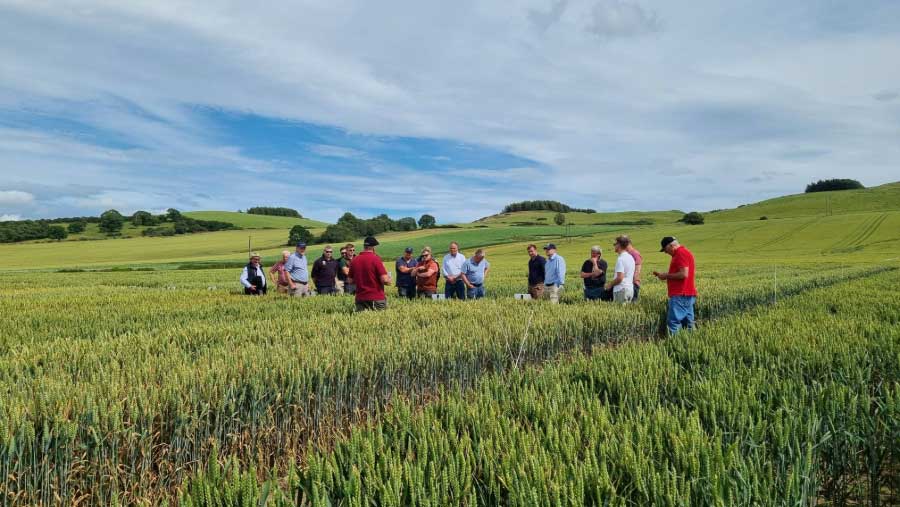
© Limagrain UK Ltd
“We want to offer growers a different and valuable way of looking at our varieties – through a farmer lens,” she says.
“That means taking them beyond controlled trial conditions and putting them into real farming systems, managed by farmers making commercial decisions every day.
“It’s about working with farmers, listening to them, and learning from them.”
She recognises formal trials and the AHDB Recommended List remain important tools for comparing varieties.
“They offer consistency, structure and valuable performance benchmarks. However, they are often conducted under controlled conditions that do not always reflect the variability and complexity of commercial farming.
“The Demo Farm network is designed to complement that system by bridging the gap between trial data and real-world performance,” says Nicolle.
“This isn’t about replacing trials; it’s about adding another dimension. Farmers want to understand how varieties behave in their own systems – how they establish, how they cope with different soils, how they perform under lower inputs or after cover crops. That context is critical.”
“At the heart of the Demo Farm network is the belief that farmers learn best from other farmers.”
Heather Oldfield, Limagrain’s cereals product manager, says the strength of the network lies in its farmer-led approach.
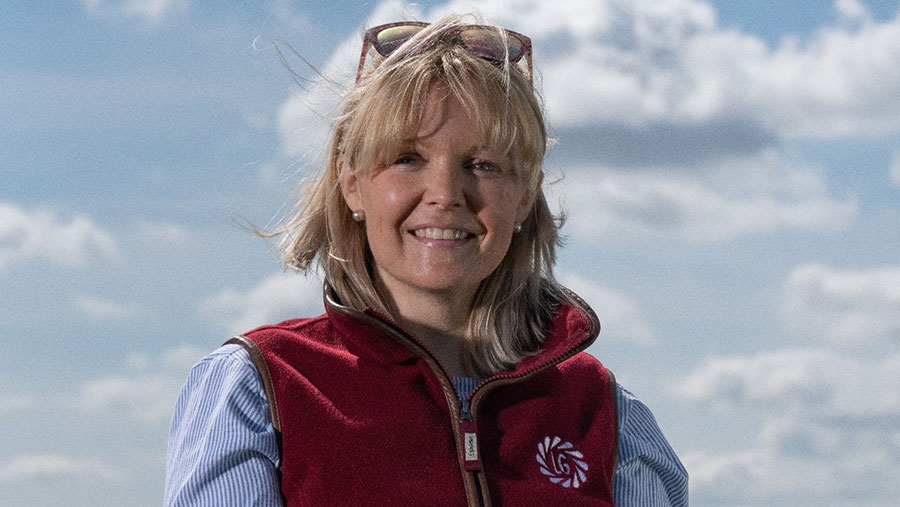
Heather Oldfield, LG cereals product manager © Limagrain UK Ltd
“This is about genuine collaboration,” she says.
She emphasises that the goal is not to promote a single “best” variety, but to improve understanding of where different genetics fit.
“There is no perfect variety,” she says. “Success comes from putting the right variety in the right place.
By working closely with growers, we can better understand how varieties perform across different systems and use that knowledge to support both farmers and future breeding
“What works on one farm may not work on another. These demo farms help us show those differences in a way that is much more relevant to growers.”
To follow crops through the year, Limagrain is supporting the initiative with open days, digital content and seasonal updates.
Register for the open days to be held in June this summer.
Collaboration at the core
The first two farms in the network to be launched this summer are hosted by Ryan McCormack at Dennington Hall Farms in Suffolk and Rob Atkin at Atkin Farms in Staffordshire.
Together, they provide two very different but complementary environments – east and west, contrasting soils, climates and management approaches – allowing Limagrain to build a more complete picture of how varieties perform across the UK.
Dennington Hall Farms – building a system from the soil up
At Dennington Hall Farms in East Suffolk, Ryan McCormack is managing a highly integrated and forward-thinking farming system.
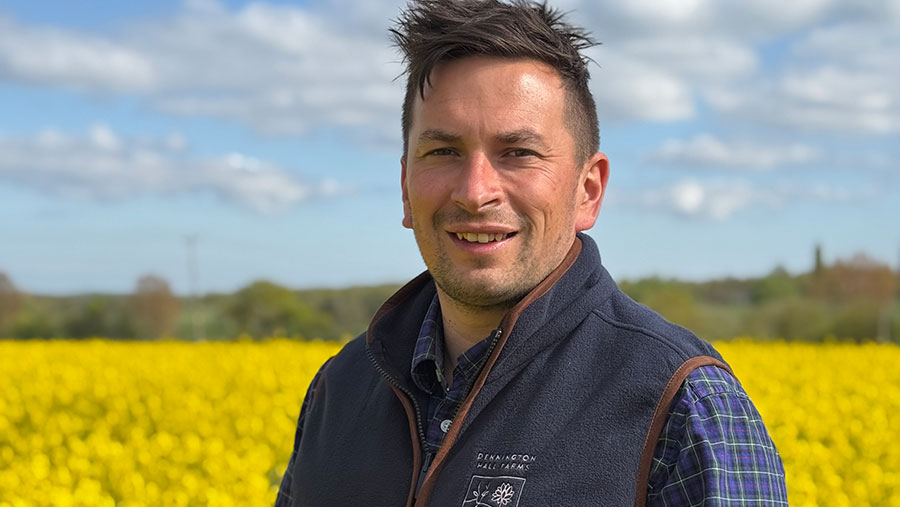
Ryan McCormack, Dennington Hall Farms, Suffolk © Limagrain UK Ltd
The business combines large-scale arable production with livestock, environmental management and diversification.
The farm has been restructured into 12 blocks, each following a 12-year rotation designed to balance efficiency with diversity.
Crops include wheat, barley, oats, sugar beet, oilseed rape, pulses and cover crops. Soil health is central to the system, with 300ha of overwinter cover crops, summer catch cropping, minimal soil disturbance and ploughing only once every 12 years.
We’re testing varieties in systems that include reduced tillage, cover crops and livestock. That’s the direction we’re heading, so we need to know what genuinely works in those conditions
He takes a detailed and scientific approach, analysing soil health across physical, chemical and biological indicators, and using advanced tools such as satellite imagery, sap analysis and DNA plant diagnostics to better understand crop performance.
“I’m farming for margin, but also for my soils and for nutrient density,” he says. “That means I need varieties that can cope with reduced tillage, cover crops, livestock integration and lower inputs.
“The only way to really understand that is to test them in those conditions.”
His on-farm trials include comparing multiple varieties under different establishment systems within the same field, providing a detailed picture of how genetics interact with cultivation and management.
Atkin Farms – balancing performance and practicality
In Staffordshire, Rob Atkin’s farm presents a different but equally valuable perspective.
The third-generation family business spans around just over 485ha’s combining combinable crops with beef cattle and sheep. Soil types range from heavy clay to high-organic-matter silt, requiring flexible management and careful decision-making.
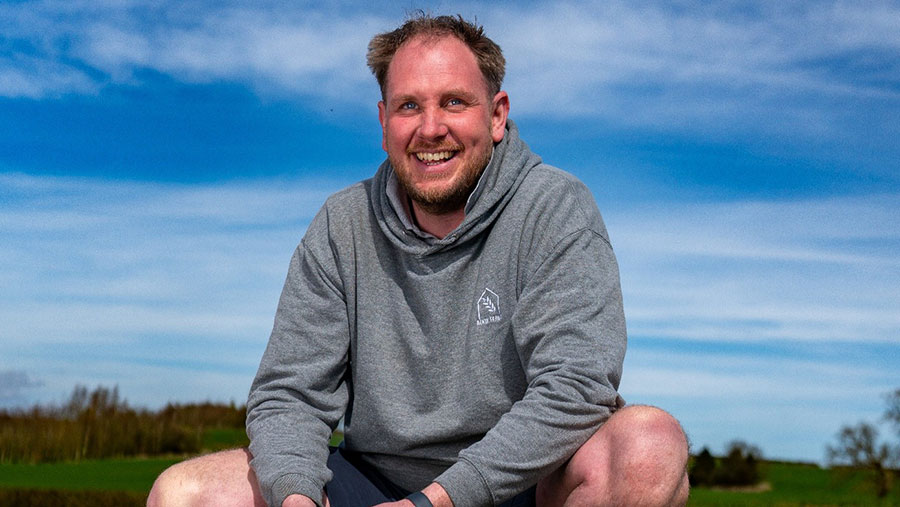
Rob Atkin, Atkin Farms, Staffordshire © Limagrain UK Ltd
Rob has been involved in practical farm trials for many years, including work on variable rate technology and environmental initiatives aimed at improving soil health and reducing water pollution.
He has been integrating cover crops and livestock into his system, while maintaining a strong focus on economic performance.
“I still need yield to pay the bills, so yield is important,” he says. “But I want varieties that work in real farm conditions, not just in perfect plots. I want to know how they perform under pressure and whether they genuinely fit into my system.”
I want to see varieties in real situations – real farms, real seasons, real pressures. That’s what helps me make better decisions
For Rob, the value of the demo farm approach lies in its honesty and relevance.
“It’s about seeing what works, what doesn’t, and why,” he says. “That’s far more useful than just looking at figures on a page.”
A platform for future farming
Limagrain sees the demo farm network as a long-term initiative, with plans to expand across more regions and farming systems.
Future developments may include deeper analysis of soil health, carbon, nutrient use efficiency and crop performance, as well as greater use of digital tools to share insights throughout the growing season.
For Nicolle Hamilton, the ambition is to strengthen the connection between breeding and farming.
“This is about creating a platform for meaningful collaboration,” she says. “By working closely with farmers and seeing varieties in real situations, we can build better understanding and ultimately develop better genetics for the future.”
Provided by
Farmer‑owned global seed specialist delivering high‑performing, reliable crop varieties and expert support, combining UK breeding excellence with worldwide research to help farmers grow profitably and sustainably.